

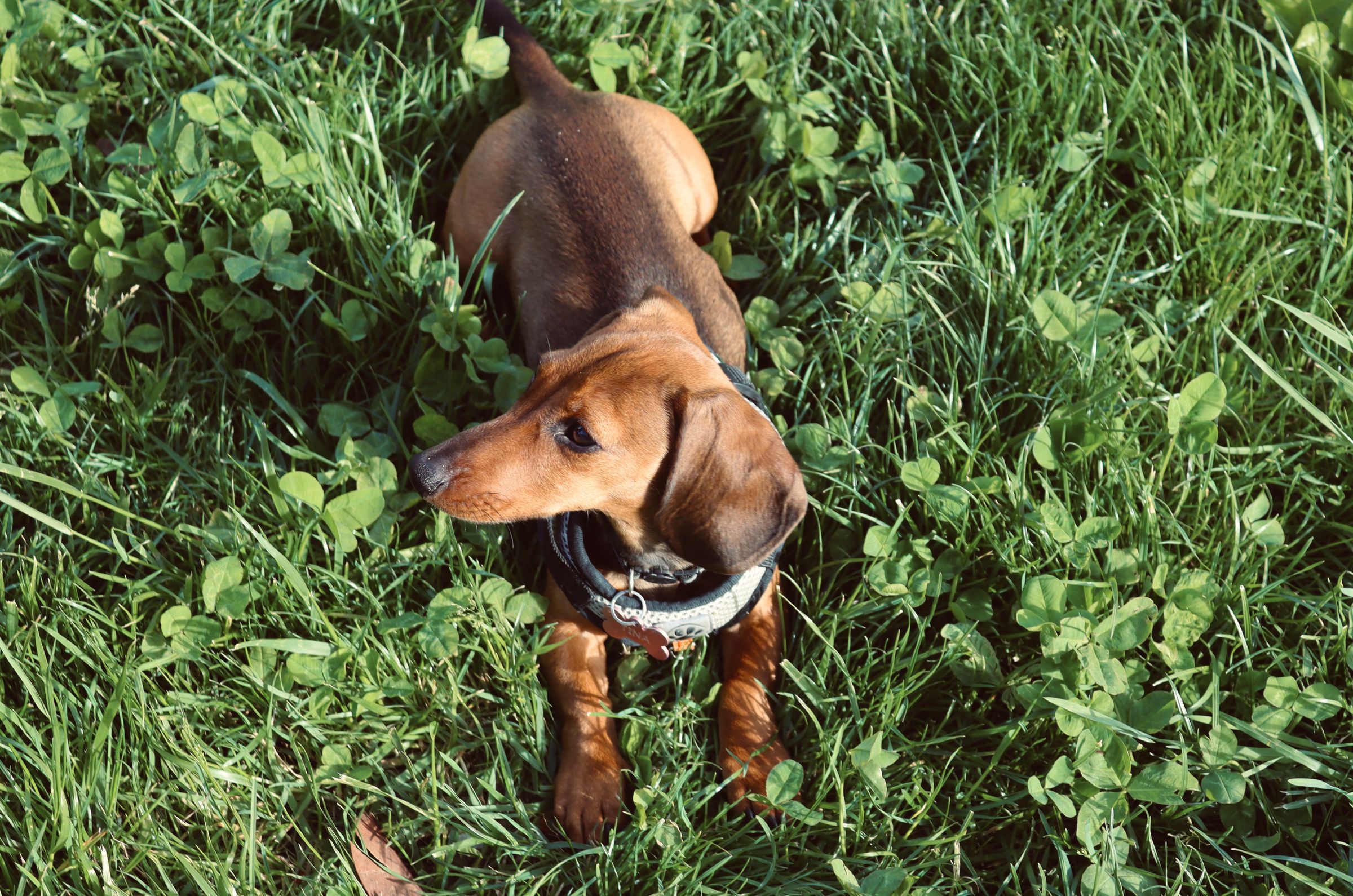
You’re halfway across the park and your dog stops dead, drops its head, and starts cropping grass like a sheep. Why do dogs eat grass? The old answer, “he’s making himself sick”, is almost certainly wrong. When researchers actually watched what dogs do, fewer than one in four showed any sign of illness beforehand, and most never vomited at all.
Grass eating is one of the most normal things a dog does. This guide covers how common it really is, the eight genuine reasons behind it, the vomiting myth in full, the handful of situations where it is dangerous, and what to do if your dog does it obsessively.
The Short Answer
For the great majority of dogs, eating grass is ordinary canine behaviour, a mix of instinct, boredom, taste and texture. It is not usually a sign of illness, a nutritional gap, or a dog “self-medicating”. It only becomes a concern when it is sudden, frantic, constant, or paired with other symptoms.

How Normal Is It? Very
Surveys of dog owners put the figure at roughly four dogs in five eating plants at least occasionally, with grass by far the most common choice. Younger dogs do it more than older ones. Wild relatives do it too: wolves, coyotes and foxes all have plant matter turning up in their droppings, which tells you this predates kibble by a very long way.
In other words: if your dog grazes now and then, eats normally, and is otherwise well, you are looking at a dog being a dog.
8 Reasons Dogs Eat Grass
1. It’s instinct
Dogs are scavenging omnivores, not pure carnivores. Their ancestors ate whole prey, stomach contents included, plus fruit, roots and greenery when meat was scarce. The urge to sample plants never went away.
2. They like it
The least glamorous explanation and probably the most common. Fresh spring grass is sweet, wet and crunchy. Plenty of dogs are simply picky about which grass they eat, which is a strong hint that taste and texture are driving it rather than distress.
3. Boredom
An under-stimulated dog in a garden will find a job to do, and grazing is an easy one. If the grass eating happens mostly when your dog is alone, bored, or waiting around, that’s your answer. The same restlessness often shows up as pacing, digging, or shadowing you from room to room. See why your dog follows you everywhere.
4. Attention
If eating grass reliably makes you turn round, walk over and say the dog’s name, it has been trained, by you, accidentally. Dogs repeat whatever gets a reaction.

5. Fibre
Grass is roughage. Some dogs on low-fibre diets, or with mild constipation or sluggish digestion, appear to seek it out. This is a real but minor effect, a dog on a decent complete diet is not fibre-starved.
6. Nausea or an upset stomach
A genuinely nauseous dog may eat grass, and a small number vomit afterwards. The important part is the direction of cause: illness can prompt grass eating, but grass eating is rarely evidence of illness. Watch for the rest of the picture: lip licking, drooling, swallowing repeatedly, a hunched posture, refusing food.
7. Anxiety and stress
Some dogs graze the way people bite their nails, a self-soothing, repetitive habit that surfaces during thunderstorms, fireworks, separation, or upheaval at home. Anxious grass eating usually comes packaged with other signs: panting with no heat or exercise to explain it (more on that here), trembling, yawning, pacing or clinginess.
8. Hunger or meal timing
Dogs on one meal a day, or on a restricted diet, sometimes graze more, particularly in the long gap before breakfast. Splitting the same daily ration into two meals often quietly ends it.
The Vomiting Myth, Properly Examined
The belief that dogs eat grass to induce vomiting is the most repeated claim on this subject and the least supported. When behaviour researchers at the University of California, Davis surveyed hundreds of owners and watched dogs directly, the pattern was clear:
- Only about one dog in ten showed signs of illness before eating grass.
- Fewer than one in four vomited afterwards, and the same dogs tended to be the ones that did.
- The overwhelming majority ate grass, carried on with their day, and vomited nothing at all.
A more sensible reading: dogs eat grass because they want to. Occasionally a mouthful of coarse blades tickles the stomach on the way down and something comes back up. That’s a side effect, not a plan.
When Grass Eating IS a Problem
The grass itself is harmless. What’s on it, or around it, may not be.
- Pesticides, herbicides and fertiliser. Treated lawns, verges and parks are the single biggest risk. Keep your dog off recently treated ground. Check for the little warning flags, and rinse paws and muzzle after.
- Slug pellets. Metaldehyde is rapidly and often fatally toxic. Tremors or seizures after garden access is a 999-level emergency.
- Lungworm and intestinal parasites. Grass carries slug and snail slime trails, which carry lungworm larvae. Lungworm can cause coughing, unexplained bruising and bleeding that won’t stop. Stay on top of worming.
- Toxic plants mixed in with the grass. Daffodil and tulip bulbs, foxglove, yew, oleander, sago palm, autumn crocus, lily of the valley, and for cats, all true lilies. Dogs grazing indiscriminately can get a mouthful of the wrong thing.
- Grass awns (foxtails). Barbed seed heads in dry summer grass. They burrow into paws, ears, noses and throats and travel inward. Swelling between the toes, violent head shaking or relentless sneezing after a walk needs a vet.
- Pica. Compulsive eating of non-food items: soil, stones, fabric, plastic. That’s a different problem from grazing and warrants a proper veterinary work-up.
When to Call the Vet
- Grass eating that starts suddenly and is frantic or non-stop
- Repeated vomiting, or vomiting with blood
- Diarrhoea, or no appetite for 24 hours
- Lethargy, hiding, or a dog that just isn’t itself
- Straining to poo, or no poo at all
- A swollen, hard or painful belly, with unproductive retching this is a bloat emergency, go now
- Known access to a treated lawn, slug pellets or a toxic plant
- Tremors, wobbliness or seizures: emergency
Worth having to hand: if your dog eats something it shouldn’t, don’t try to induce vomiting yourself without veterinary advice. For chocolate specifically, see our guide on what to do.
How to Cut Down the Grazing
You don’t need to stop it entirely. Normal grazing is fine. If it’s excessive, work through these:
- Rule out the medical side first. A vet check, a faecal test and up-to-date worming, especially if the habit is new.
- Split meals. Two or three smaller meals instead of one, so the fasting gap shrinks.
- Add safe greens. Small amounts of steamed green beans, broccoli or carrot give the same crunch and fibre. Never onion, garlic, grapes or raisins.
- Grow dog grass. A pot of untreated wheatgrass or oat grass indoors gives a safe outlet and keeps them off the park.
- Exercise the brain, not just the legs. Sniffing walks, scatter feeding, snuffle mats, puzzle feeders and chews. Boredom grazing dissolves when there’s a better job available.
- Teach “leave it” and pay well. A reliable “leave it” plus a high-value treat beats pulling on the lead every time.
- Stop rewarding it. No eye contact, no chasing, no commentary. Redirect calmly and move on.
- Keep your own lawn untreated: or check the interval on the label before letting the dog out.
Common Questions
Is grass actually bad for dogs? Plain, untreated grass is harmless in normal amounts. The chemicals, parasites and seed heads it carries are the real risk.
My dog eats grass and then vomits every time. That’s not typical. Get a vet check. Persistent vomiting points to something else going on.
Does it mean the diet is wrong? Usually no. Dogs on complete, balanced food graze just as much as any other. If you’re already suspicious about the food, raise it with your vet rather than switching on a hunch.
Puppies do it constantly, normal? Largely yes; puppies explore with their mouths. Supervise closely, because they’re also the ones most likely to swallow something they shouldn’t.
Should I punish it? No. Punishment tends to produce a dog that eats grass faster and further away from you, which is worse.
The Bottom Line
Grass eating is normal, widespread, and in most dogs means nothing more alarming than “I fancied some grass”. The myth about self-induced vomiting doesn’t survive contact with the evidence. Keep an eye on where your dog grazes rather than whether it grazes, and treat any sudden, frantic change in the habit as a reason to ring the vet rather than to worry about the lawn.