


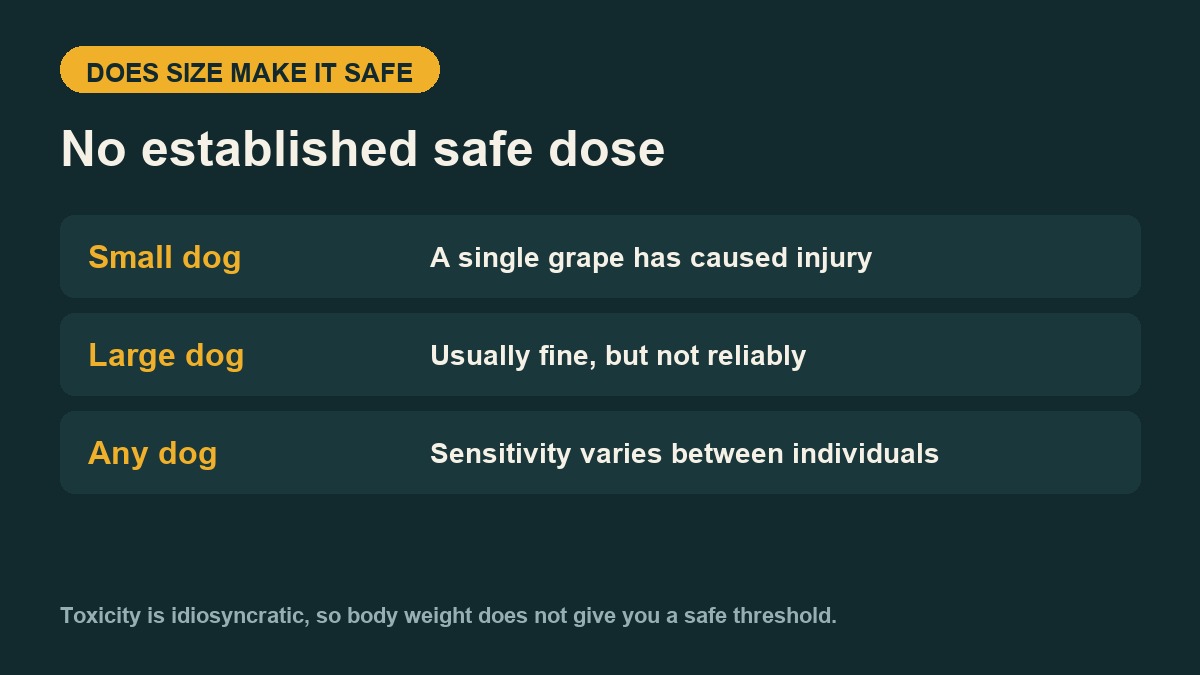
The short answer: phone your vet. One grape is unlikely to harm a large dog and has been enough to injure a small one, and there is no way to tell in advance which kind of dog yours is. Grape toxicity is idiosyncratic, which means it does not scale neatly with body weight the way most poisons do. If it happened in the last couple of hours, a vet can still empty the stomach, and that is the cheapest and most effective thing available.
Why nobody will give you a safe number
The honest reason this question has no clean answer is that the dose response is unreliable. Some dogs eat a handful of grapes and are completely fine. Others develop acute kidney injury after a single one. Published case reports include dogs poisoned at doses that other dogs tolerate without a problem.
The toxic principle is now generally thought to be tartaric acid and its salt potassium bitartrate, which grapes contain in amounts that vary by variety, ripeness and growing conditions. That variability is part of why two dogs eating “one grape” are not necessarily eating the same dose.
So the answer to “will one grape hurt a 50 pound dog” is: probably not, and nobody can promise it. That is not evasion. It is the actual state of the evidence.
What to do, in order
- Phone a vet or a poison line now. In the United States, Pet Poison Helpline is on (855) 764-7661 and the ASPCA Animal Poison Control Center is on (888) 426-4435, both 24 hours. Both charge a consultation fee.
- Say how long ago. Inside roughly two hours, decontamination is realistic. After that the window narrows.
- Do not make your dog vomit at home unless you are told to. Hydrogen peroxide dosing goes wrong easily and can cause its own damage.
- Count what is missing. If the bag is open, estimate how many are gone. A guess beats nothing.
- Keep the packaging if it was a product, because raisins, sultanas and currants are the dried form and gram for gram they carry far more.
What the first three days look like
Vomiting, if it happens, usually comes first, in the first few hours. Then lethargy, going off food, and abdominal discomfort. Kidney injury shows up in bloodwork across roughly one to three days, and by the time an owner can see it in the dog’s behaviour, it is well established.
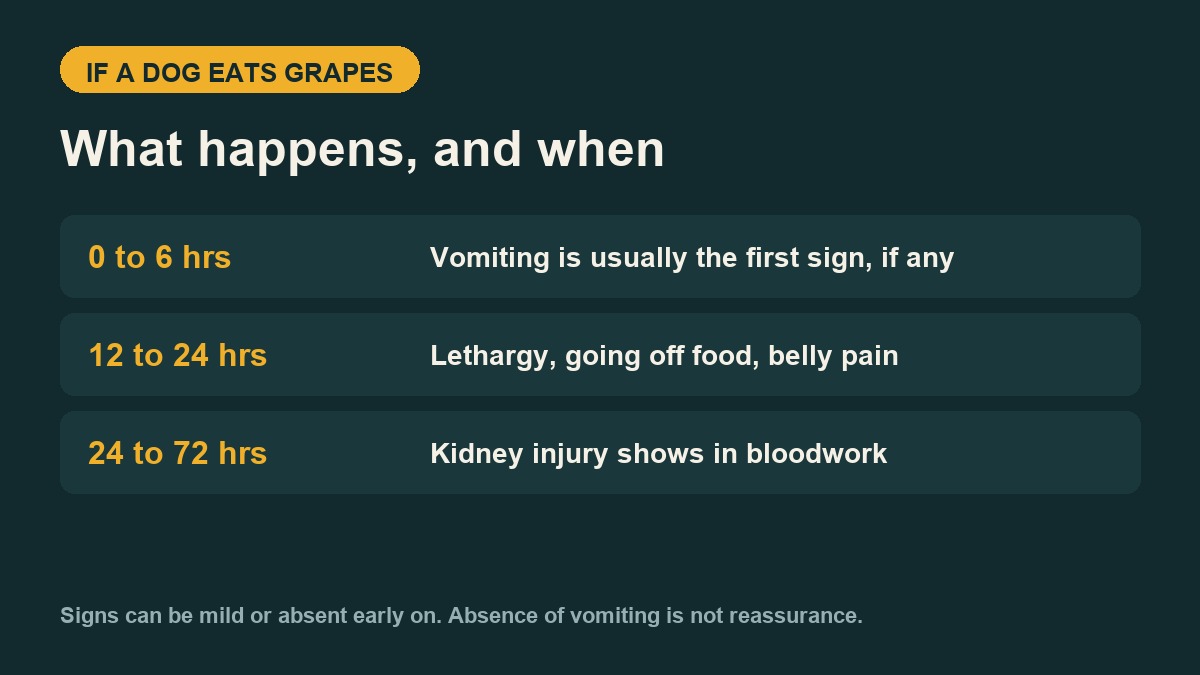
This is why vets will often recommend bringing the dog in even when it seems completely well. Bloodwork at 24 and 48 hours, with fluids in between, is a far better position than waiting to see.
Raisins are not the same as grapes
Raisins, sultanas and currants are dried, so the problem compound is concentrated. A small handful of raisins in a flapjack or a scone is a meaningfully larger exposure than the same visual quantity of fresh grapes.
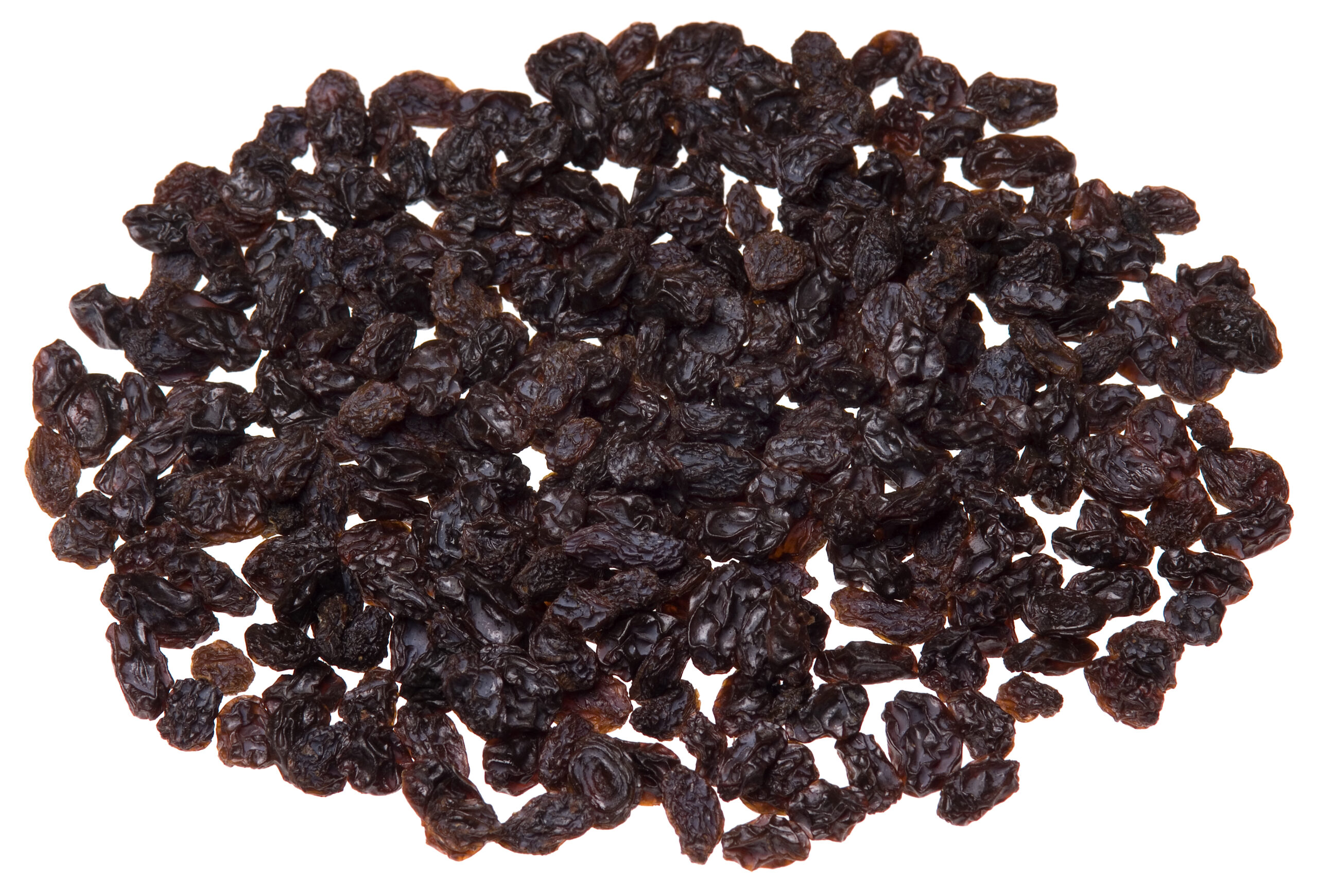
Worth remembering that raisins arrive in things people do not think of as fruit: cereal bars, fruit loaves, mince pies, trail mix, and chocolate coated snacks.
Where it usually happens
Not often from deliberate feeding. The common routes are duller:
- A fruit bowl on a low table
- A dropped grape in the kitchen that nobody noticed
- A child sharing lunch under the table
- A grazing dog at a picnic or a party
- Food waste in an accessible bin

Frequently asked questions
Will one grape hurt a large dog?
Usually not, but there is no established safe dose and sensitivity varies between individual dogs. Large body weight lowers the risk, it does not remove it. Phone a vet rather than deciding on weight alone.
My dog ate one grape and threw it up. Is that enough?
It helps, but it is not proof the stomach is empty. Tell the vet that it happened, when, and what came up, and follow their advice on whether to come in.
How long after eating a grape would a dog show symptoms?
Vomiting, if it occurs, is usually within the first few hours. Lethargy and loss of appetite follow in the first day. Kidney changes appear in bloodwork across roughly 24 to 72 hours.
My dog ate one grape two days ago and seems fine. Should I worry?
A dog that is genuinely well at 72 hours has most likely got away with it, but a vet can confirm that with a single blood test, which is worth it for peace of mind if the dog is small or if more than one grape is unaccounted for.
Is one raisin worse than one grape?
Yes. Raisins are dried grapes, so the toxic compound is concentrated. Treat any raisin exposure more seriously than the same number of fresh grapes.
Are grapes toxic to cats too?
Grape toxicity is best documented in dogs, with some reports in cats and ferrets. Do not feed grapes or raisins to any pet, and phone a vet if a cat has eaten one.
The one thing to take away
The question people ask is “how much is too much”. The question that actually helps is “how long ago”. Early decontamination is cheap, simple and effective, and it stops being an option quickly. Phone before you weigh up the odds.
This article is general information and is not a substitute for veterinary advice. If your dog has eaten grapes or raisins, contact a vet or a poison control line now.
Related reading: why grapes and raisins are toxic to dogs, and what to do if a dog eats rat poison, which follows a similarly deceptive timeline.