

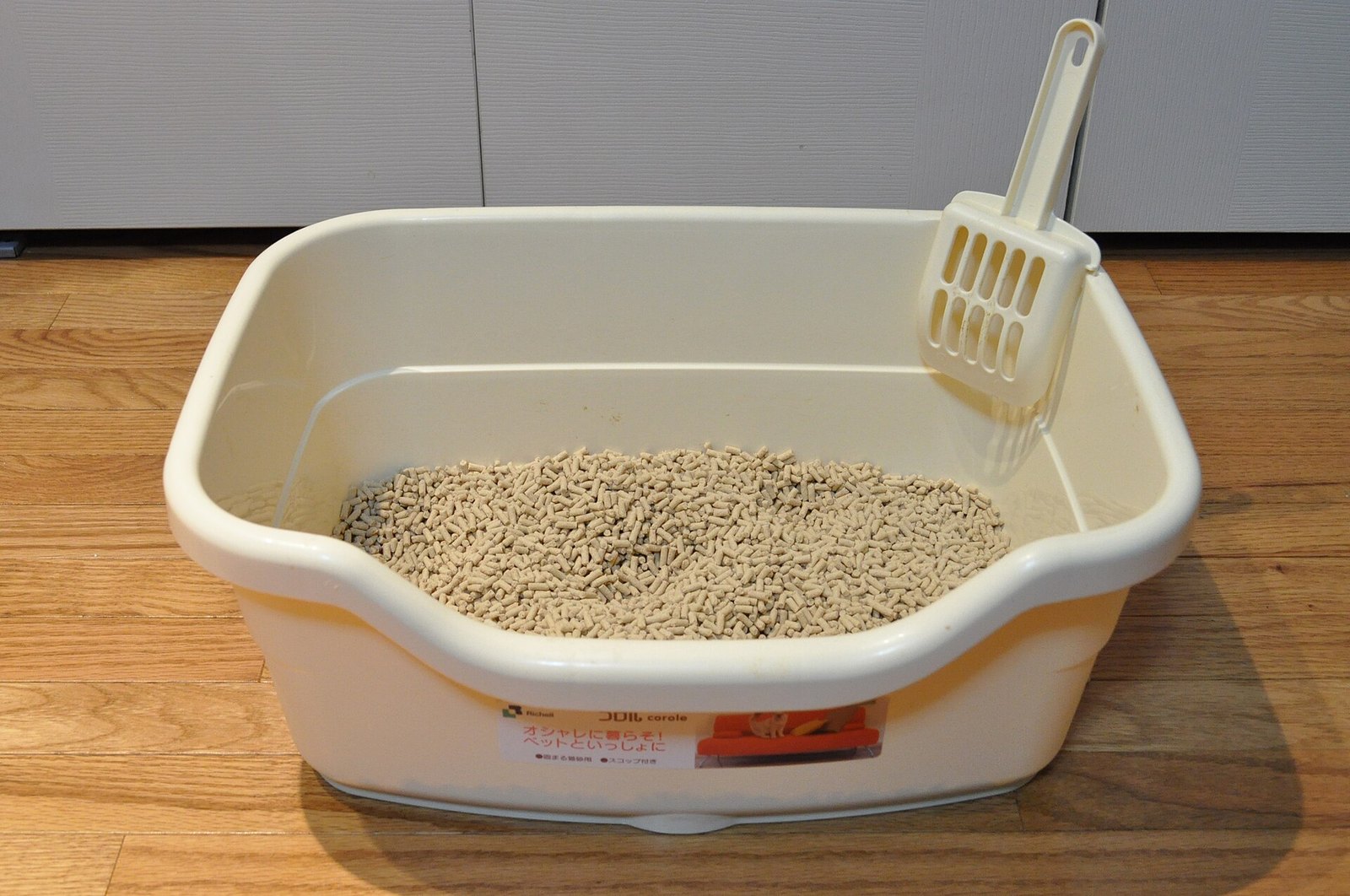
There is a damp patch on the bath mat again. But when you check the litter box, there is a neat, covered deposit sitting in it, exactly where it should be. Your cat is using the box for one job and refusing it for the other.
That combination feels baffling, and most litter box advice does not address it at all. It is also the most useful clue you are going to get. A cat that still poops in the box has told you it accepts the box. Once you understand what that rules out, the list of likely causes gets much shorter, and most of the standard advice turns out to be aimed at a different problem.
What the Poop in the Box Already Rules Out
The usual advice for a cat that stops using its litter box is about the box: move it somewhere quieter, add another one, scoop it more often, change the litter, swap the covered box for an open one. That advice exists because it works, and if your cat had abandoned the box completely it would be the right place to start. We cover that whole situation in our guide to why cats pee outside the litter box.
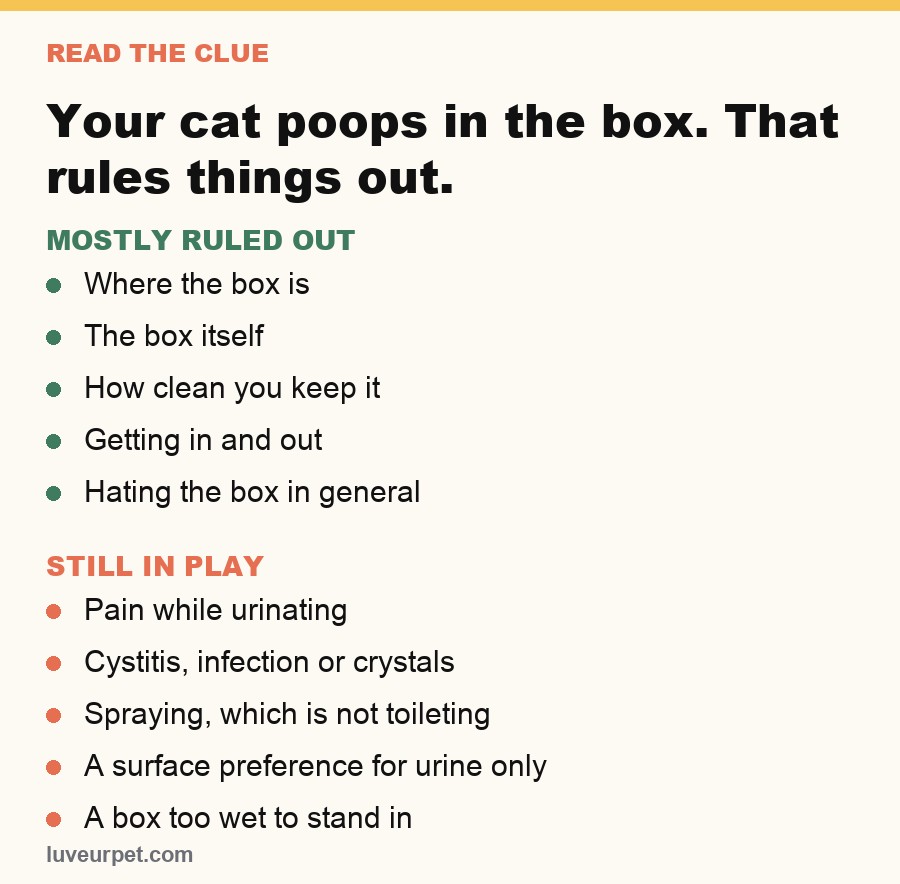
But your cat has not abandoned it. It walks to the box, gets in, turns around, squats, and buries the result. That single fact means:
- The location is acceptable. If the box were somewhere your cat felt cornered or exposed, it would avoid it for both jobs, and defecating takes longer and leaves a cat more vulnerable than urinating does.
- The box itself is acceptable. Size, sides, hood, doorway. Your cat gets in and out without a problem.
- It is clean enough. Not perfect, but tolerable.
- Access is fine. No stairs it cannot manage, no door shut at night, no dog camped outside.
- There is no general aversion. Nothing about the box as an object is frightening it.
So the question is no longer “why does my cat hate its box”. It is narrower and much more answerable: what makes urinating different?
Check This First: A Blocked Bladder Is a Same Day Emergency
Before any of the behavioural explanations, rule out the one that kills. A cat with a blocked urethra cannot pass urine at all. The bladder keeps filling, toxins build up in the blood, and the kidneys fail. Untreated, it is usually fatal within 24 to 48 hours.
It matters here specifically because a blocked cat looks exactly like a litter box problem. It squats on the carpet, on the sofa, in the hallway, producing a few drops or nothing at all, and an owner reasonably reads that as the cat weeing everywhere. Meanwhile it is still passing faeces normally, in the box, which makes the whole thing look behavioural.
Male cats are at far higher risk, because their urethra is longer and much narrower, and the people asking this question online ask about male cats constantly. Females block too, just less often.
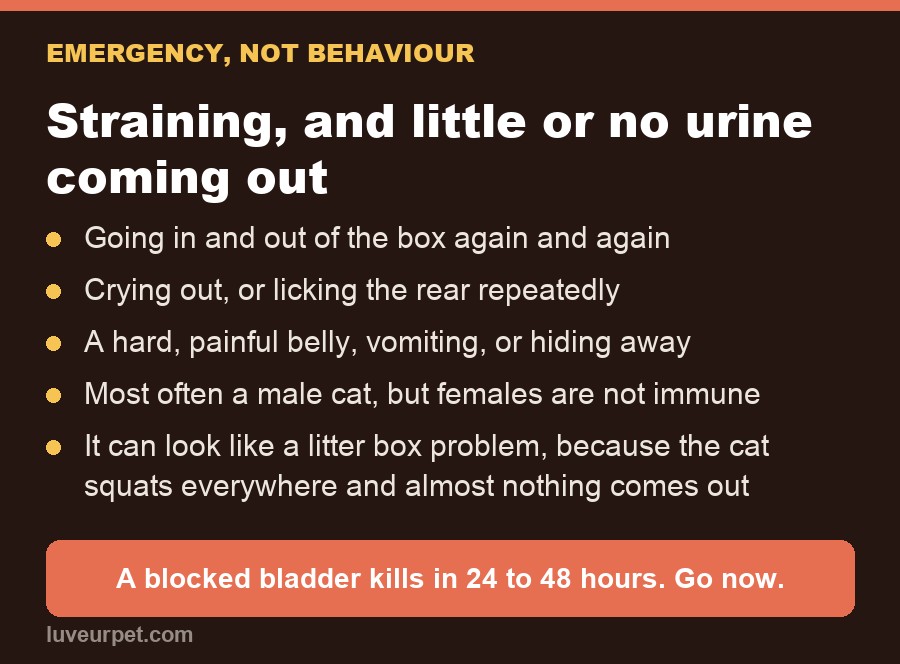
Go to a vet immediately, day or night, if you see straining with little or nothing produced, repeated trips in and out of the box, crying while trying, constant licking at the rear, a tense or painful belly, vomiting, or a cat that suddenly goes quiet and hides. Do not wait for morning and do not wait to see if it settles.
Why Peeing Can Hurt When Pooping Does Not
This is the mechanism behind most cases, and once you see it the whole pattern makes sense.
When urinating is painful, a cat associates the pain with wherever it was standing at the time, which is the litter box. Cats make that link quickly and they make it to the place, not to the illness. Defecating does not hurt, so the box keeps its good associations for that job. The result is a cat that poops in the box and urinates on the rug, the bed or the bath mat, often somewhere soft and open where it feels less trapped.
Three things cause that pain.
Feline idiopathic cystitis
FIC is the most common diagnosis in cats under ten with urinary signs, and it is the single likeliest answer to this question. The bladder wall becomes inflamed and painful with no infection and no stones to find. “Idiopathic” means exactly that: the tests come back clear.
What is known is that stress drives it. A new cat in the house, a new baby, building work, a house move, a change of routine, an unfamiliar cat visiting the garden. The signs are small and frequent attempts, straining, blood in the urine, excessive licking, and urinating in odd places. Episodes often settle in five to ten days, then come back when the cat is stressed again. Our guide to the signs your cat is stressed covers the triggers worth looking for.
Urinary tract infection
A true bacterial infection is less common in young cats than most owners assume, but it rises sharply in cats over ten and in cats with kidney disease, diabetes or an overactive thyroid. It produces the same picture: urgency, discomfort, small amounts, and a cat that no longer wants to use the box for that job. It needs a urine sample and antibiotics, which is why guessing is a waste of a week.
Crystals and bladder stones
Mineral crystals and stones irritate the bladder lining and can scratch on the way out. They also carry the risk of becoming a blockage, which is the emergency above. Diet and water intake both play a part, and your vet will want to know which type of crystal before changing anything.
Is It Peeing, or Is It Spraying?
Spraying is not a toileting problem at all. It is communication, which is why a cat that sprays will often keep using its litter box perfectly for both jobs. If what you are cleaning up is spray, the box is a red herring.
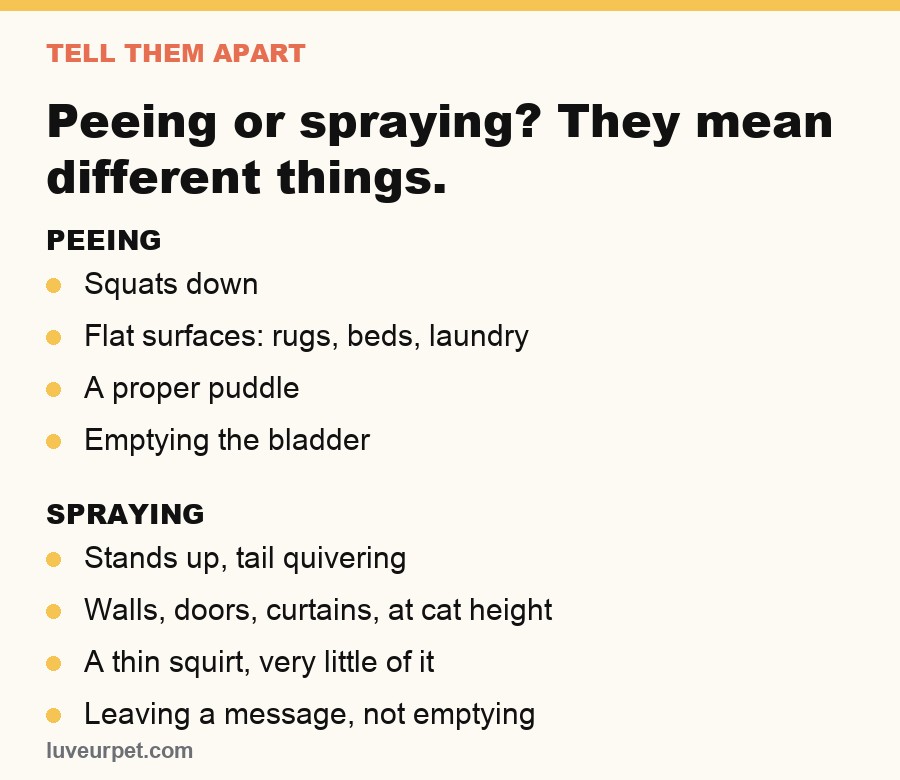
A spraying cat backs up to something vertical, stands upright with its tail held high and quivering, treads with its back feet, and releases a small squirt at roughly cat height. You find it on walls, door frames, curtains, the side of the sofa, bags brought in from outside. A urinating cat squats on something horizontal and leaves a proper puddle.
What triggers it is almost always territorial: a cat visible through the window, a new cat in the home, a neighbour’s cat using your garden, or anything that changes who owns which space. Neutering removes most of it, and most but not all neutered cats stop.
A Surface Preference That Applies to Urine Only
Cats can hold different preferences for the two jobs, and the reason is physical. Urine soaks in and spreads. Faeces sits on top and gets buried. So a surface that works fine for one can be unsatisfying for the other.
A cat that wants to urinate on something soft and absorbent will pick a bath mat, a pile of laundry, a duvet, a rug or a sofa cushion, and will still happily use gritty litter for everything else. This is also why the bed gets chosen so often. It is soft, it absorbs, and it smells of you, which is reassuring to an anxious cat rather than insulting.
The reverse works too. A cat will often step into litter briefly to defecate but refuse to stand in it for the longer, lower crouch that urinating needs, especially if the bottom of the box is permanently damp, if the litter is too shallow, or if it has gone hard and crusted underneath.
One Box, Two Jobs
Many cats simply prefer to use separate places for urine and faeces, and in a home with one litter box they resolve that by keeping the box for one job and finding somewhere else for the other. It is not defiance, it is the same instinct that makes a cat bury waste in the first place.
The standard guidance is one box per cat plus one spare, and it exists largely for this reason rather than for hygiene. Two boxes in different rooms, with different litter in each, is the cheapest diagnostic you can run. If the weeing moves into the second box within a few days, you have your answer.
In a multi-cat home there is a second layer. A cat that gets ambushed, stared at or simply blocked by another cat on the way to the box will take the quicker option somewhere else, and it will do that more readily for urinating than for defecating because it is over faster and it can choose a spot with a clear view of the room.
Older Cats: More Urine, Same Amount of Poop
In a cat over ten, this pattern deserves a vet visit on its own. Kidney disease, diabetes and an overactive thyroid all make a cat drink far more and produce far more urine. The amount of faeces does not change.
So the box fills with urine faster than you are scooping it, the cat will not stand in a soaked box to urinate, and it goes elsewhere. It still poops in the box, because that takes seconds and the dry part of the litter is still fine. The behaviour looks like fussiness. It is a symptom.
Arthritis adds to it. Squatting to urinate is a lower, longer position than the one a cat uses to defecate, and a stiff older cat will avoid the deeper crouch while still managing the quick one.
What to Do This Week, in Order
- Rule out the emergency. If your cat is straining and producing little or nothing, go now.
- Get a urine sample to your vet. Ask for non absorbent litter, a few plastic beads your vet can supply, and collect what you can. This separates FIC, infection and crystals, and nothing you do at home will.
- Add a second box in a different room, with different litter, uncovered, large, and with the litter about five centimetres deep.
- Scoop both twice a day and change the litter completely every week while you are working this out.
- Get more water into the cat. Wet food, extra bowls away from the food, a wide shallow bowl rather than a narrow one. Dilute urine irritates less. Our guide on how much to feed a cat covers wet and dry portions.
- Reduce what you can of the stress. Block the view of visiting cats at ground level, keep routines steady, give each cat its own high place, and consider a pheromone diffuser.
- Clean every spot properly, which matters more than any of the above for stopping repeat visits.
Cleaning Up So They Do Not Return to the Spot
Cat urine contains compounds that ordinary detergent does not break down, so the spot keeps smelling like a toilet to your cat long after it smells of nothing to you. Use an enzyme cleaner sold for pet urine, soak the area rather than wiping it, and let it dry on its own.
Never use anything with ammonia in it. Ammonia is one of the things cat urine smells of, so an ammonia based cleaner is an invitation. Avoid bleach on the same spots for the same reason.
If the spot is fabric that cannot be soaked, covering it is a reasonable temporary measure while the medical side is being sorted out, but it only moves the problem until the cause is fixed.
Frequently Asked Questions
Is my cat doing this out of spite?
No. Cats do not plan revenge, and a cat that was angry with you would not carefully keep using the box for the other job. The split behaviour is evidence of a specific problem, not a general grudge.
My cat only wees on my bed. Does that mean something different?
Usually it means the bed is soft, absorbent and covered in your scent, which makes it the most attractive alternative surface in the house to an anxious or uncomfortable cat. It is a stronger pointer towards stress or pain than towards the box.
Will neutering stop it?
It stops most spraying, and it helps if the behaviour is territorial. It does nothing for cystitis, infection or crystals, so it is not a substitute for a vet visit.
My cat poops outside the box but wees in it. Is that the same thing?
It is the mirror image and it usually points elsewhere: constipation or pain on defecating, a box too small to turn around in, or litter that is uncomfortable underfoot for a longer visit. The same logic applies, which is that whichever job the cat still does in the box tells you what it has already accepted.
How long should I wait before seeing a vet?
If the cat is straining with nothing coming out, do not wait at all. Otherwise, book within a few days. Urinating in the wrong place is the commonest sign of a urinary problem in cats, and the behavioural explanations are the ones you reach for after the medical ones have been excluded, not before.
Could it be the litter I changed to?
It could. Cats often tolerate a new litter for the quick job and reject it for the longer one. If the change lines up in time, put the old litter in a second box and see which one gets used for what.
Final Thoughts
A cat that pees outside the box but poops in it is not being difficult, and it is not a harder problem than the usual one. It is an easier one, because the cat has already eliminated most of the suspects for you.
Rule out the blocked bladder today. Get a urine sample to your vet this week. Add a second box with different litter while you wait. In most cases the answer is pain, stress or both, and both are treatable once somebody has actually looked.