


You turn your back for thirty seconds and the dog has the foil eggs, the selection box, or the bar you left on the arm of the sofa. Can dogs eat chocolate? No. Chocolate is genuinely toxic to dogs, and it’s one of the most common reasons owners ring a pet poison line. But “toxic” doesn’t mean every nibble is an emergency. Whether your dog is fine, needs watching, or needs a vet right now depends on three things: what kind of chocolate, how much, and how big your dog is.
This guide explains why chocolate poisons dogs, how much is dangerous by dog size and chocolate type, the symptoms and when they start, exactly what to do if your dog has eaten some, and how to stop it happening again.
Why Is Chocolate Toxic to Dogs?
Chocolate contains two stimulants from the methylxanthine family: theobromine and, in smaller amounts, caffeine. Humans metabolise theobromine in a few hours. Dogs take up to 17 to 18 hours to clear half of it, so it builds up in their system, over-stimulating the heart, nervous system and kidneys. That’s why a dog can seem fine for hours and then get suddenly worse.
The rule of thumb: the darker and more bitter the chocolate, the more theobromine it contains, and the more dangerous it is.
Which Chocolate Is Most Dangerous?
Approximate theobromine content per 28 g (1 oz):
- White chocolate: about 0.25 mg. Essentially non-toxic, but full of fat and sugar (see pancreatitis, below).
- Milk chocolate: 44 to 60 mg. The most common culprit; dangerous in quantity for small dogs.
- Dark / semi-sweet chocolate: 130 to 450 mg, rising with cocoa percentage. A 70 to 85% bar is at the top of that range.
- Baking (unsweetened) chocolate: 390 to 450 mg. Extremely dangerous even in small amounts.
- Cocoa powder: 400 to 740 mg. The most concentrated form; a few tablespoons can be serious for a small dog.
- Cocoa bean mulch (garden) is also high in theobromine and smells irresistible to dogs.

How Much Chocolate Is Toxic to Dogs?
Vets work in milligrams of theobromine per kilogram of body weight:
- Around 20 mg/kg brings mild signs: vomiting, diarrhoea, restlessness, thirst.
- 40 to 60 mg/kg brings heart effects: racing or irregular heartbeat, high blood pressure.
- 60 mg/kg and above: tremors, seizures, collapse.
- 100 to 200 mg/kg: potentially fatal without treatment.
In practice, here’s roughly how much of each chocolate it takes to reach the mild-symptom threshold (20 mg/kg). Anything approaching these amounts is a call to the vet:
Small dog, 5 kg (11 lb), e.g. Chihuahua, Yorkie, small terrier
- Milk chocolate: about 50 g (one standard bar)
- Dark chocolate (70%): about 10 to 15 g (2 to 3 squares)
- Baking chocolate or cocoa powder: 5 to 7 g (one square / one heaped teaspoon)
Medium dog, 15 kg (33 lb), e.g. Beagle, Cocker Spaniel, Border Collie
- Milk chocolate: about 150 g (three bars)
- Dark chocolate (70%): about 35 to 45 g (half a bar)
- Baking chocolate or cocoa powder: 15 to 20 g
Large dog, 30 kg (66 lb), e.g. Labrador, Golden Retriever, German Shepherd
- Milk chocolate: about 300 g (six bars, or a large box of chocolates)
- Dark chocolate (70%): about 70 to 90 g (one bar)
- Baking chocolate or cocoa powder: 30 to 40 g
Two important caveats. First, these are thresholds for mild signs. Serious symptoms arrive at two to three times these amounts. Second, dogs don’t read charts: puppies, seniors, and dogs with heart conditions, epilepsy or pancreatitis can react at lower doses. If you’re anywhere near these numbers, or you simply don’t know how much was eaten, call your vet.

Symptoms of Chocolate Poisoning in Dogs
Signs usually start 6 to 12 hours after eating chocolate and can last up to 72 hours because theobromine leaves the body so slowly. Watch for:
- Vomiting and diarrhoea (often with a chocolate smell)
- Excessive thirst and urination
- Restlessness, pacing, hyperactivity
- Panting, drooling
- Racing heart or irregular heartbeat
- Muscle tremors, twitching, stiffness
- High body temperature
- Seizures, collapse, coma (severe cases)
Because symptoms are delayed, don’t wait for them to appear before ringing the vet. Treatment works best in the first one to two hours, before the chocolate has been absorbed.
My Dog Ate Chocolate: What Do I Do?
- Take the chocolate away and check the dog can’t reach any more (including wrappers, which can cause blockages).
- Find the packaging. Note the type of chocolate, the cocoa percentage if given, the weight of the bar or box, and how much is missing.
- Weigh or estimate your dog in kilograms.
- Call your vet or a poison line straight away, even if your dog seems fine. Give them the numbers from steps 2 and 3. In the UK: your vet or Animal PoisonLine on 01202 509000. In the US: ASPCA Animal Poison Control on (888) 426-4435 or Pet Poison Helpline on (855) 764-7661 (both charge a consultation fee).
- Do not make your dog vomit at home unless a vet specifically tells you to. Salt water, hydrogen peroxide and other home remedies can cause serious harm.
- Don’t “wait and see”. If the vet asks you to bring the dog in, go now. The window for emptying the stomach closes fast.

Is There a Home Remedy for a Dog That Ate Chocolate?
No. Nothing in a kitchen cupboard neutralises theobromine, and the things people reach for tend to cause more harm than the chocolate would have. It is worth reading this list before you try any of it.
- Hydrogen peroxide is the one that lands dogs in hospital. The dose is easy to get wrong, bottle strengths vary, and it can burn the stomach lining or be breathed into the lungs while the dog retches. Vets use an injection instead, dosed by body weight, which works within minutes.
- Salt or salt water to force vomiting can cause sodium poisoning, which is harder to treat than the chocolate was.
- Milk, bread or butter do not bind theobromine or slow it down. The extra fat makes an upset stomach worse and, after a big binge, makes pancreatitis more likely.
- Human charcoal tablets from the pharmacy are the wrong strength and the wrong format. Vets give a liquid dose by weight, usually alongside something to move it through the gut, and often repeat it, because theobromine is reabsorbed from the gut and goes round again.
- Walking the dog about, or pushing water into it, does nothing useful and burns the window in which the stomach can still be emptied.
The one thing that genuinely helps at home is the phone call. Have three numbers ready: your dog’s weight, the type of chocolate, and how much is gone. Plenty of calls end with the line telling you the dose sits below the threshold and to watch for vomiting or restlessness at home, which is a far better outcome than a stomach full of peroxide.
What Will the Vet Do?
If the chocolate was eaten within the last couple of hours, the vet will usually induce vomiting with an injection, then give activated charcoal to absorb any theobromine already in the gut (sometimes repeated over 24 hours, because theobromine recirculates). Dogs with symptoms may need an intravenous drip to flush the toxin out, medication to control heart rate and tremors, and monitoring overnight. Prognosis is excellent when treatment starts early; it’s the untreated, high-dose cases, usually small dogs and dark or baking chocolate, that become fatal.
Other Hidden Dangers in Chocolate Products
- Xylitol: a sweetener in “sugar-free” chocolate, gum and some baked goods. It’s far more toxic to dogs than chocolate, causing a dangerous blood-sugar crash and liver damage within an hour. Treat any xylitol ingestion as an emergency.
- Raisins: in chocolate raisins, fruit-and-nut bars and rich fruit cake. Even a handful can cause kidney failure; see why grapes and raisins are toxic to dogs.
- Macadamia nuts: found in some luxury chocolates; cause weakness and tremors.
- Fat and sugar: a big binge on any chocolate, even white, can trigger painful and sometimes serious pancreatitis a day or two later.
- Foil and wrappers: can cause vomiting or an intestinal blockage.
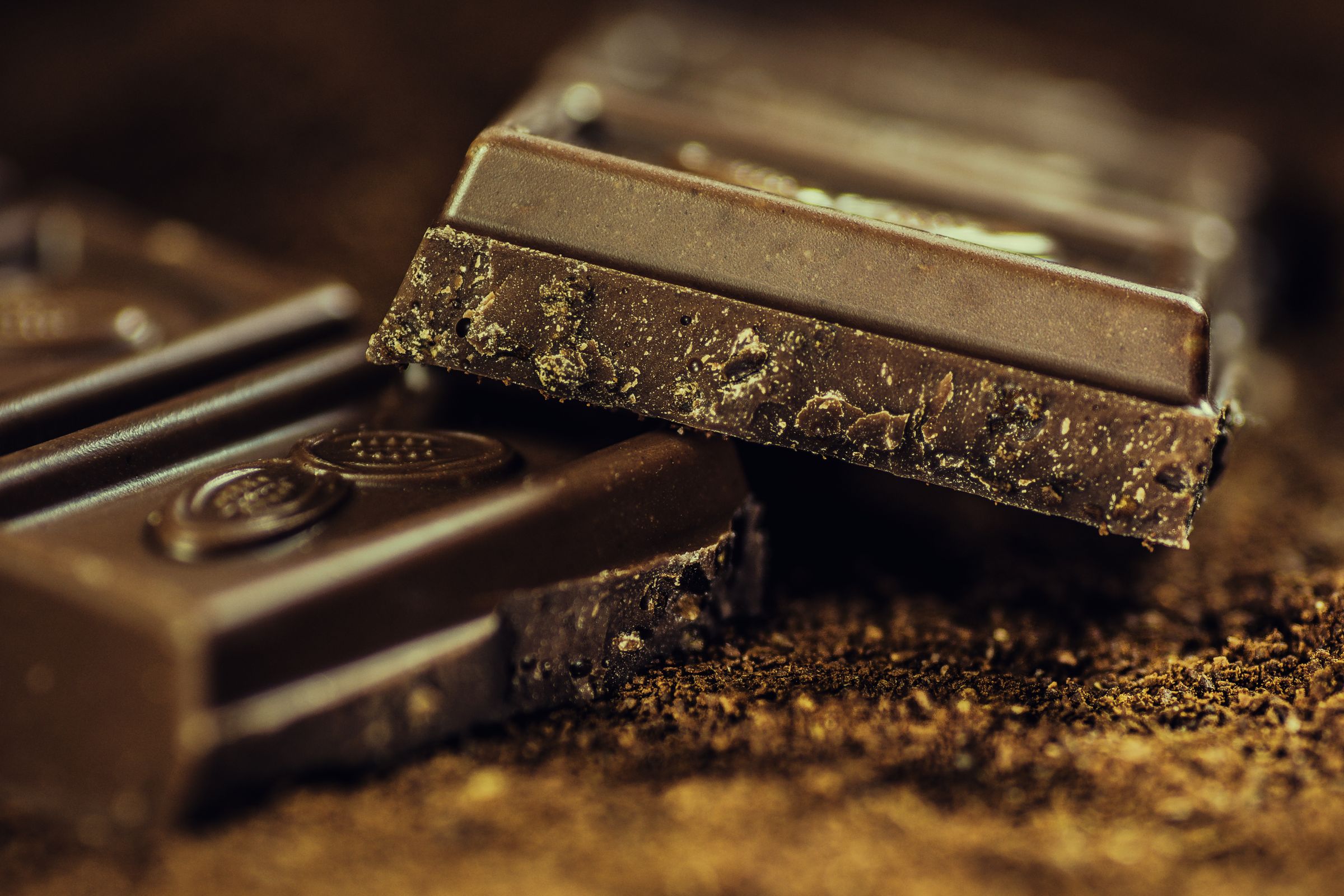
My Dog Ate Chocolate Chip Cookies: How Worried Should I Be?
This is the most common chocolate call of all, and usually the least serious. A chocolate chip cookie is mostly dough. A standard cookie of around 30 g carries roughly 5 to 8 g of chips, and ordinary semi-sweet chips hold about 4 to 5 mg of theobromine per gram. That puts one cookie somewhere near 20 to 40 mg of theobromine, against the 20 mg per kilogram it takes to bring on mild signs.
Run that through the same thresholds used above and you get:
- 5 kg dog (needs about 100 mg): roughly three or four cookies.
- 15 kg dog (needs about 300 mg): roughly ten cookies.
- 30 kg dog (needs about 600 mg): roughly twenty cookies.
So one or two cookies off the worktop sits below the level that troubles most dogs. A small dog and a handful of cookies is a phone call. The arithmetic also only holds for ordinary chips: a cookie made with dark chocolate chunks, or with cocoa worked into the dough, can carry two or three times as much.
The chocolate is not the only thing in a cookie either, and the rest of the list is why “it was only a cookie” sometimes still ends at the vet.
- Raisins, in oatmeal raisin cookies, are the real danger on a baking tray. They can cause kidney failure at amounts that sound trivial, and they matter far more than the chocolate does. See why grapes and raisins are toxic to dogs.
- Xylitol in “no added sugar” or diabetic cookies. Treat that as an emergency.
- Macadamia nuts, which cause weakness and tremors.
- Fat and sugar. A dog that clears half a tray can be vomiting that night and, if it is prone to it, develop pancreatitis a day or two later.
- Raw dough. Uncooked yeast dough rises in the stomach and produces alcohol. That is its own emergency, separate from the chocolate.
Brownies, chocolate cake and cocoa-dusted truffles are a different question. They are built on cocoa rather than sprinkled with it, so treat them like dark chocolate and go back to the thresholds above.
How to Keep Chocolate Away From Your Dog
- Store chocolate in high, closed cupboards, not on tables, sofas or in handbags on the floor.
- Be extra careful whenever the house fills up with sweets, through the winter holidays and on any occasion that arrives with a box of chocolates. Nothing left under a tree, no foil eggs hidden where the dog finds them first.
- Tell children and guests never to share sweets with the dog.
- Avoid cocoa-shell mulch in the garden.
- Teach a solid “leave it” and “drop it”. It will pay for itself the first time it works.
- Want to treat your dog? Give banana slices, carrot sticks or blueberries instead. Carob-based “dog chocolate” is also safe, as it contains no theobromine.

Frequently Asked Questions
Can dogs eat chocolate in small amounts?
A single small square of milk chocolate is unlikely to harm a medium or large dog, but there’s no “safe” amount. It’s just a question of how much it takes to cause problems, and for small dogs that can be very little. Don’t feed chocolate deliberately.
My dog ate chocolate but seems fine. Should I worry?
Possibly. Symptoms take 6 to 12 hours to appear. Work out the type and amount, compare it to the thresholds above, and call the vet if you’re anywhere near them or unsure.
Can dogs eat white chocolate?
White chocolate contains almost no theobromine, so chocolate poisoning is unlikely. But it’s very high in fat and sugar and can cause vomiting, diarrhoea or pancreatitis, so it’s still not a treat for dogs.
How long after eating chocolate will a dog get sick?
Typically 6 to 12 hours, occasionally sooner with large amounts of dark chocolate. Signs can persist for up to three days.
Can chocolate kill a dog?
Yes, at high doses. That means dark, baking or cocoa-powder chocolate in small dogs, especially if untreated. With prompt veterinary treatment, deaths are rare.
Is chocolate toxic to cats too?
Yes, and cats are even more sensitive per kilogram. They’re just less likely to eat it because they can’t taste sweetness. Keep it away from both.
Is there a home remedy for chocolate poisoning in dogs?
No. Nothing you have at home neutralises theobromine, and hydrogen peroxide or salt water given without veterinary instruction can do real damage. The only useful thing you can do at home is ring your vet or a poison line with your dog’s weight, the type of chocolate and the amount.
My dog ate a chocolate chip cookie. Is that an emergency?
Usually not. A standard cookie carries roughly 20 to 40 mg of theobromine, so a 15 kg dog would need around ten of them to reach the mild-symptom threshold. Call your vet if the dog is very small, if several cookies went missing, or if the cookies contained raisins, macadamia nuts or xylitol.
Final Thoughts
So, can dogs eat chocolate? No, but panic isn’t necessary either. Grab the wrapper, do the maths on type, amount and weight, and ring the vet with the numbers. Treated early, almost every dog recovers completely. Put the chocolate somewhere the dog can’t reach, and if you want to spoil them, there are plenty of safe treats they’ll love just as much. Chocolate gets all the attention, but the poison that kills fastest around a house is antifreeze, and that one gives you hours rather than days.