

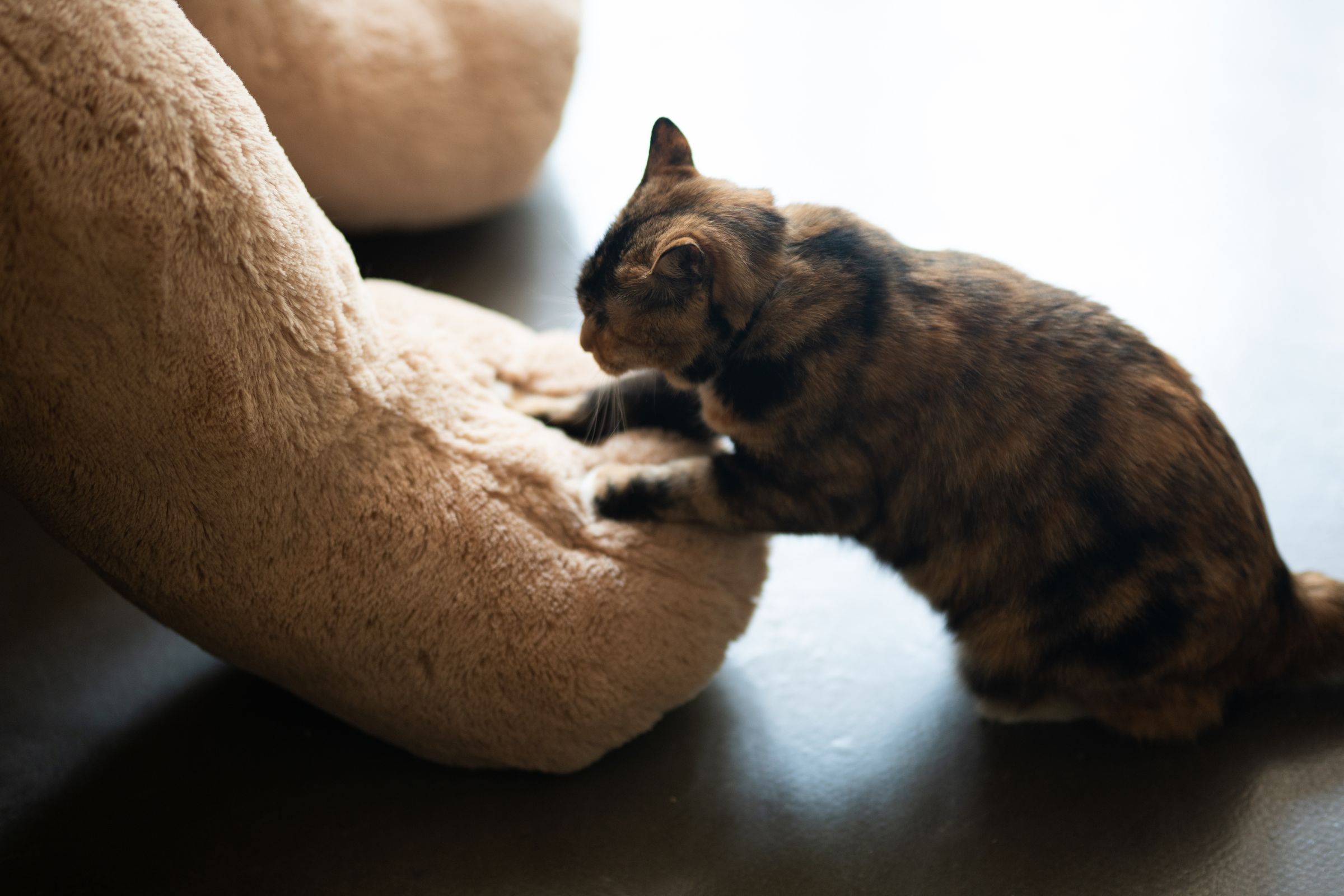
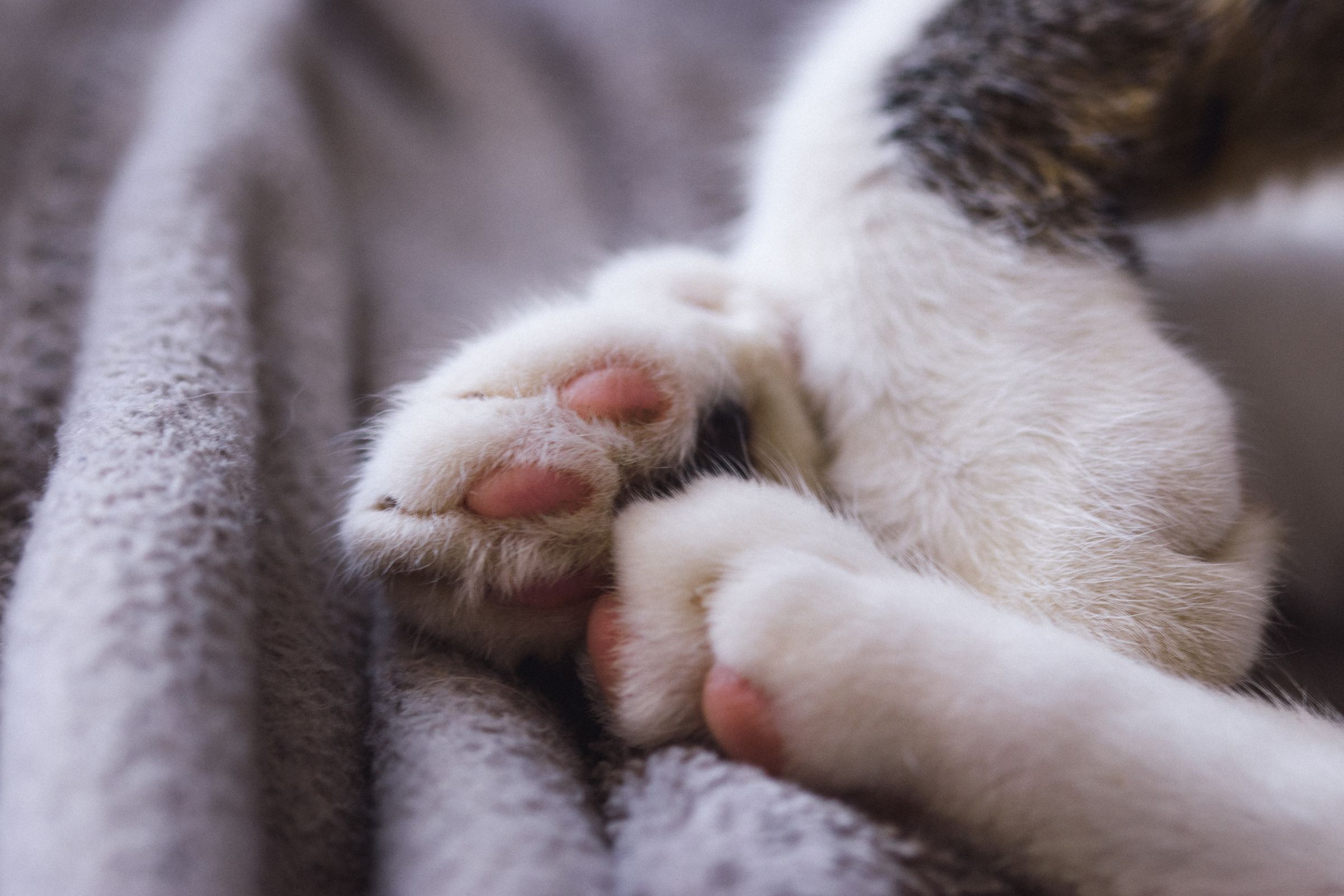
Your cat climbs onto your lap, fixes you with a half-closed stare, and starts pushing its front paws into you – left, right, left, right – often purring, sometimes drooling, occasionally with claws. Why does my cat knead me? Cat owners call it “making biscuits”, and it’s one of the most endearing (and occasionally painful) things cats do. The short answer: kneading is a kitten behaviour that adult cats keep because it feels good, and they do it on the people and places they love most.
This guide explains where kneading comes from, the six reasons adult cats do it, why some cats knead with claws, drool or suckle at the same time, why kneading in an older cat can be worth a vet check, and how to enjoy the biscuits without the puncture wounds.
Where Kneading Comes From
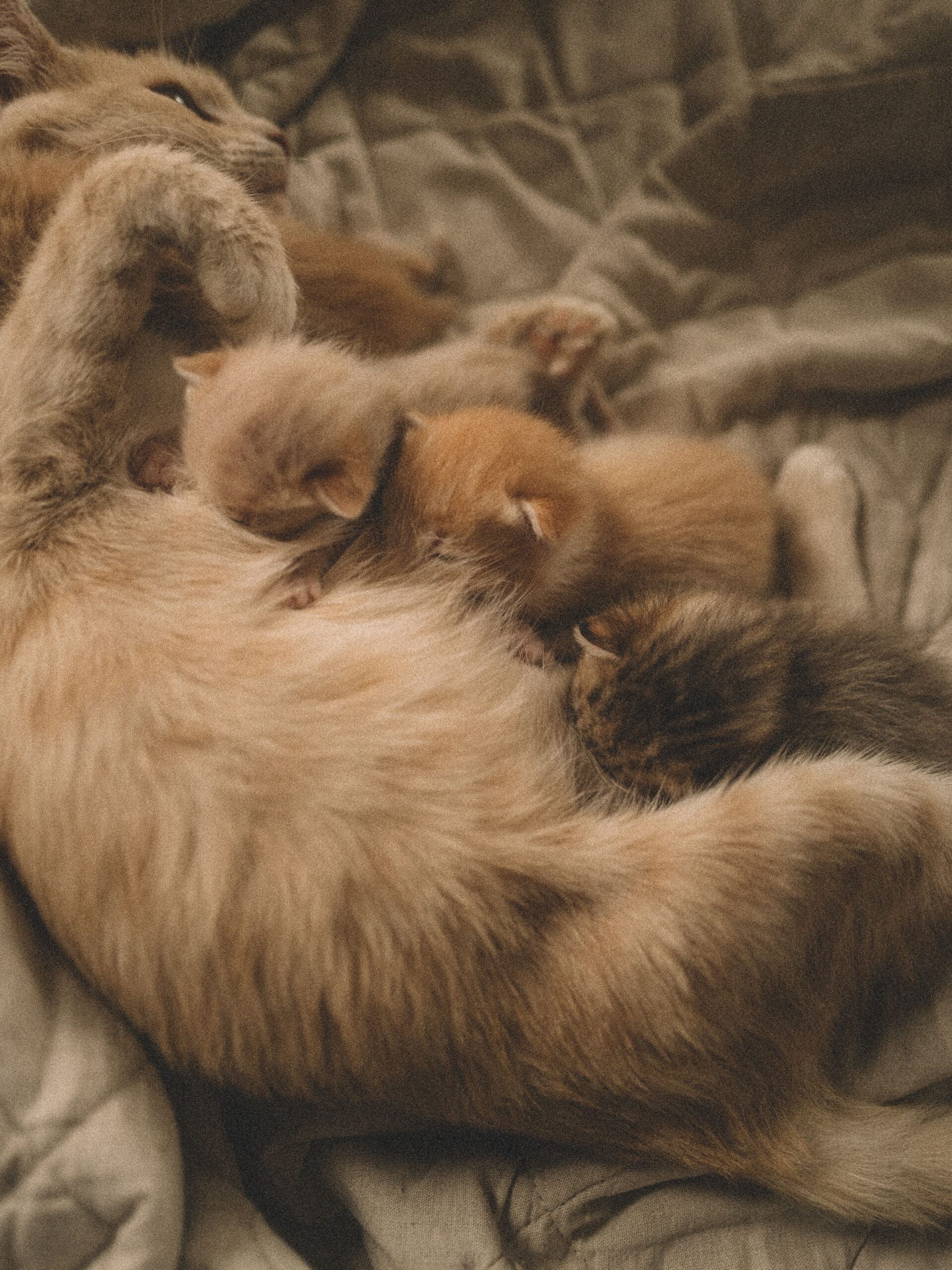
Newborn kittens knead their mother’s belly while nursing. The rhythmic pushing stimulates milk flow, and it becomes hard-wired to the feeling of being warm, full and safe. Most behaviourists agree that adult cats keep kneading because it triggers that same comfort – kneading you is, in a sense, your cat reliving its earliest, happiest memories. It’s also why so many cats purr, drool or go glassy-eyed while they do it.
6 Reasons Why Cats Knead You
1. You’re their comfort zone
Kneading is self-soothing. A cat that kneads you is telling you that, right now, it feels as safe as it did as a kitten. It’s a huge compliment – and it’s why cats often knead just before settling down to sleep on you (see why does my cat sleep on me?).
2. Affection and bonding
Cats knead the people they’re bonded to, not strangers. If your cat kneads you and not your partner, it’s the same reason it sleeps on you: you’re the one it trusts most. Kneading, purring and slow blinks together are as close to “I love you” as a cat gets.
3. Marking you as theirs
Cats have scent glands between their toes. Every push of the paw leaves a little of your cat’s scent on you – a quiet way of claiming you as part of its territory and telling other cats “taken”. That’s also why cats knead blankets, cushions and beds: they’re stamping them.
4. Making a bed
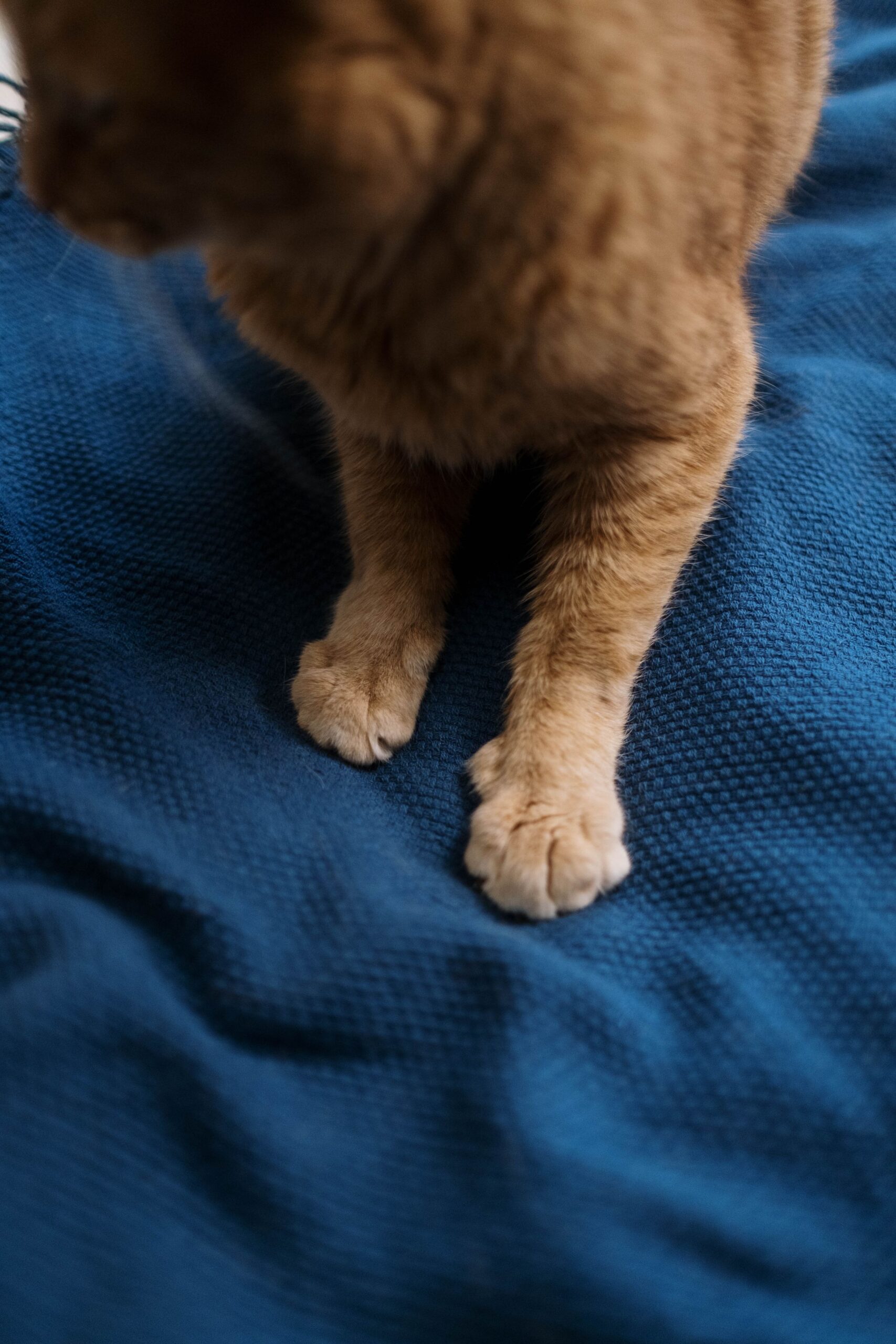
Wild cats trample grass and leaves to make a soft, safe nest before lying down. Your lap, the duvet and the sofa cushion get the same treatment. It’s instinct, even when the “grass” is a cashmere jumper.
5. Stretching
Kneading works the muscles and tendons in the shoulders and forelegs. Cats often do it after a long nap – the feline equivalent of a good stretch and a yawn.
6. Hormones and heat
Unspayed female cats knead more – often while lying on their side, purring loudly and lifting their hindquarters – when they’re in season. It’s a signal to males. If your female cat isn’t spayed and the kneading comes with yowling and restlessness, that’s what’s going on.
Why Does My Cat Knead With Claws Out?
Because it feels better with claws. Kittens knead with claws out to grip while nursing, and the stretch through the toes is part of the pleasure. It’s not aggression – a cat kneading with claws is usually in a state of total bliss and has no idea it’s hurting you. The fix isn’t to stop the kneading; it’s to manage the claws (see below).
Why Does My Cat Drool or Suckle While Kneading?
Both are throwbacks to nursing. Drooling comes from the anticipation of milk; suckling on a blanket, your jumper or your earlobe is the full kitten package. It’s most common in cats weaned early (before eight weeks), Siamese and Oriental breeds, and cats that were bottle-fed. It’s harmless unless the cat is swallowing fabric – wool-eating (pica) needs a vet’s attention.
Is Kneading Ever a Problem?
Almost never. Kneading is a sign of a relaxed, secure cat. Two exceptions worth knowing:
- Sudden, obsessive kneading in an adult or senior cat – especially alongside more vocalising, clinginess or restlessness – can be a sign of stress, pain or, in older cats, hyperthyroidism or cognitive decline. Cats also knead more when they’re anxious, because it’s self-soothing. Our guide to the signs your cat is stressed covers what else to look for.
- Kneading with suckling that turns into eating fabric – swallowed wool or thread can cause a blockage.
If kneading is new, frantic or paired with other changes, get a vet check. Otherwise, enjoy it.
How to Stop Kneading Hurting (Without Stopping the Kneading)
- Keep the claws trimmed. A trim every 2–3 weeks takes the points off. Most cats accept it if you start slowly and use treats.
- Put a barrier between you. Keep a folded blanket or cushion on your lap – the cat still gets to knead you, you get a layer of padding.
- Redirect gently. If it’s getting painful, lift the cat onto a blanket beside you and stroke it there. Don’t push it off or shout – kneading is the cat being affectionate, and punishing it damages trust.
- Don’t declaw. It’s an amputation, it’s illegal in the UK and much of Europe, and it causes long-term pain and behaviour problems.
- Give them a kneading spot. A soft fleece blanket that’s “theirs” satisfies the urge and saves your jumpers.
Frequently Asked Questions
Why does my cat knead me and then bite?
Usually overstimulation. Kneading puts cats in a heightened, dreamy state, and a stroke in the wrong place (belly, base of tail) can tip them into a nip. Watch for a twitching tail or flattened ears and stop petting before the bite.
Why does my cat knead me but not my partner?
You’re the one it feels safest with – often the person who feeds it, moves least, or bonded with it first. It’s not personal.
Why does my cat knead my face or hair?
Your head is warm, still and smells strongly of you. Some cats also suckle hair – it’s the closest thing to a mother’s fur.
Why do cats knead blankets and purr?
Soft blankets feel like a mother’s belly. Kneading plus purring is the full nursing memory playing out – pure contentment.
Do male cats knead?
Yes. Both sexes knead from kittenhood. Unspayed females knead more when in season, but neutered males and females knead just as happily.
Why does my cat knead the air?
Some cats knead while lying on their back or side, paws pushing at nothing. It’s the same reflex without a surface – usually a sign the cat is deeply relaxed.
Final Thoughts
So, why does my cat knead me? Because you’re warm, you’re safe, you’re theirs, and pushing paws into you feels exactly like being a kitten again. It’s one of the clearest signs of a happy, bonded cat. Trim the claws, keep a blanket handy, and take the biscuits as the compliment they are. For more on what your cat is telling you, read why do cats purr? and why does my cat lick me?