

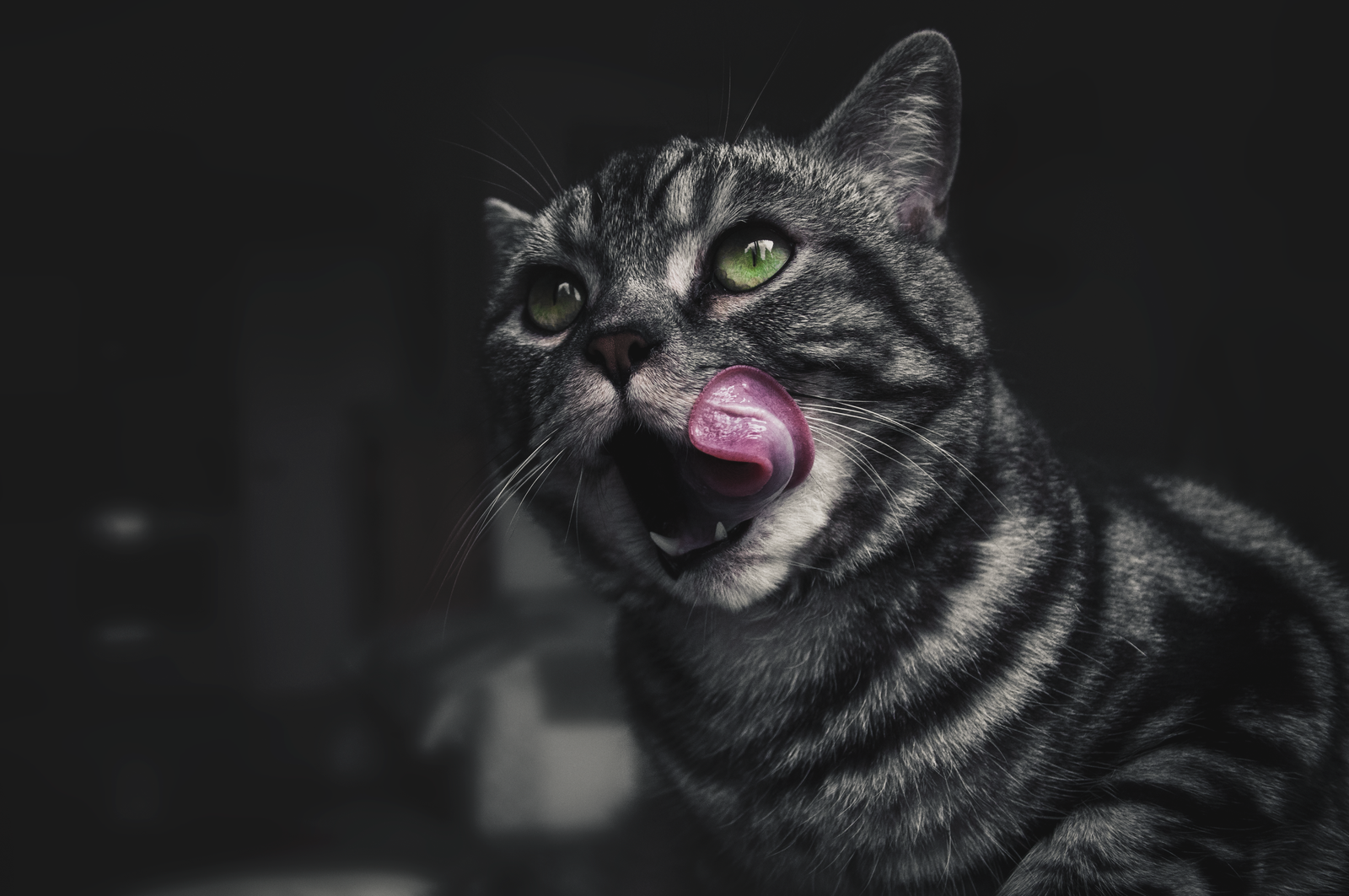
You’re stroking your cat on the sofa when a rough little tongue starts rasping across your hand. Why does my cat lick me? It’s one of the most common questions cat owners ask, and, for the most part, the answer is a compliment. Cats lick the people they trust and consider family. But licking can also be a way of asking for something, coping with stress, or, occasionally, a hint that something is wrong.
This guide explains the eight real reasons cats lick people, why a cat’s tongue feels like sandpaper, when licking is a warning sign, and how to gently stop the habit if it’s getting a bit much.
8 Reasons Why Cats Lick You
1. It’s a sign of affection
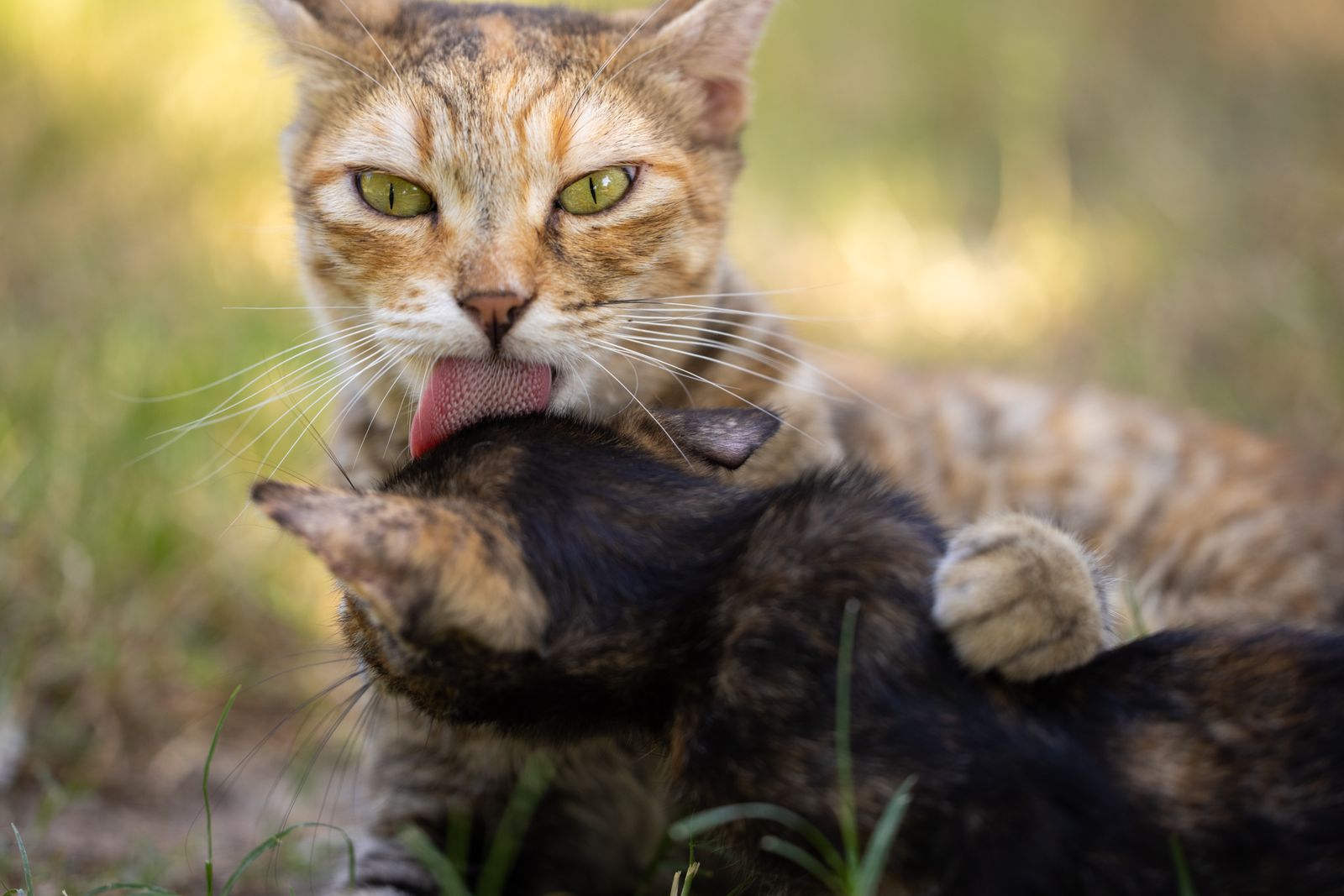
The most common reason. Cats that live together groom each other. Behaviourists call it allogrooming, and they only do it with cats they are bonded to. When your cat licks you, it is treating you as part of its social group. In cat language, that’s as close to “I love you” as it gets.
2. You’re being groomed
Kittens are groomed by their mother from the day they are born, and they grow up seeing licking as normal family behaviour. Your cat may simply be trying to “clean” you, smoothing your hair or licking your arm the way it would tidy up a littermate. It doesn’t mean you smell (though see reason 6).
3. Marking you as theirs
Cats are territorial, and scent is how they claim things. Licking deposits your cat’s scent on you, marking you as a safe, familiar part of its territory. That’s also why cats rub their cheeks against you and against furniture. Being licked means you’ve been claimed, in a good way.
4. Seeking attention
If licking gets a reaction, whether you laugh, talk, stroke or feed the cat, a smart cat learns to repeat it. Many cats lick their owners first thing in the morning or around dinner time for exactly this reason. It’s a polite (if scratchy) way of saying “Hey. Human. Pay attention.”
5. Self-soothing and stress
Licking releases endorphins, so cats use it to calm themselves. A cat that starts licking you (or itself) more than usual after a house move, a new pet, a new baby, or a change in routine may be anxious. Look for other signs such as hiding, over-grooming bald patches, or changes in appetite. Our guide to the signs your cat is stressed covers what to watch for.
6. You taste interesting
Sometimes it’s simply about flavour. Salty skin after exercise, hand cream, food residue on your fingers, or the scent of another animal can all be irresistible. Cats have far fewer taste buds than we do, but they are very sensitive to salt and to the smell of protein.
7. Kitten behaviour that never stopped
Kittens weaned too early, before eight weeks, often keep kitten habits into adulthood, including licking, suckling on blankets and kneading. If your cat licks you while kneading and purring, it is essentially reliving the comfort of nursing.
8. A medical problem
Less commonly, a sudden increase in licking, of you, of objects, or of itself, can point to nausea, dental pain, hyperthyroidism, skin allergies or a neurological issue. If the licking is new, intense or compulsive, book a vet check.
Why Does It Feel Like Sandpaper?
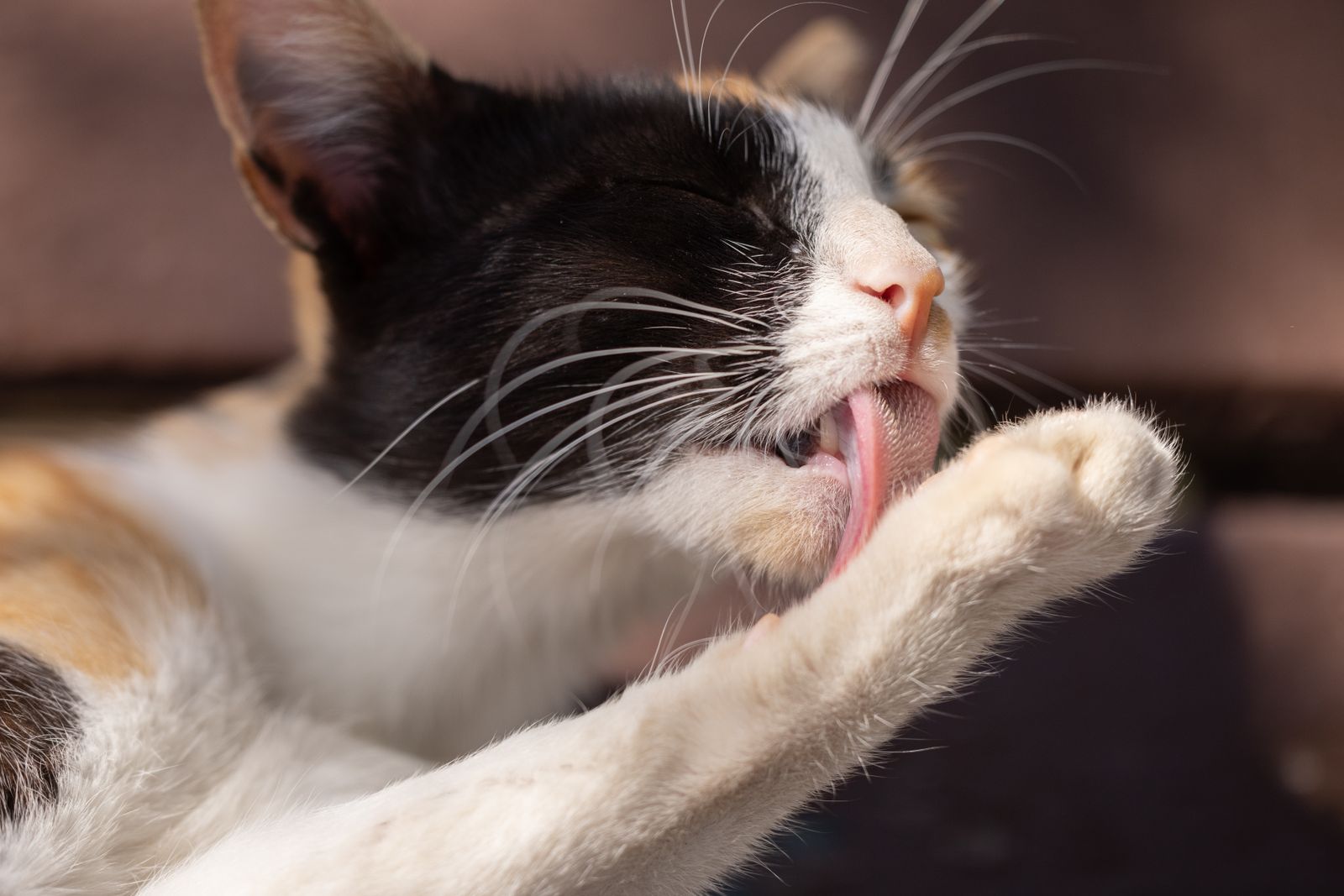
A cat’s tongue is covered with hundreds of tiny, backward-facing hooks called papillae. They are made of keratin, the same material as claws and your fingernails, and they work like a built-in comb, pulling loose fur, dirt and parasites out of the coat and spreading saliva to help the cat cool down. Research using CT scans has shown that each papilla is hollow-tipped and wicks saliva right down to the skin, which is how cats keep such clean coats. On your skin, though, those hooks feel exactly like fine sandpaper.
Is It Safe to Let My Cat Lick Me?
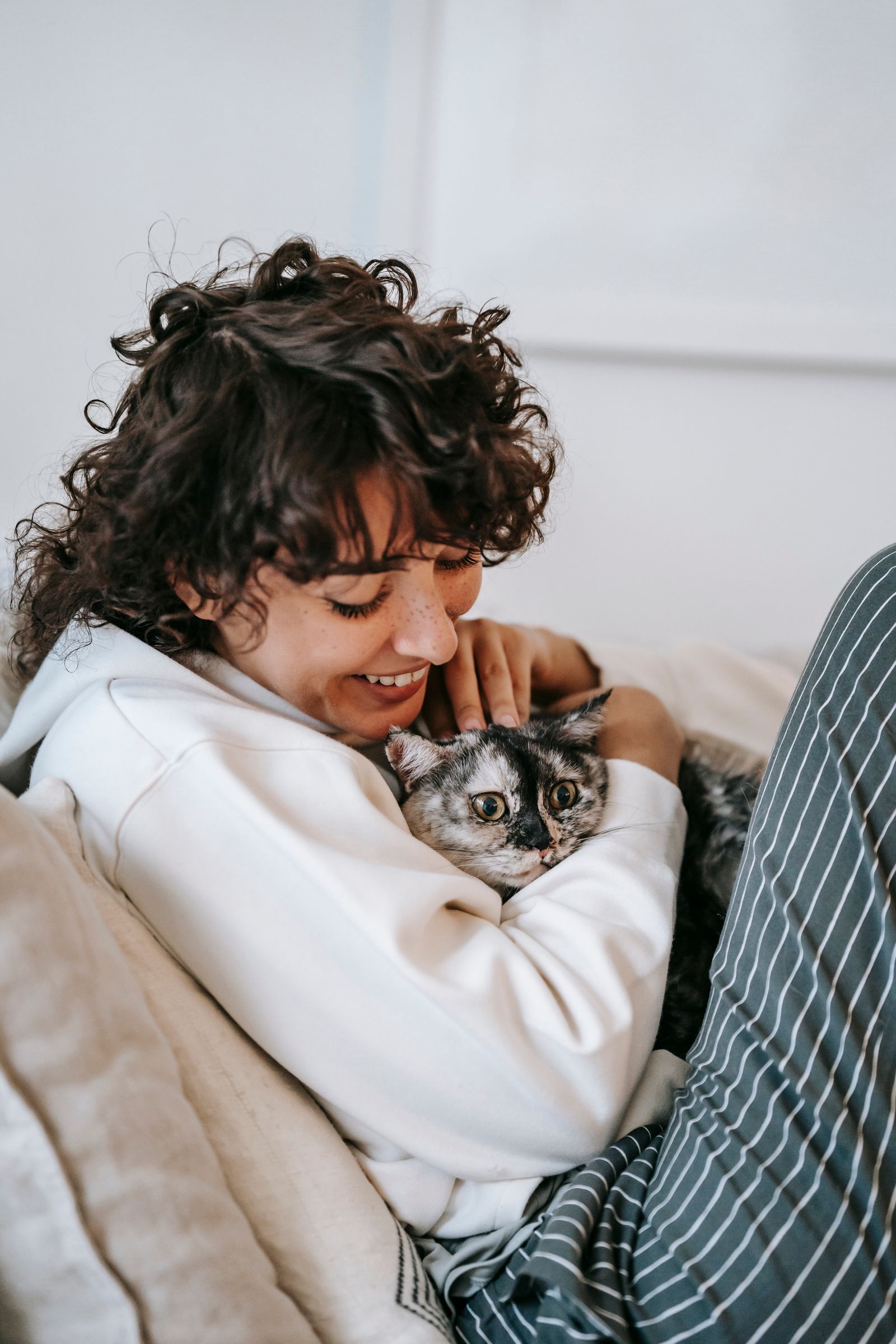
For most healthy adults, yes. Cat saliva does contain bacteria (including Pasteurella and, rarely, Bartonella, the cause of cat-scratch disease), so there are a few sensible precautions:
- Don’t let your cat lick open cuts, scratches or wounds.
- Avoid licks on the face, especially the mouth and eyes.
- Wash your hands after being licked, particularly before eating.
- People with weakened immune systems, very young children and pregnant women should be more cautious.
- Keep your cat wormed, flea-treated and vaccinated.
Also think about what’s on your skin: some hand creams, sunscreens, essential oils and medicated ointments are toxic to cats if ingested. If you’ve just applied any of these, gently move your cat away.
Why Does My Cat Lick Me and Then Bite Me?
The lick-then-bite combination confuses a lot of owners. There are three usual explanations:
- Grooming with teeth: cats nibble as part of normal grooming to work out tangles. A gentle nibble after a lick is just thorough grooming.
- Overstimulation: too much stroking builds up static-like excitement, and the bite is a “that’s enough” signal. Watch for a twitching tail, flattened ears or rippling skin on the back, and stop before the bite.
- Play: young cats especially may switch from licking to play-biting because your hand has become a toy. Redirect to a proper toy.
If you’d like to understand more of your cat’s mixed signals, read why cats purr. It isn’t always because they’re happy either.
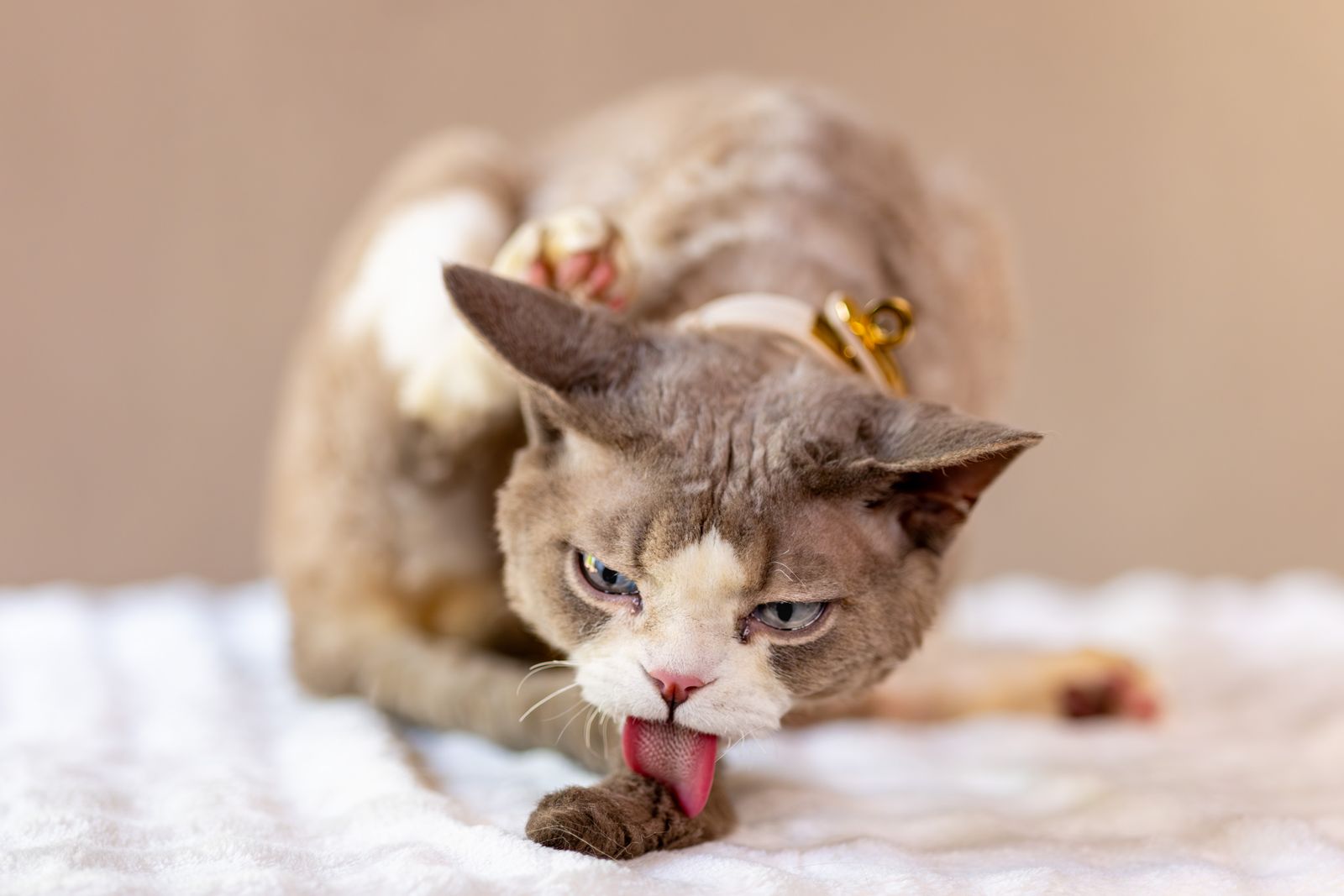
How to Stop Your Cat Licking You (Kindly)
Licking is a bonding behaviour, so never punish it. Instead:
- Redirect: when the licking starts, calmly move your hand away and offer a toy, a brush or a chin scratch instead.
- Don’t reward it: if licking is attention-seeking, quietly get up and walk away for a minute. Give attention when the cat is calm and not licking.
- Cover up: long sleeves or a light blanket on your lap remove the temptation.
- Add enrichment: puzzle feeders, climbing space, scheduled play sessions and a predictable routine reduce stress-driven licking.
- Keep hands clean: wash off food, lotions and other animals’ scents.
- Check the basics: regular meals, fresh water, clean litter trays and a quiet safe space reduce the anxiety that drives compulsive licking.
When to See a Vet
Make an appointment if licking is accompanied by any of these: a sudden change in behaviour, bald patches or sores from over-grooming, drooling, bad breath, weight loss, vomiting, increased thirst, restlessness, or licking of unusual objects such as plastic or walls (a sign of pica). Most underlying causes are very treatable when caught early.
Frequently Asked Questions
Why does my cat lick my hair?
Hair is the closest thing you have to fur, so your cat is grooming you the way it would groom another cat. It’s a strong sign of bonding.
Why does my cat lick my face?
Face-licking is usually affection combined with scent-marking, and sometimes interest in the salt on your skin. For hygiene reasons it’s worth gently discouraging.
Why does my cat lick me at night?
Cats are most active at dawn and dusk. Night-time licking is usually attention-seeking. It’s bored, hungry, or wants you awake. A play session and a small meal before bed often solves it.
Why does my cat lick me but not my partner?
Cats lick the people they are most bonded to, and they often choose one favourite human. Diet, scent, who feeds them and who they sleep with all play a part.
Do cats lick you to say sorry?
Not in the human sense. Cats don’t feel guilt. But a cat that licks you after a scuffle is re-establishing the bond and calming itself, which is about as close to “sorry” as a cat gets.
Final Thoughts
So, why does your cat lick you? Nine times out of ten, because it loves you and considers you family, a scratchy but genuine compliment. Keep an eye on sudden changes, keep your skin free of anything harmful, and redirect gently if it becomes too much. And if you’re wondering how many years of sandpaper kisses lie ahead, our guide on how long cats live has the answer. And if those licks keep turning into teeth, why your cat bites you covers what that switch actually means.