

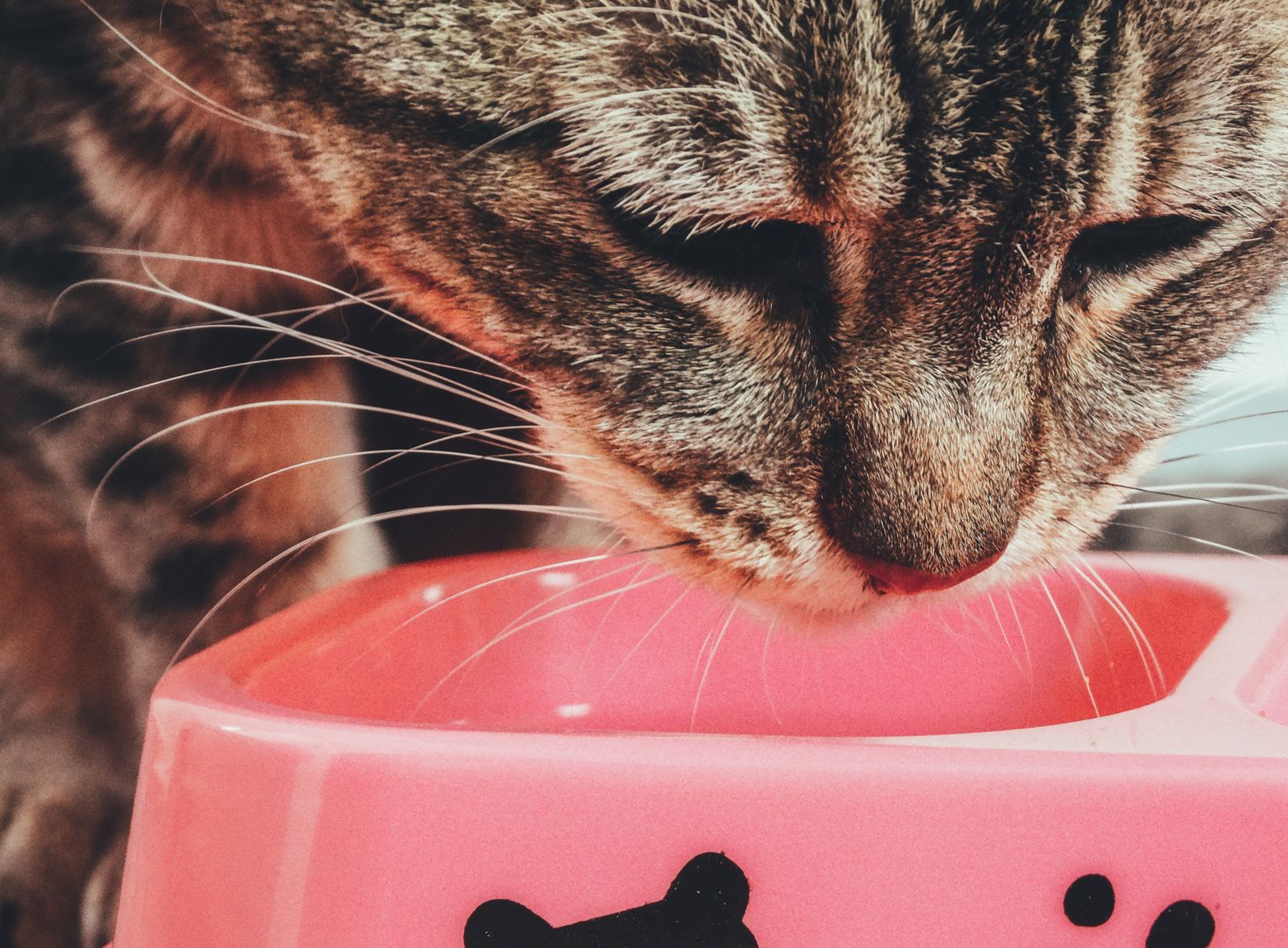
How much should I feed my cat? It’s a surprisingly hard question to answer from the back of a food packet. The feeding guides are generous, cats vary enormously, and “one cup” means something different for every brand. The result is that more than half of pet cats are overweight, and obesity is now the biggest nutritional problem vets see in cats.
This guide gives you the numbers: how many calories your cat actually needs, a feeding chart by weight, portion sizes for kittens, adults and seniors, how to convert calories into grams of wet or dry food, how often to feed, and how to tell whether you’re getting it right.
How Many Calories Does a Cat Need?
The single most useful number is your cat’s daily calorie requirement. Vets calculate it from body weight, then adjust for age, activity and whether the cat is neutered. As a rule of thumb:
- Typical indoor, neutered adult cat: 20 calories per pound (about 45 per kg) of ideal body weight per day.
- A 10 lb (4.5 kg) cat therefore needs roughly 200 calories a day.
- Active, outdoor or intact cats may need 25 to 30% more; overweight or elderly cats often need less.
Note the words ideal body weight. If your cat is already overweight, feed for the weight it should be, not the weight it is.
Cat Feeding Chart by Weight (Adult Cats)
| Ideal weight | Calories per day (indoor, neutered) | Approx. dry food* | Approx. wet food* |
|---|---|---|---|
| 2.5 kg (5.5 lb) | 120 to 140 kcal | 30 to 35 g | 1½ pouches (85 g) |
| 3.5 kg (8 lb) | 160 to 180 kcal | 40 to 45 g | 2 pouches |
| 4.5 kg (10 lb) | 200 to 220 kcal | 50 to 55 g | 2½ pouches |
| 5.5 kg (12 lb) | 230 to 250 kcal | 58 to 63 g | 3 pouches |
| 6.5 kg (14 lb) | 260 to 280 kcal | 65 to 70 g | 3½ pouches |
*Based on an average dry food of 400 kcal per 100 g and wet food of 80 kcal per 85 g pouch. Always check the calorie content (“kcal/100 g” or “ME”) printed on your food’s label, as it varies a lot between brands.
How to Work Out the Exact Portion for Your Food
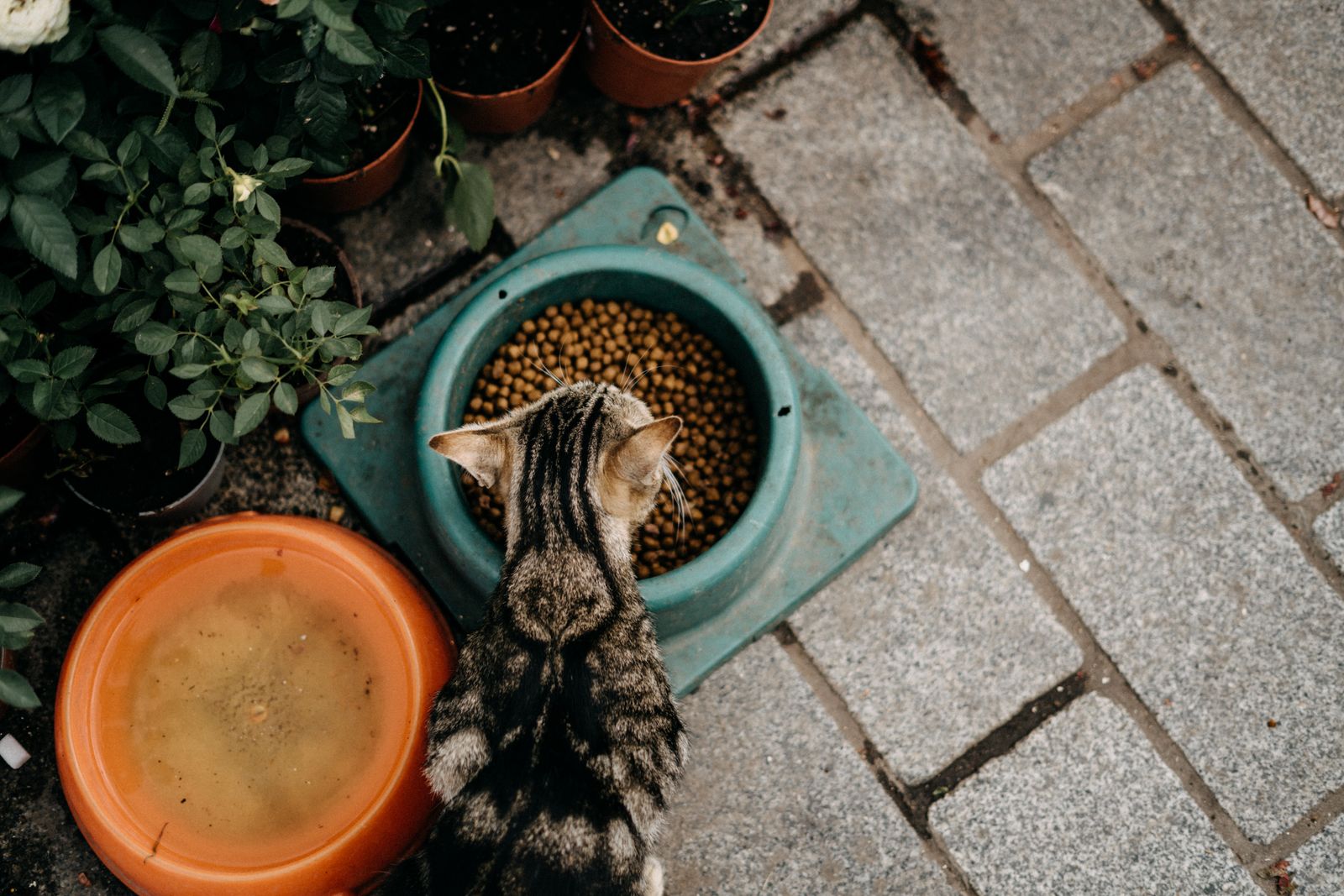
- Find the calories on the packet, usually written as kcal per 100 g (dry) or kcal per pouch/can (wet).
- Divide your cat’s daily calories by that number. Example: a 200 kcal cat on a dry food of 380 kcal/100 g needs 200 ÷ 380 × 100 = 53 g a day.
- Weigh it with kitchen scales. Measuring cups are unreliable. Different kibble shapes and sizes mean a “cup” can vary by 30% or more.
- Subtract treats. Treats should be no more than 10% of daily calories (about 20 kcal for a typical cat, so that’s only 3 to 4 commercial treats).
How Much to Feed a Kitten
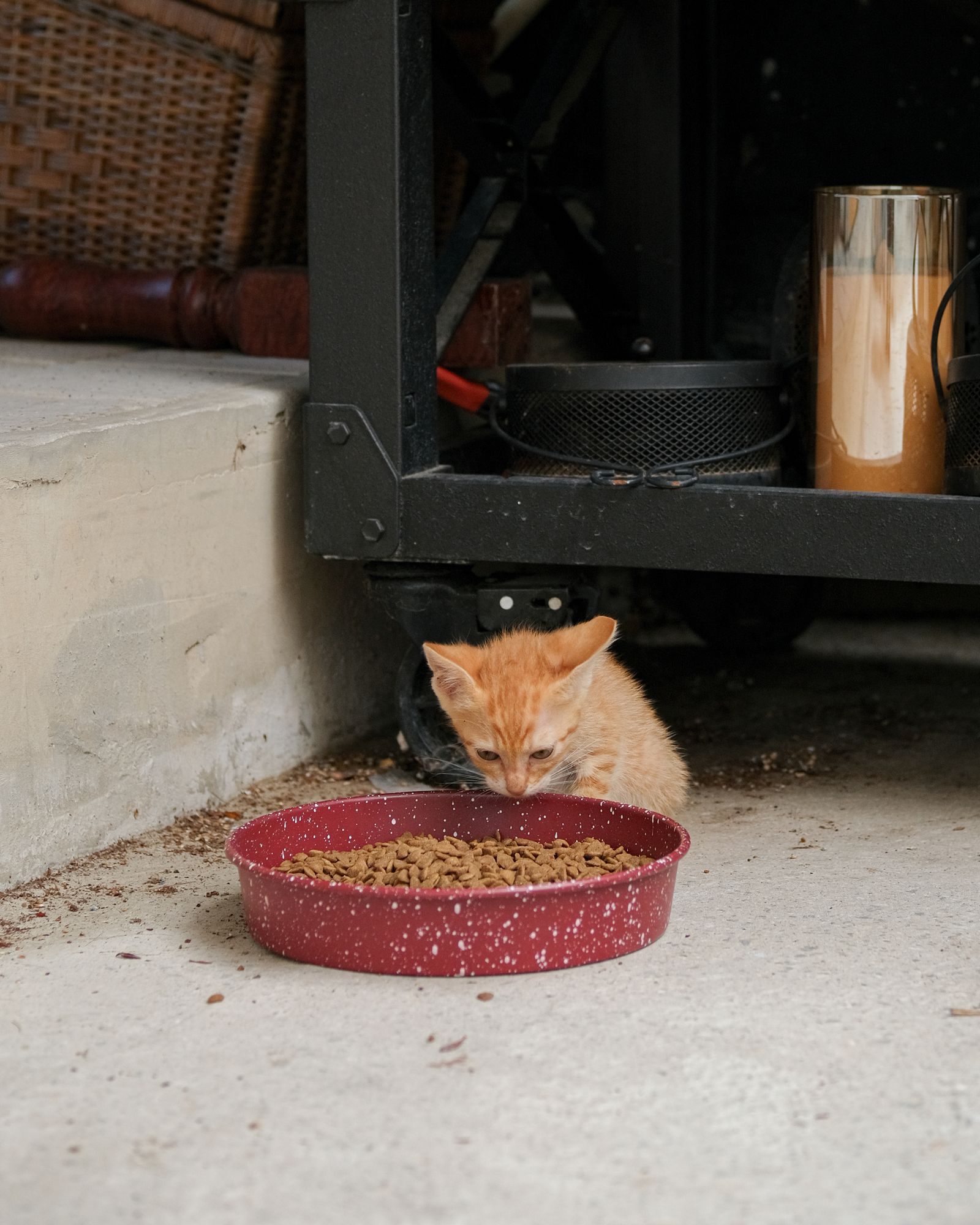
Kittens need two to three times the calories per kilogram of an adult cat because they’re growing so fast. They also have tiny stomachs, so they need frequent meals:
| Age | Meals per day | Notes |
|---|---|---|
| 4 to 8 weeks | 4 to 6 (weaning) | Wet kitten food mashed with a little water or kitten milk replacer |
| 2 to 4 months | 4 | Complete kitten food; feed as much as they will eat in 20 minutes |
| 4 to 6 months | 3 | Growth slows; start measuring portions using the packet’s kitten guide |
| 6 to 12 months | 2 to 3 | Move gradually to adult portions; switch to adult food at 12 months (18 for large breeds like Maine Coons) |
Always feed a food labelled “kitten” or “all life stages”. Adult food doesn’t contain enough protein, fat or calcium for growth.
How Much to Feed a Senior Cat
Cats over 7 tend to become less active, so many need 10 to 20% fewer calories to avoid weight gain. From about 11 onwards, however, digestion becomes less efficient and many cats start losing weight and muscle. Senior cats do best on a highly digestible, high-protein food fed in smaller, more frequent meals. Weigh your senior cat monthly. Unexplained weight loss is the earliest sign of common conditions like kidney disease, hyperthyroidism and diabetes, all of which are treatable when caught early.
Wet Food vs Dry Food: How Much of Each?
- Wet food is about 75 to 80% water, so it’s low in calories per gram (roughly 70 to 100 kcal per 85 g pouch or 3 oz can). It helps cats stay hydrated, which supports the kidneys and bladder, and is more filling, good for weight control.
- Dry food is calorie-dense (350 to 450 kcal per 100 g), convenient and better for puzzle feeders, but it’s easy to over-pour and cats on dry-only diets drink less than they should.
- Mixed feeding is a popular compromise: for a 200-kcal cat, one 80-kcal pouch morning and evening plus about 10 g of dry food, or one pouch plus 30 g of dry.
Whichever you choose, the total calories are what matter. If you switch foods, do it gradually over 7 to 10 days to avoid stomach upsets.
How Often Should I Feed My Cat?
Cats are natural grazers that would eat 10 to 20 small prey meals a day in the wild. For most pet cats, two meals a day (morning and evening) is the practical minimum; three or four smaller meals is better still if your schedule allows, and automatic feeders make this easy. Regular timed meals also let you notice quickly when a cat goes off its food, an important early warning sign.
Should I free-feed my cat?
Leaving dry food down all day works for a minority of self-regulating cats, but for most it’s the fastest route to obesity, and it makes appetite changes impossible to spot. If you do free-feed, measure the day’s total portion out in the morning and don’t top up.
Is My Cat the Right Weight? The Body Condition Check
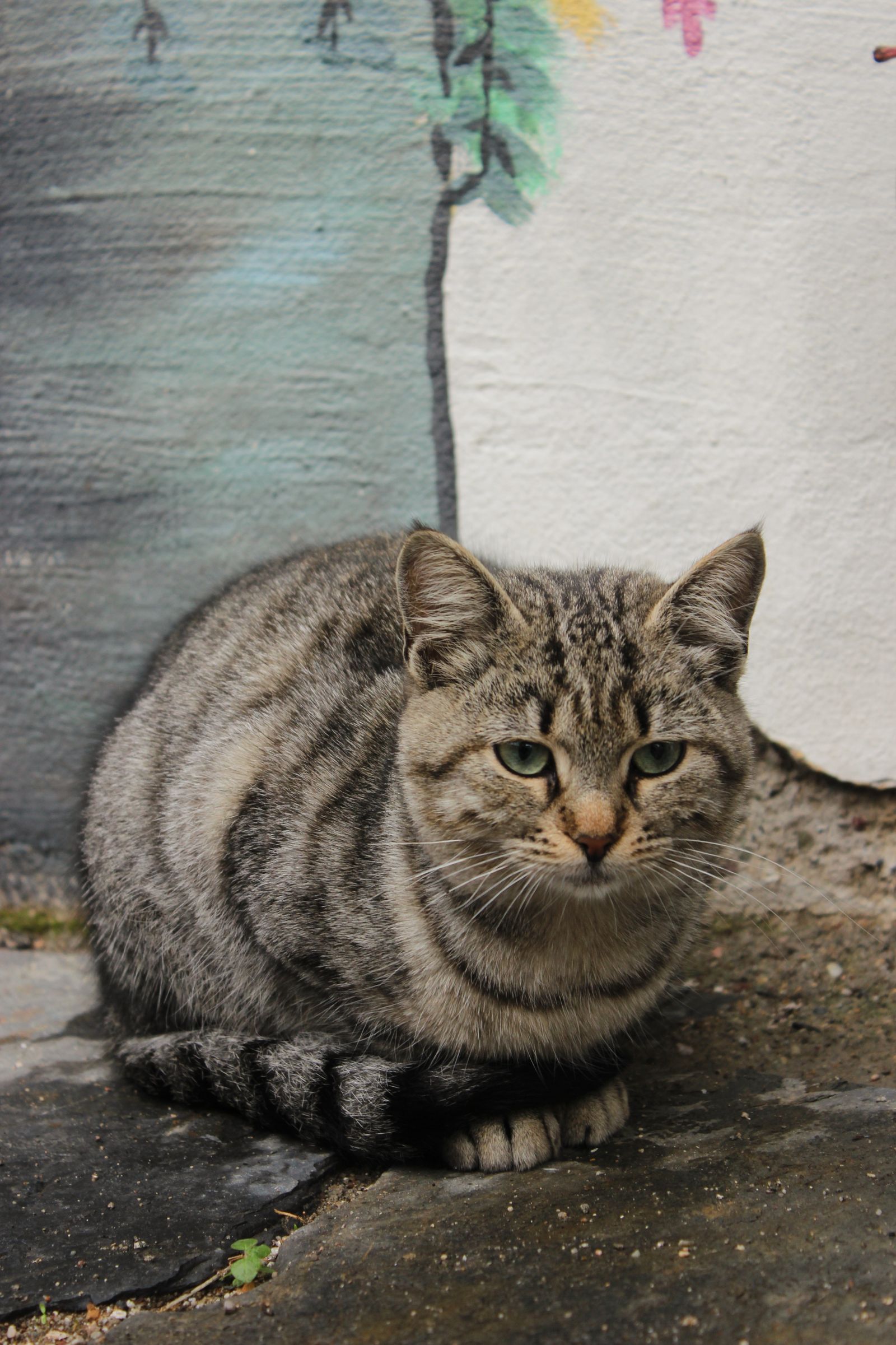
Scales tell you the number; the body condition score tells you whether it’s right. Run your hands over your cat:
- Ideal: you can feel the ribs easily under a thin layer of fat but not see them; there’s a visible waist behind the ribs from above and a slight tummy tuck from the side.
- Overweight: ribs are hard to feel, no waist, a rounded belly and a fat pad swinging under the tummy (a small “primordial pouch” is normal, a heavy swinging pouch is not).
- Underweight: ribs, spine and hip bones visible; an obvious hollow behind the ribs.
Weigh your cat at home monthly (weigh yourself holding the cat, then without) and adjust portions by about 10% at a time. Aim for weight loss of no more than 1 to 2% of body weight per week. Crash dieting a cat can cause fatty liver disease, which is life-threatening.
Common Feeding Mistakes
- Trusting the packet guide blindly: guides are written for active, intact cats and usually overfeed neutered indoor cats.
- Eyeballing portions: use scales.
- Ignoring treats and “just a bit” of human food: a single tablespoon of cheese is a tenth of a cat’s daily calories.
- Feeding for the weight the cat is rather than the weight it should be.
- Giving milk: most adult cats are lactose intolerant.
- Letting multiple cats share a bowl: the dominant cat gets fat and the shy one goes hungry.
Frequently Asked Questions
How much wet food should I feed my cat per day?
For an average 4.5 kg (10 lb) indoor cat, about 2½ standard 85 g pouches (roughly 200 kcal) a day if fed wet food only. Check your brand’s calories. Some pouches are 60 kcal, others over 100.
How much dry food should I feed my cat?
Usually 45 to 65 g a day for an average adult, depending on the food’s calorie density. Weigh it rather than using a cup.
Why is my cat always hungry?
Some cats are simply food-driven, but constant hunger with weight loss can indicate hyperthyroidism, diabetes, parasites or a poor-quality diet. If your cat is eating well yet losing weight, see your vet.
Can I feed my cat once a day?
Adult cats can cope, but it isn’t ideal. They may vomit bile on an empty stomach and are more likely to overeat. Twice a day is the sensible minimum.
How much should a cat eat by age?
Kittens: as much as they want in frequent small meals. Adults (1 to 7): around 20 kcal per lb of ideal weight. Seniors: often 10 to 20% less, unless they’re losing weight.
Final Thoughts
So, how much should you feed your cat? Roughly 20 calories per pound of ideal body weight, split into at least two meals, weighed rather than guessed, and adjusted every month based on what your hands tell you about your cat’s ribs and waist. Getting this right is one of the biggest things you can do for your cat’s health: lean cats live longer, and our guide on how long cats live explains why. And if your cat is off its food rather than hungry, check the signs your cat is stressed.
One thing worth checking beyond portion size is what is actually in the food. The FDA found eight lots of one cat food with almost no thiamine in 2026, and cats store so little of it that deficiency shows up within weeks. Here are the signs of thiamine deficiency in cats and the head posture that means call the vet today.
Food safety is the other half of the feeding question. If you are weighing up a raw diet, the FDA’s own testing found roughly one in four raw samples positive for Salmonella or Listeria, which we unpack in is raw pet food safe.
If the heavy metals headlines reached you too, the short version is that detection is not harm and the useful finding is narrower than the number suggests. We unpack it in heavy metals in cat food.