

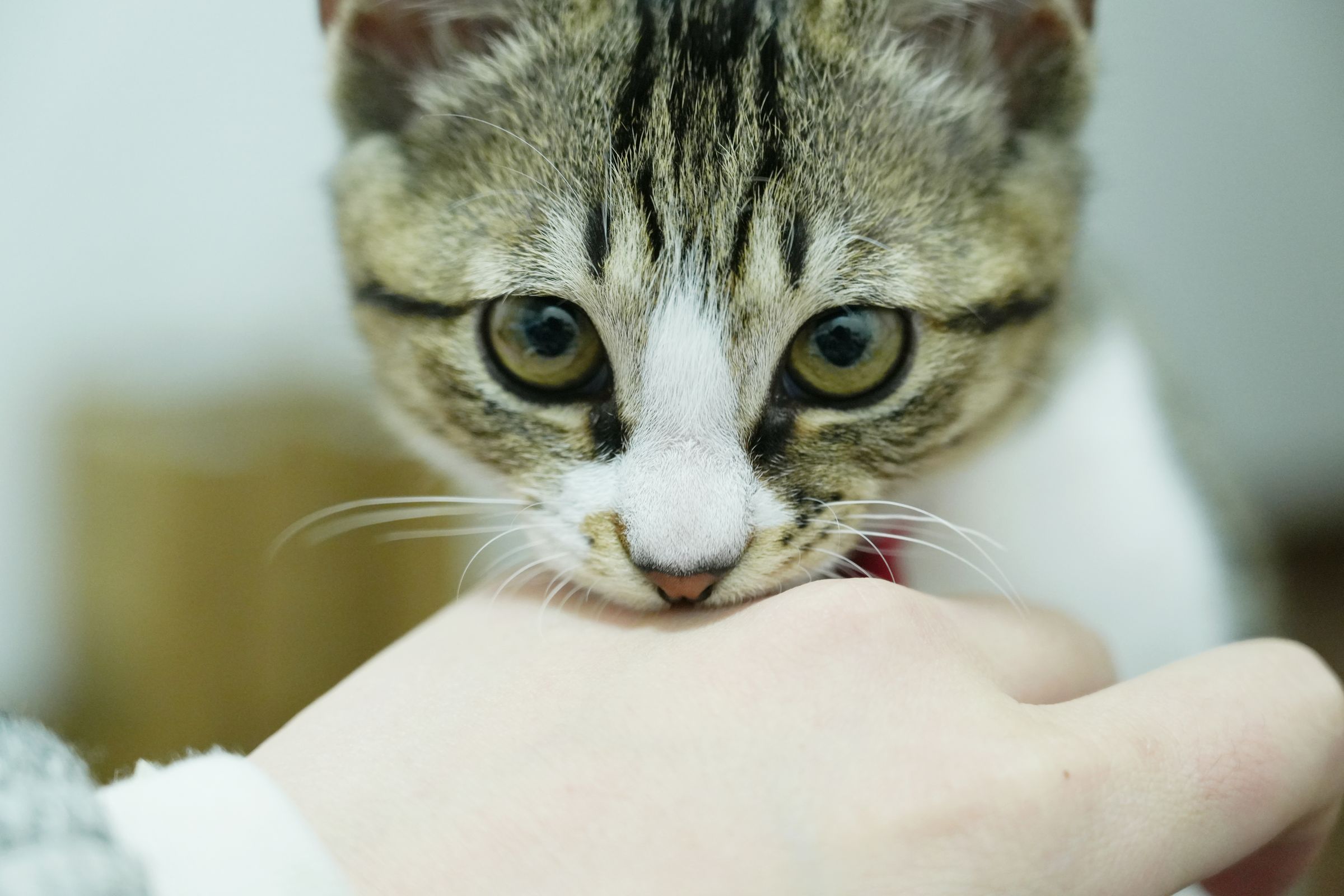
One minute your cat is purring on your lap, the next it’s clamped onto your hand. Or it nips your ankle as you walk past. Or it bites, hard, in the middle of a stroke it seemed to be enjoying. Why does my cat bite me? It’s one of the most common – and most confusing – questions cat owners ask. The good news: almost every bite has a clear reason, and most of them aren’t about aggression at all.
This guide explains the seven reasons cats bite their people, how to read the warning signs that come before a bite, what “love bites” actually mean, when biting is a medical or behavioural problem, and how to stop it without damaging your relationship with your cat.
7 Reasons Why Cats Bite
1. Petting-induced overstimulation (the “suddenly bites me while I stroke it” bite)
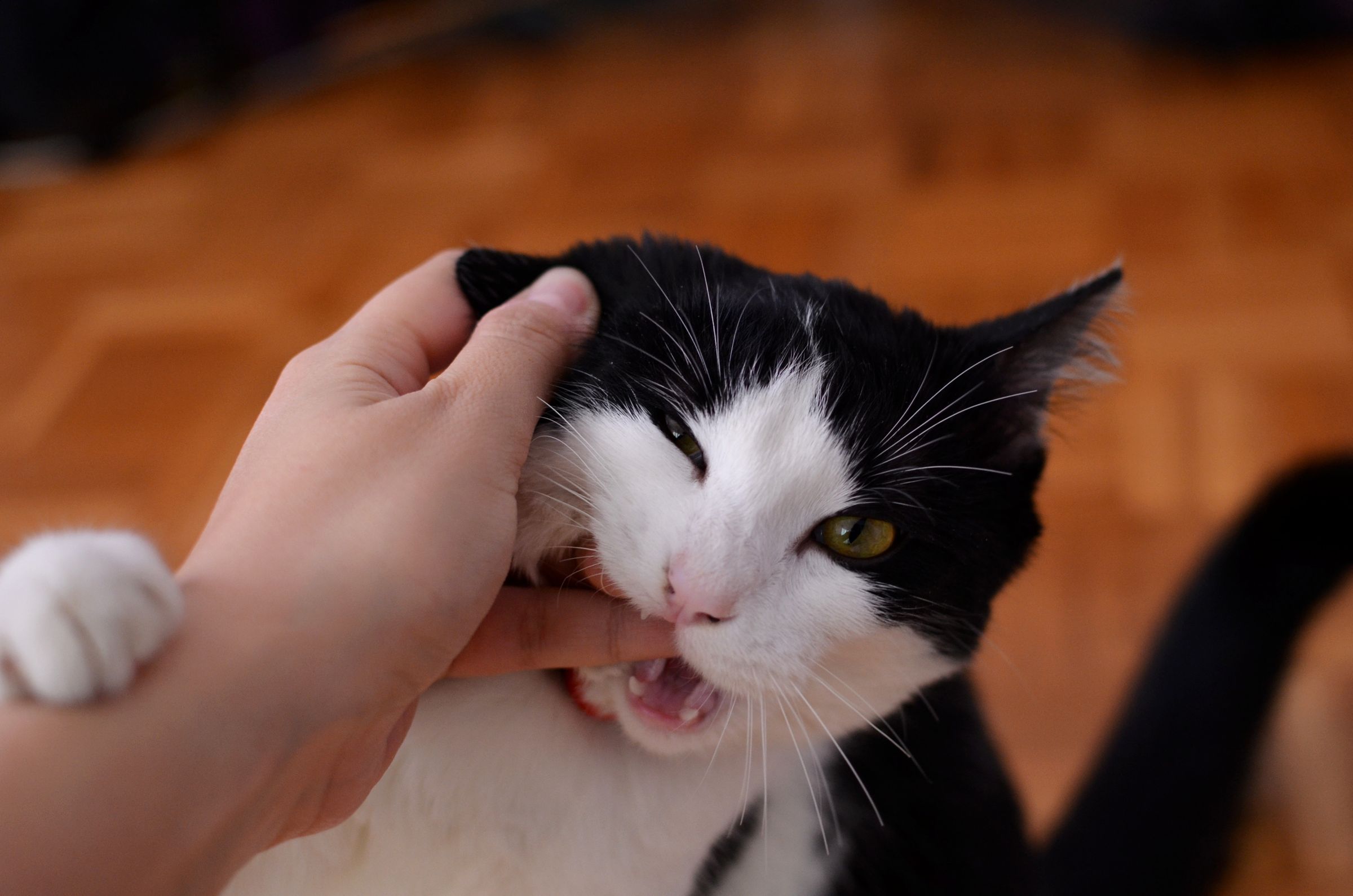
The most common bite of all. Your cat enjoys being stroked – until it doesn’t. Repetitive stroking builds up sensation until it becomes irritating, and the cat’s only way to say “enough” is teeth. It nearly always comes with warning signs first: a twitching or thumping tail, skin rippling along the back, ears flattening or rotating, dilated pupils, a sudden stillness, or the cat turning to look at your hand. Stop at the first sign and you’ll rarely be bitten.
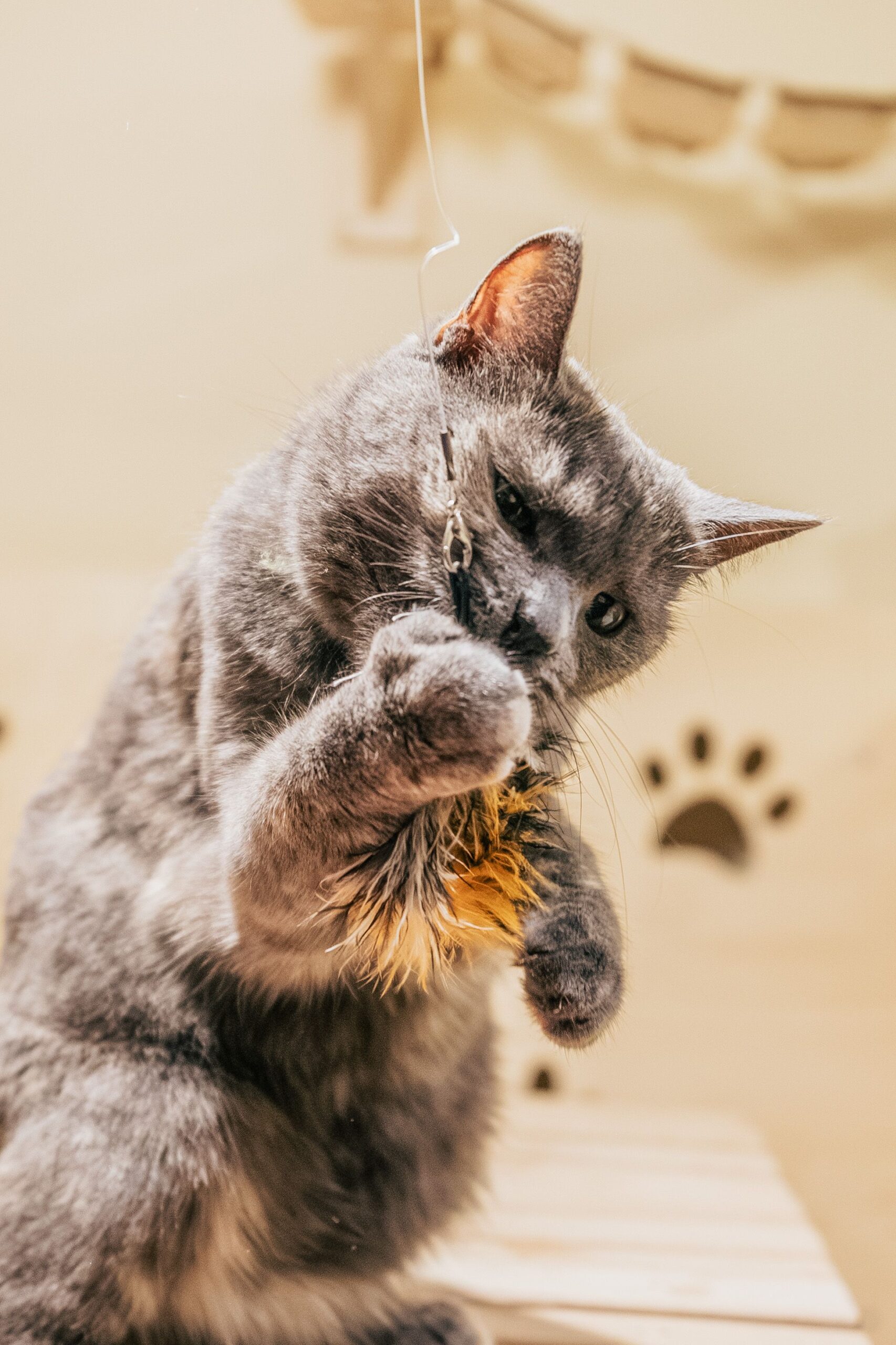
2. Play aggression
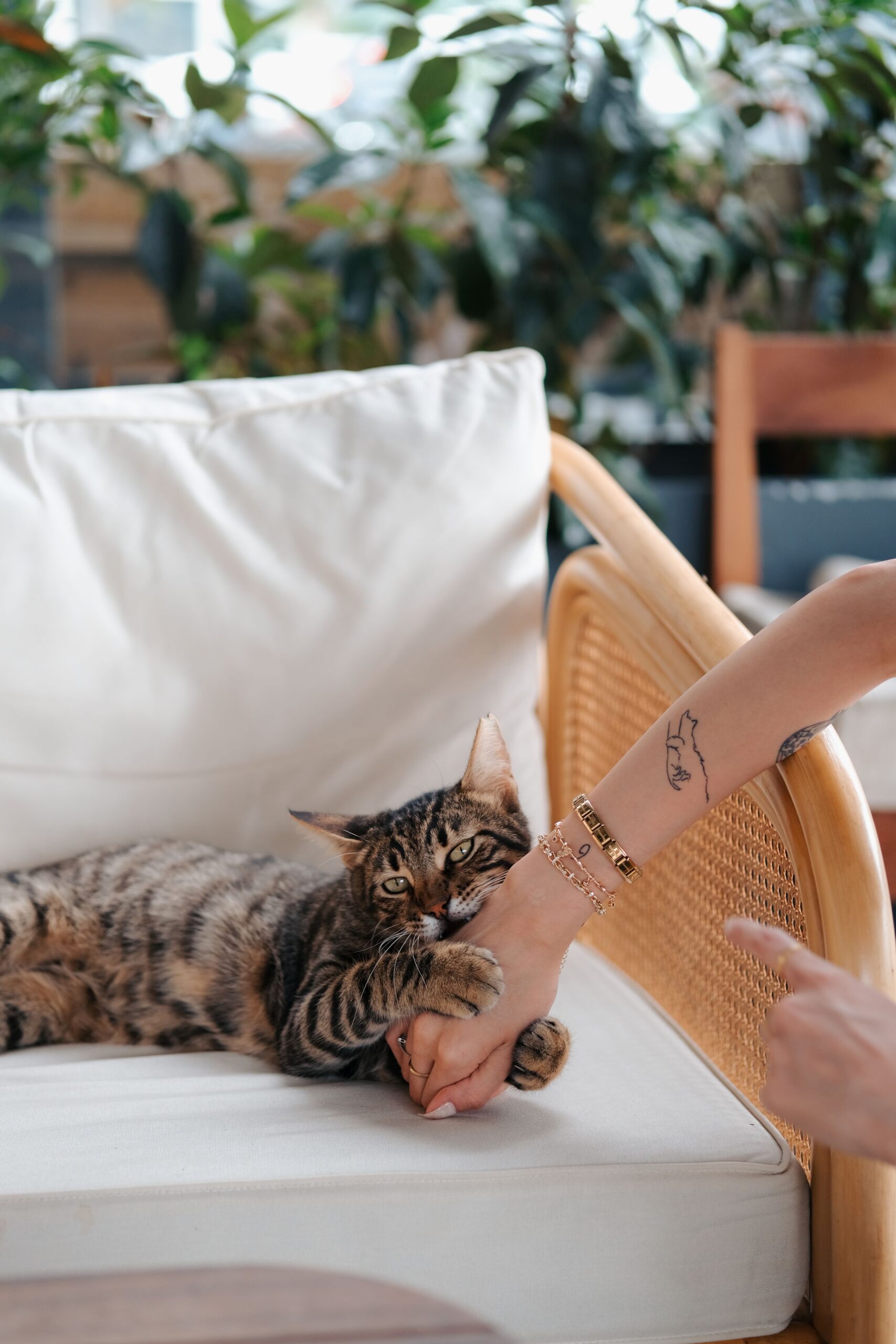
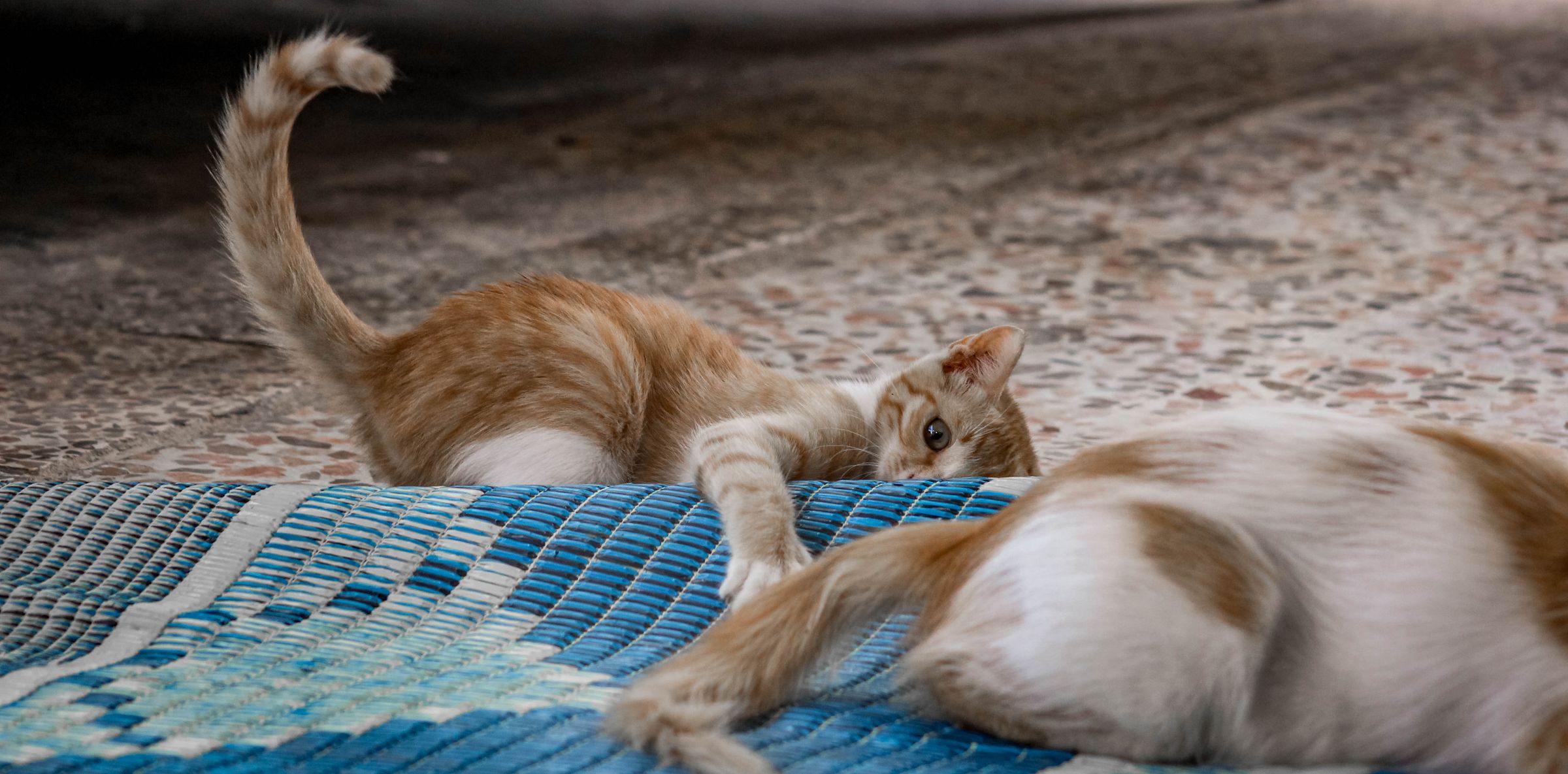
Kittens learn to hunt by pouncing on and biting their littermates – and their littermates bite back, which teaches them how hard is too hard. Kittens taken from the litter too early, or raised alone, never learn that lesson and grow into cats that ambush ankles and bite hands during play. Adult cats with too little stimulation do the same: your moving feet are the only prey available.
3. “Love bites”
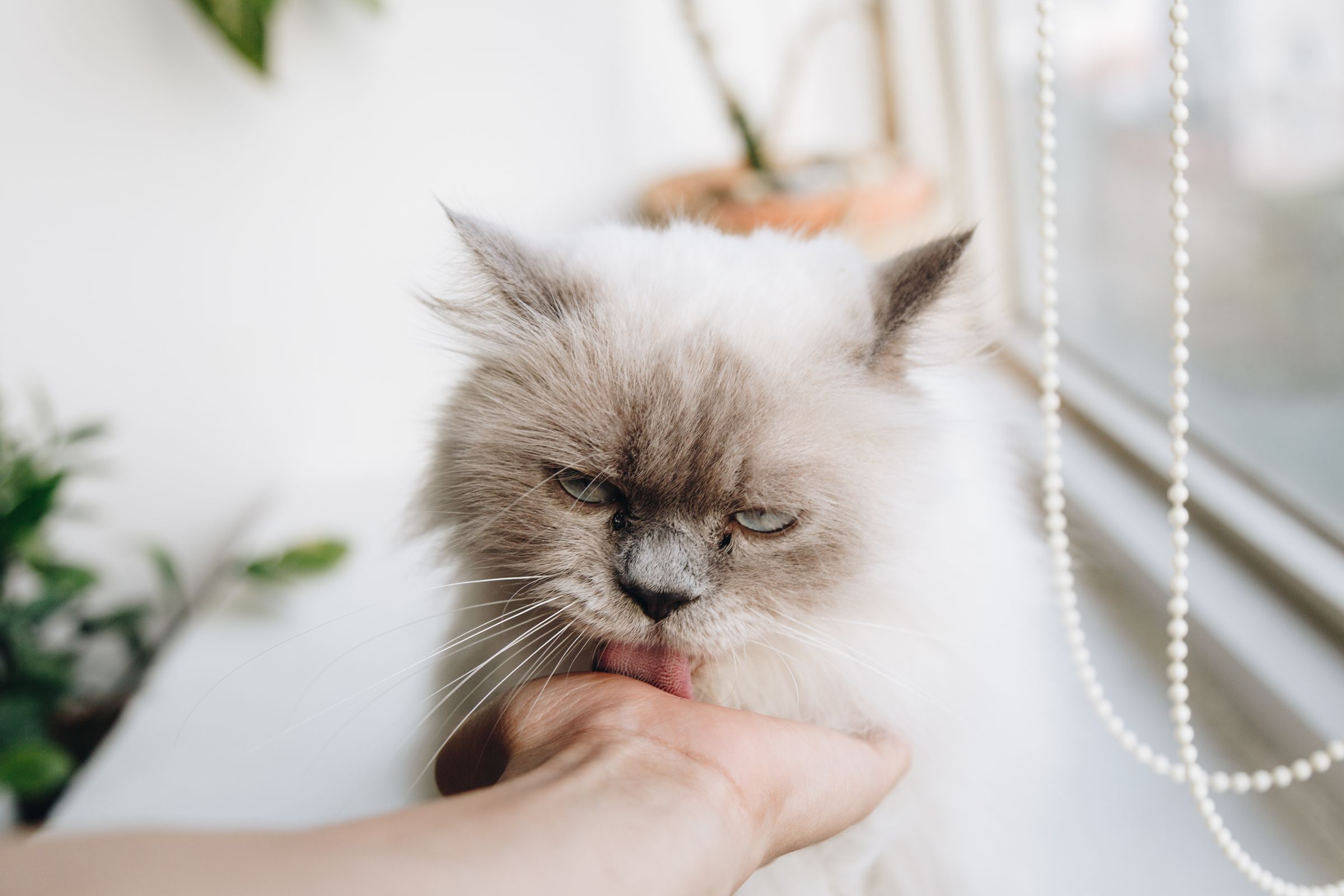
Gentle, soft-mouthed nibbles during cuddles, grooming or kneading are affection, not aggression. Cats groom each other with little nibbles, and a cat that licks your hand then gives it a soft bite is treating you like another cat. They don’t break the skin and they don’t come with tension or warning signs. Our guides to why cats lick you and why cats knead cover the same bonding behaviours.
4. Fear and defence
A cornered, startled or handled-against-its-will cat bites to protect itself. Classic triggers: being picked up when it doesn’t want to be, being restrained for medication or nail trimming, a child grabbing it, or a stranger reaching for it. The body language is unmistakable: crouched, ears flat, hissing, tail tucked or lashing.
5. Redirected aggression
Your cat sees another cat through the window, can’t get to it, and bites the nearest thing – which is you. Redirected bites are often the most serious because the cat is genuinely aroused and frustrated. If your cat is agitated by something outside, leave it alone until it calms down.
6. Pain or illness
A cat that bites when touched in a particular spot – the back, the belly, the base of the tail – may be in pain. Arthritis, dental disease, skin conditions, hyperthyroidism and abscesses all make cats bite when handled. A previously gentle cat that starts biting is a vet visit, not a behaviour problem.
7. Attention and communication
Some cats learn that a nip gets you to do things: feed them, open a door, stop typing and pay attention. If biting has ever worked, they’ll keep using it. It’s usually a firm-but-not-painful bite followed by a stare at whatever they want.
Warning Signs a Bite Is Coming
- Tail twitching, flicking or thumping
- Ears flattening, turning sideways or back
- Skin rippling or twitching along the back
- Pupils suddenly dilating
- Body going still or tense; the cat stops purring
- Head turning sharply towards your hand
- Low growl or a short meow of complaint
Learn your cat’s sequence and stop before the last step. Most petting bites are entirely avoidable.
How to Stop Your Cat Biting You
- Stop petting before the bite. Watch the tail and ears. Keep sessions short, stick to the head, cheeks and chin, and let the cat walk away when it wants to.
- Never play with your hands. Hands and feet are not toys. Use wand toys, feather teasers and thrown balls so the “prey” is always something other than you.
- Play more – properly. Two 10–15 minute wand-toy sessions a day, ending with a “catch” and a meal, drain the hunting energy that would otherwise go into your ankles.
- Go still, then leave. If bitten, don’t yank away (it triggers the chase reflex) and don’t shout or hit. Freeze, gently withdraw, and end the interaction. The cat learns that biting makes the fun stop.
- Redirect kittens. The moment teeth touch skin, swap in a toy. Consistency over a few weeks teaches bite inhibition.
- Don’t reward the “attention” nip. If your cat bites to be fed, wait until it’s calm before you feed it – otherwise you’ve trained it.
- Manage triggers. Block the window view if outside cats set your cat off, give it escape routes and high perches, and teach children to stroke gently and never grab.
- Consider a second cat – carefully. A lone, under-stimulated young cat sometimes does better with a playmate, but introductions must be slow.
- See the vet if it’s new. Sudden biting in an adult cat means pain until proven otherwise.
What to Do If a Cat Bite Breaks the Skin
Cat bites are small but deep, and they get infected far more often than dog bites – up to half of untreated cat bites to the hand become infected. Wash the wound thoroughly with soap and running water for several minutes, apply an antiseptic, and cover it. See a doctor the same day if the bite is on the hand, near a joint, is deep, or if you notice redness, swelling, heat or pain spreading within 24 hours – many need antibiotics. Anyone with a weakened immune system, or whose tetanus jab is out of date, should be seen promptly regardless.
Frequently Asked Questions
Why does my cat bite me gently?
Soft, unhurried nibbles during cuddles are “love bites” – affectionate grooming behaviour. If they’re gentle and there’s no tension in the cat’s body, it’s a compliment.
Why does my cat bite me then lick me?
That’s grooming. Cats nibble each other’s fur to work out tangles, then lick. A bite-then-lick on your hand or arm means you’ve been accepted as part of the family.
Why does my cat bite my feet and ankles?
Play aggression. Moving feet look like prey, especially to young, bored or single cats. More scheduled play and never letting feet be a toy fixes it.
Why does my cat bite me when I stop petting?
Attention biting – the nip means “don’t stop”. Give the cat a moment, then resume only when it’s calm, so the bite doesn’t become the way to ask.
Why does my cat bite me and no one else?
Usually because you’re the one who plays roughly with it, pets it longest, or has (unintentionally) rewarded biting before. It can also mean you’re the person it feels safest expressing itself with.
Is it normal for cats to bite?
Yes – biting is a normal part of cat communication and play. The goal isn’t a cat that never uses its mouth; it’s a cat that has learned how gently to do it, and an owner who can read the signs.
Final Thoughts
So, why does my cat bite me? Most often because you missed the warning signs, because play got out of hand, or because a soft nibble was actually a compliment. Read the tail, keep hands out of play, give your cat enough to hunt, and see the vet if biting is new. Do that, and the biting fades – and what’s left is a cat that trusts you enough to tell you what it needs. For more on cat behaviour, read why do cats purr? and 8 signs your cat is stressed.