

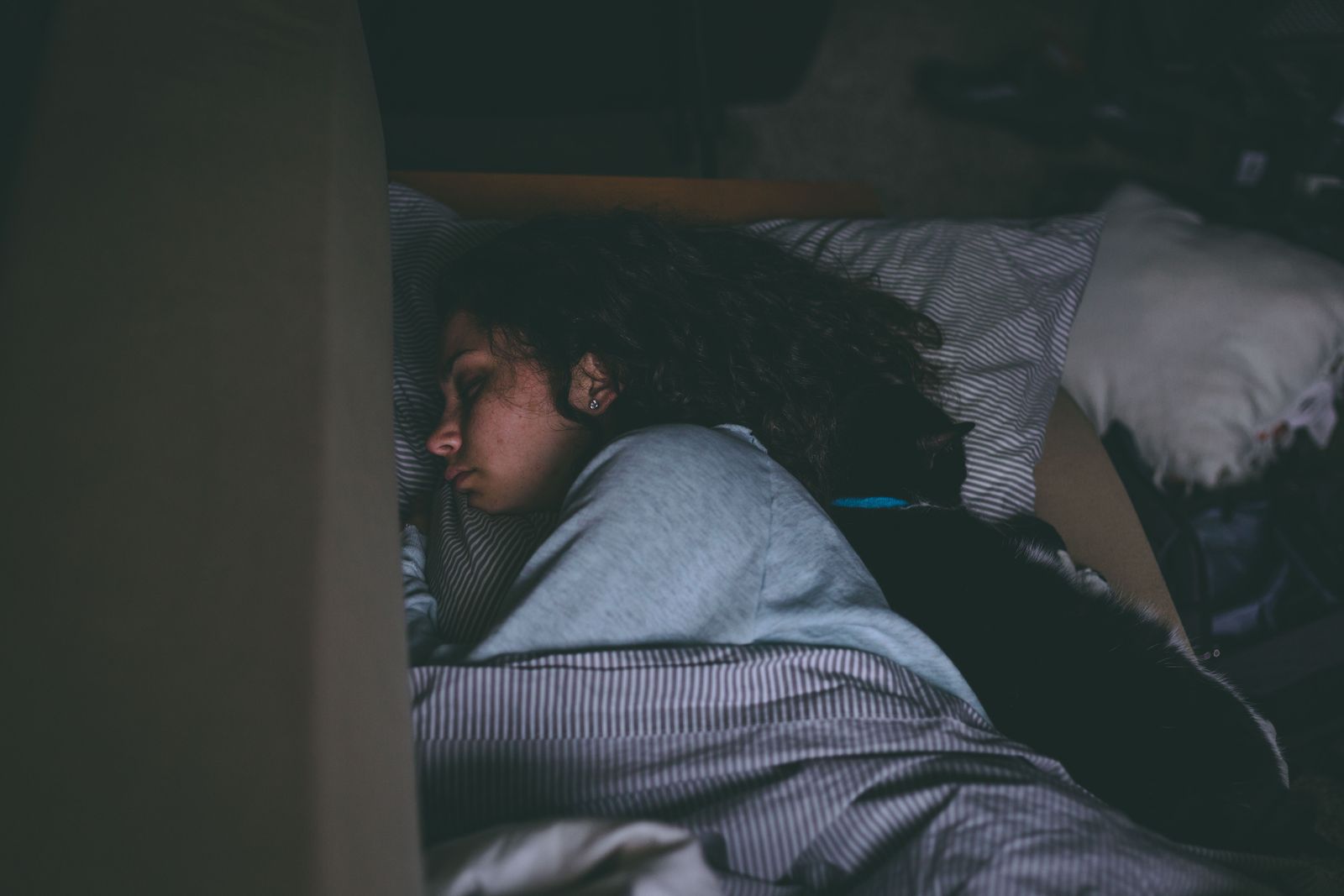
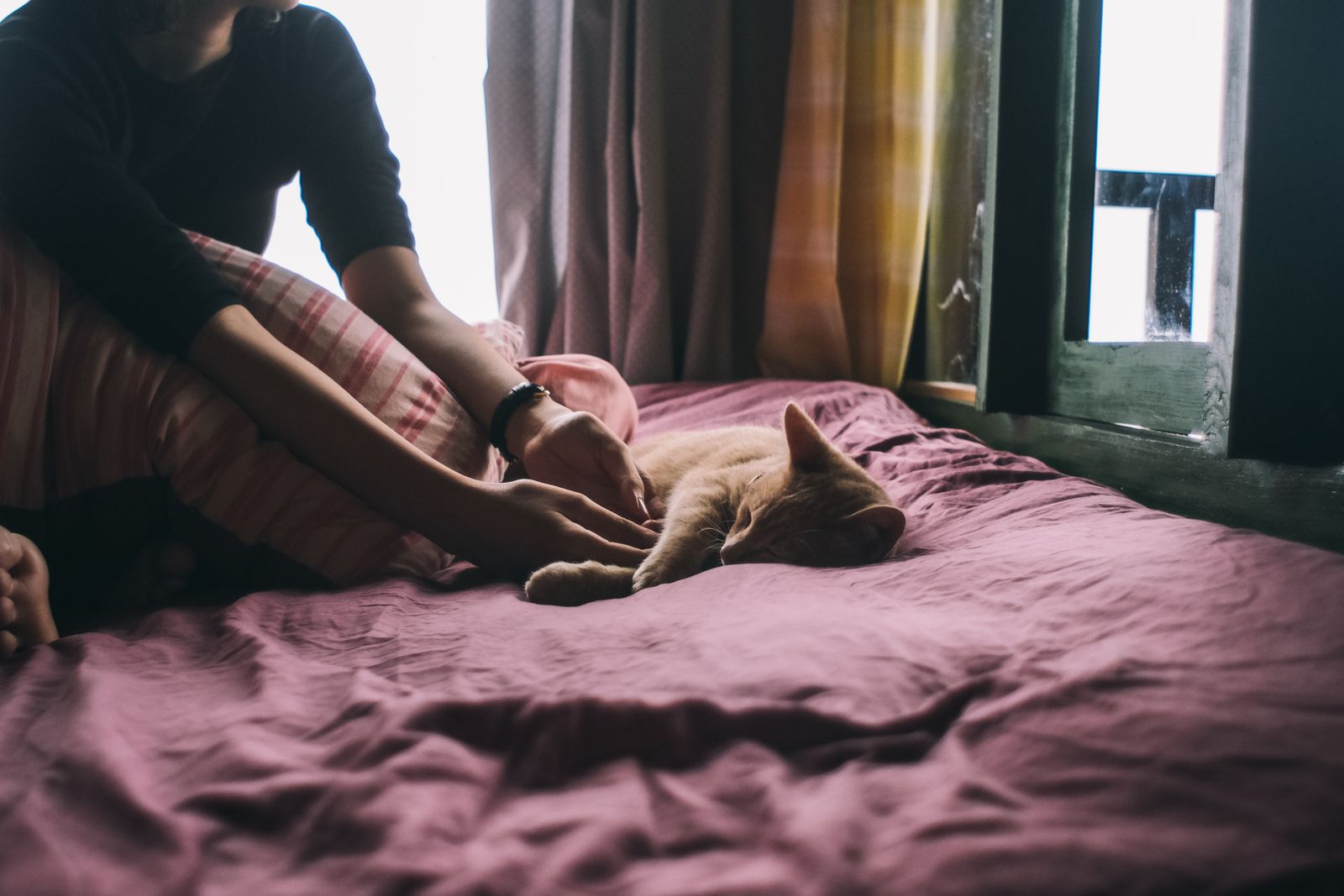
It’s 2 a.m., you’re pinned to the mattress, and a warm, purring weight has settled on your chest – or your legs, or, on a really good night, your face. Why does my cat sleep on me? If you’ve ever asked that while trying not to move, here’s the good news: a cat who chooses to sleep on you is paying you the highest compliment it has. Cats are at their most vulnerable when asleep, and they do not sleep on things they don’t trust.
But there’s more to it than love. Warmth, scent, security, routine and a little bit of ownership all play a part – and where your cat sleeps on you says something too. This guide covers the seven real reasons cats sleep on people, what the spot they pick means, whether it’s healthy, and how to share a bed with a cat and still get some sleep.
7 Reasons Why Cats Sleep on You
1. You’re warm
Cats run hotter than we do – a normal feline body temperature is 38–39°C (100.5–102.5°F) – and they lose heat quickly through their thin coats, so they’re always chasing warmth. You are a large, reliable, self-heating radiator. That’s why cats gravitate to your chest, lap and the crook of your knees, and why the sleeping-on-you habit often ramps up in winter.
2. You make them feel safe
Cats spend 12–16 hours a day asleep, and for a small predator that’s a long time to be vulnerable. In the wild, cats sleep in high, hidden or defended spots. In your home, the safest place on offer is next to the biggest, most trusted animal in the house – you. A cat sleeping on you is saying “I trust you to keep watch.”
3. They’re bonding with you
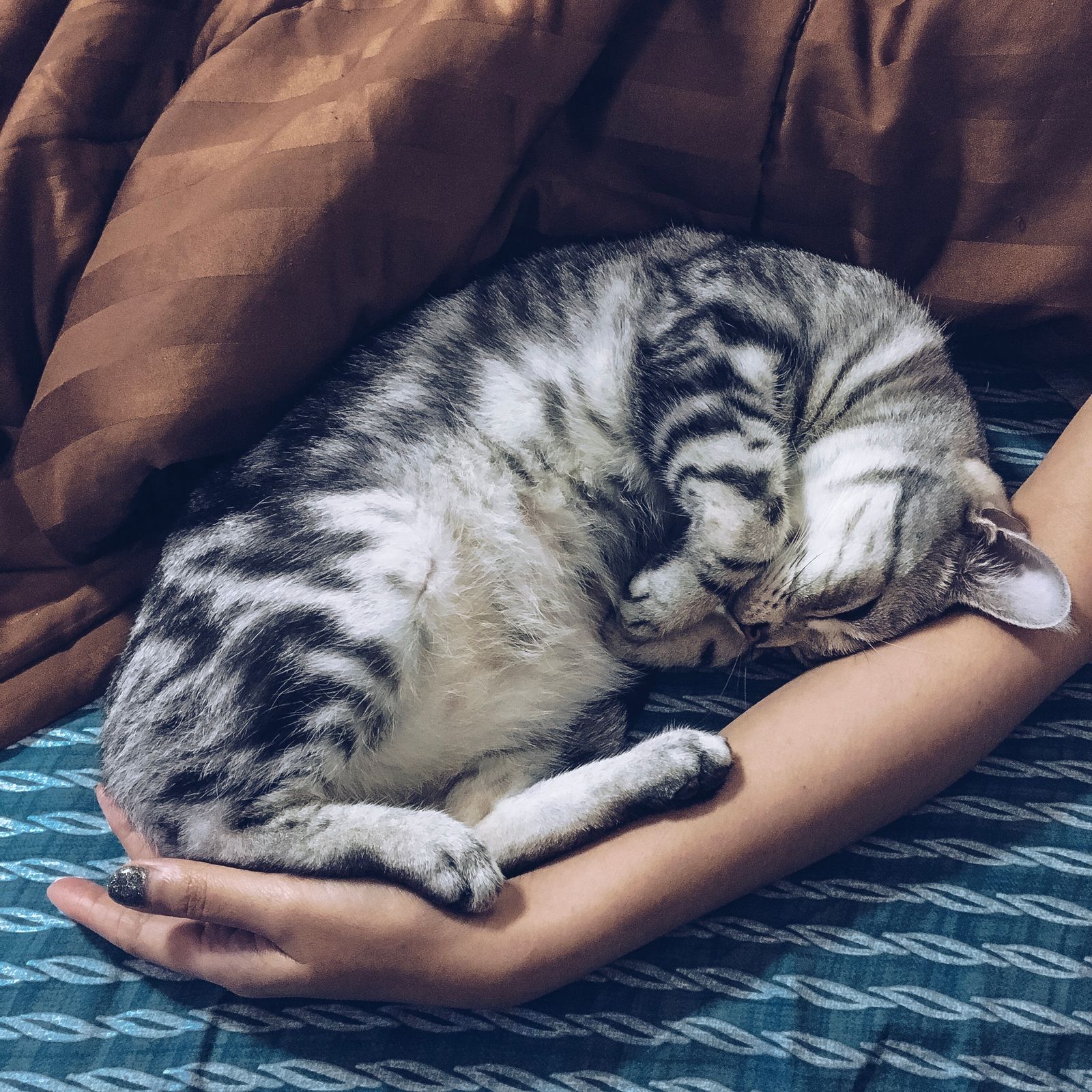
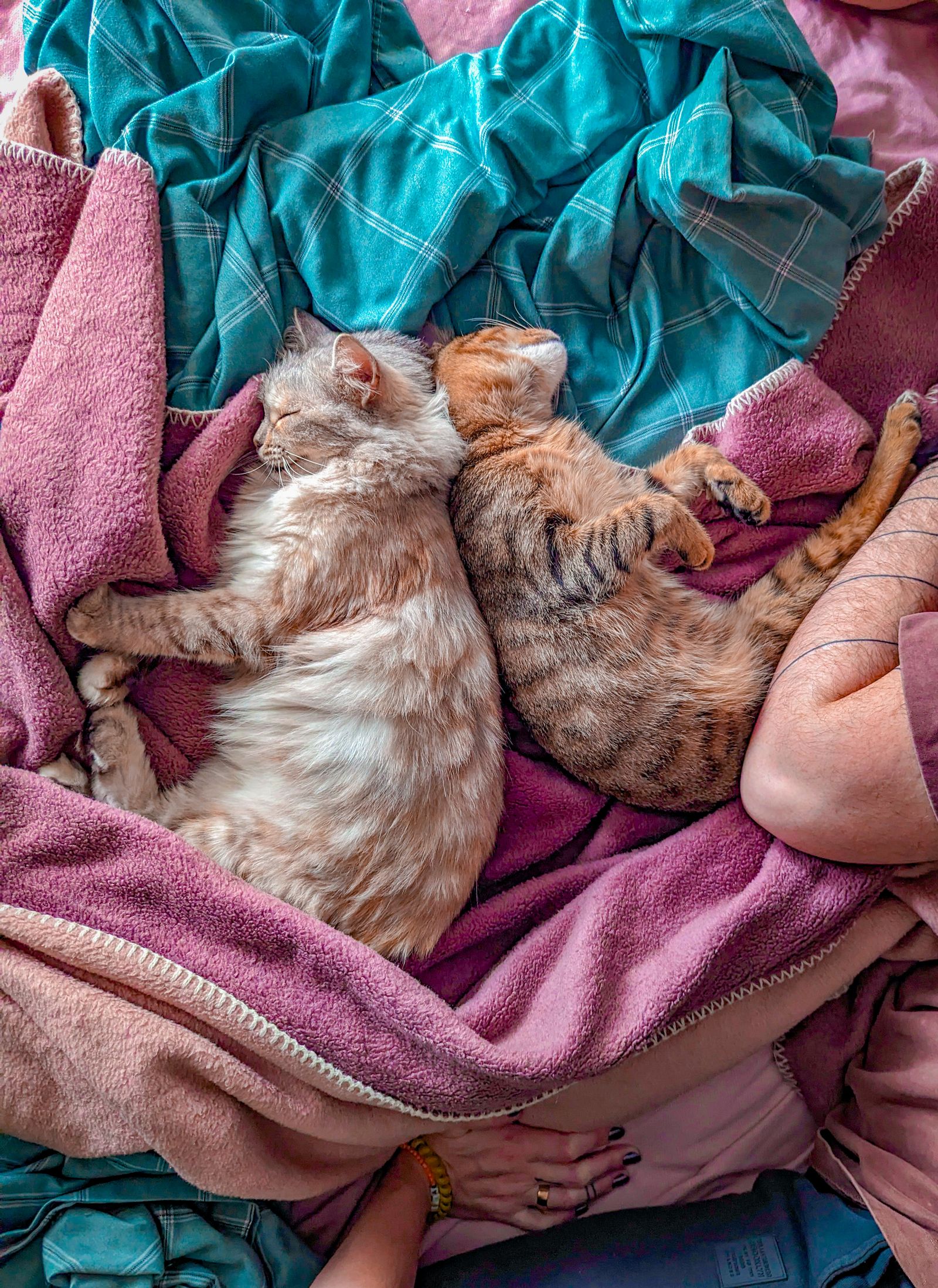
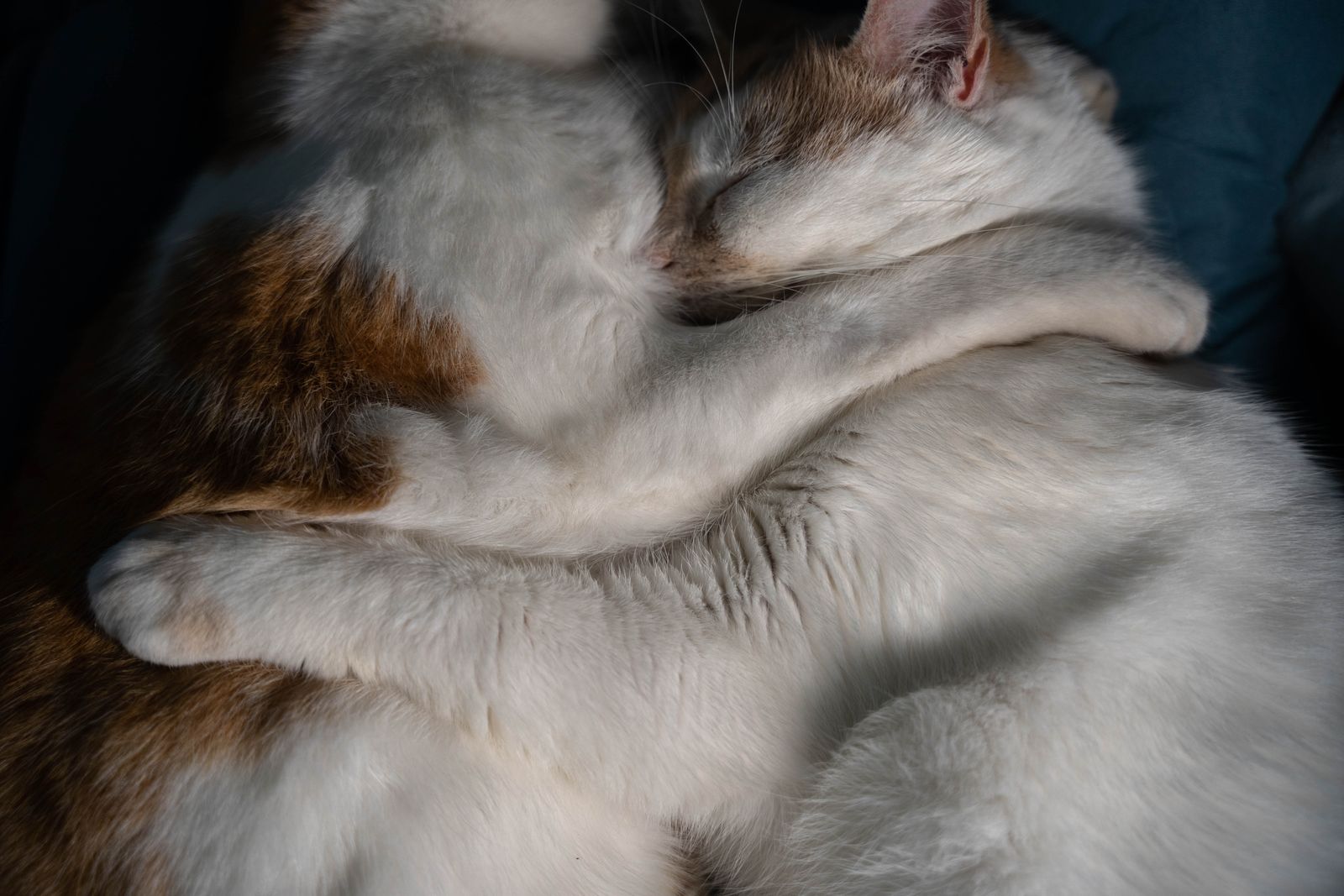
Cats that live together and get along sleep in a heap – behaviourists call it pillowing. It’s how bonded cats share warmth, scent and companionship. When your cat curls up on you, it’s including you in that inner circle. The same instinct is behind why your cat licks you and purrs when you stroke it.
4. You smell like home
Scent is how cats understand the world. Your skin, hair and bedding are saturated with your smell, and after a while, with theirs too. Sleeping on you lets your cat top up that shared “family scent” – and mark you as its territory. Cats have scent glands on their cheeks, paws and flanks, so all that kneading and cheek-rubbing before settling down is your cat signing its name on you.
5. It’s the routine
Cats love predictability. If you go to bed at the same time each night and stay still for eight hours, you’ve become the most dependable sleeping spot in the house. Many cats also learn that sleeping on you means being first in line for breakfast.
6. Your heartbeat and breathing are soothing
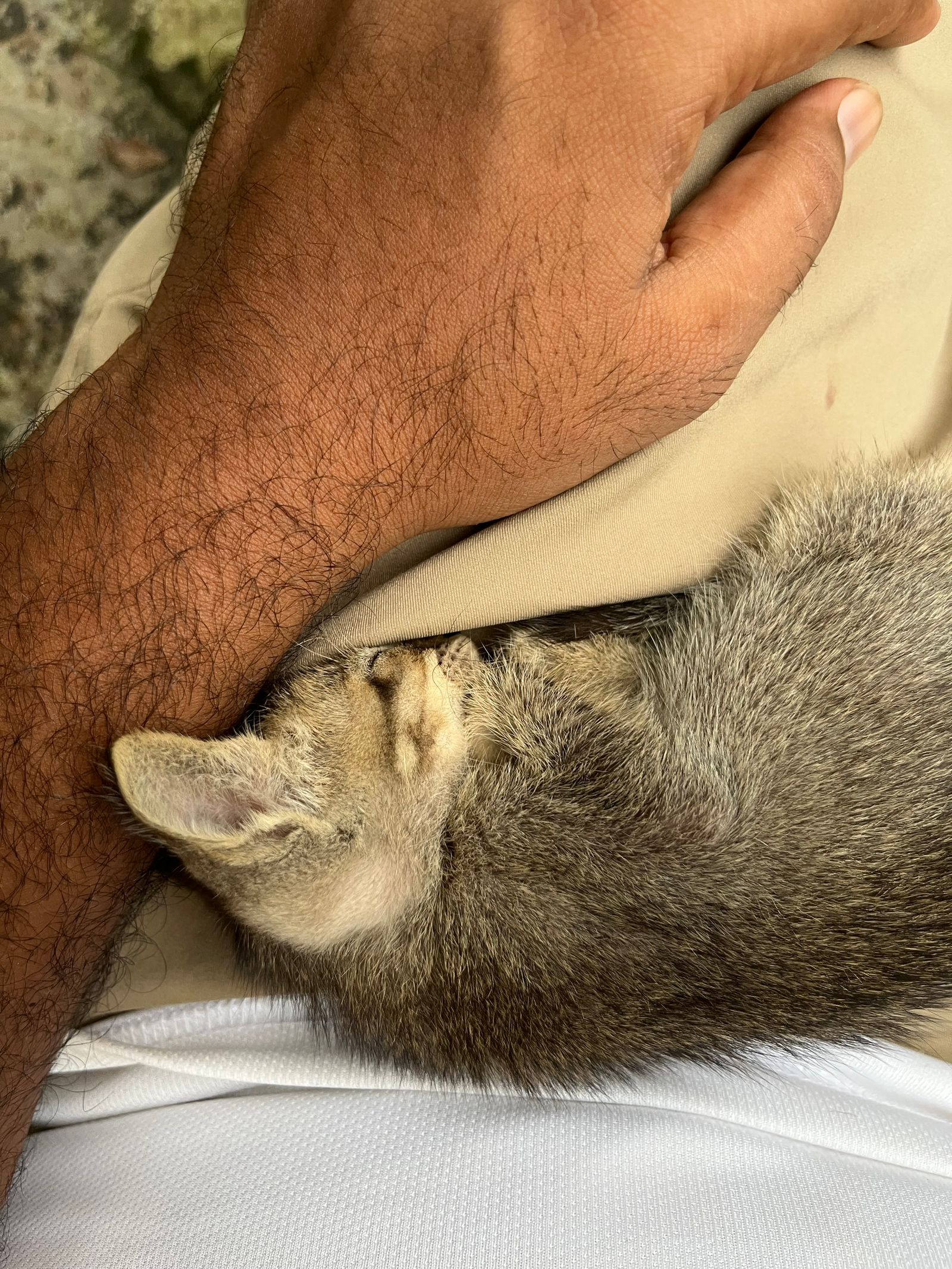
The slow rhythm of a resting human’s heartbeat and breathing has a calming effect on cats – it mimics the feeling of being curled up with mum and littermates as a kitten. This is why the chest is such a popular spot, and why cats often start purring the moment they settle there.
7. They’re claiming you
In a multi-cat or multi-person household, the cat who sleeps on you may be making a point. Sleeping on a resource is a quiet way of saying “mine” – and to your cat, you are a resource: warmth, food, safety and affection all in one.
What It Means Where Your Cat Sleeps on You
- On your chest – warmth plus heartbeat. The most affectionate spot; your cat wants to be as close as possible.
- On your head or pillow – your head is the warmest part of you and moves the least at night. Some cats also love the smell of your hair.
- On your lap – comfort and attention. It’s the daytime version of the chest.
- Between your legs or in the crook of your knees – a warm, walled “nest” that feels protected on three sides.
- On your feet – affection with an escape route. Cats that sleep at the foot of the bed like you nearby but want to be able to leave quickly. Common with more independent or slightly anxious cats.
- Back to you, facing away – not a snub. Cats guard the direction they think danger might come from and trust you to cover the rest.
Is It Good for You – and for Your Cat?
For you: mostly yes. Sleeping with a purring cat lowers stress and anxiety for many people, and a cat’s purr (25–150 Hz) is genuinely relaxing. The downsides are real, though: disrupted sleep (cats are crepuscular – most active at dawn and dusk), allergies, and a small hygiene risk if your cat uses a litter tray then walks on your pillow. Anyone with asthma, severe allergies or a weakened immune system should think twice. Babies and toddlers should never share a bed with a cat.
For your cat: it’s a healthy sign of a secure, bonded cat. The only concern is if the sleeping-on-you is sudden and intense: a cat that suddenly won’t leave you alone may be anxious, cold, unwell or in pain. Cats also seek out warmth more when they’re older, arthritic or losing weight, so a new obsession with your lap in a senior cat is worth a vet check – see our guide to how long cats live and how to help them age well.
Why Does My Cat Sleep on Me and Not My Partner?
This one causes arguments in a lot of households. The usual reasons: you’re warmer, you move less in your sleep, you feed the cat, you smell more familiar, or you were simply the person the cat bonded with first. Cats also tend to prefer people who let them approach on their own terms rather than grabbing them for cuddles. If your partner wants a turn, the fix is patience, treats, and lying still.
How to Sleep Well With a Cat on You
- Play before bed. A 10–15 minute wand-toy session followed by a meal mimics the hunt-eat-groom-sleep cycle and takes the edge off the 4 a.m. zoomies.
- Feed the last meal late. A full cat is a sleepy cat. An automatic feeder set for early morning stops the dawn wake-up call.
- Offer a heated bed on the bed. A self-warming pad by your feet gives your cat the warmth without the chest-crushing.
- Keep the litter tray clean and wipe paws if hygiene worries you.
- Wash bedding weekly if you’re allergy-prone, and keep the cat off the pillow.
- Don’t reward 3 a.m. wake-ups. If you get up and feed the cat, you’ve trained it. Stay still; it passes.
How to Stop Your Cat Sleeping on You (If You Need To)
If it’s genuinely ruining your sleep, don’t just shut the cat out abruptly – that causes crying at the door and stress. Instead, make somewhere else better: a heated cat bed on a chair next to the bed, a blanket that smells of you, and a treat there at bedtime. Move it gradually further away if you want the cat out of the room altogether. Most cats accept a “next to you” compromise within a couple of weeks.
Frequently Asked Questions
Why does my cat sleep on my chest?
Warmth, your heartbeat, and closeness. The chest is the warmest, most rhythmic part of you – it feels like being curled up with mum. It’s the strongest sign of affection a sleeping cat can give.
Why does my cat sleep on my head?
Your head is the warmest, stillest part of you at night, and your hair carries your scent. Cats that sleep on heads also like the elevated position – it’s the highest point on the bed.
Why does my cat sleep on my feet?
It wants to be near you but keep an exit route. Foot-sleepers are often slightly more independent or cautious cats. It’s still affection – just affection with a plan B.
Why does my cat sleep on me when I’m sick?
Partly warmth – fevers make you a better radiator – and partly because you’re lying still for longer. Cats also pick up on changes in your scent, breathing and behaviour, and many seem to respond by sticking close.
Is it OK to let my cat sleep in my bed?
For healthy adults, yes, as long as your cat is flea-treated, wormed and using a clean litter tray. Keep cats out of babies’ and toddlers’ beds, and out of the bedroom if you have asthma or severe allergies.
Does my cat sleeping on me mean it loves me?
Yes. Cats don’t sleep on things they don’t trust, and they don’t seek out contact with people they don’t like. It’s one of the clearest signs of a bonded cat.
Final Thoughts
So, why does my cat sleep on me? Because you’re warm, you’re safe, you smell like home, and – in your cat’s eyes – you’re family. Enjoy it, set a bedtime routine so you both actually sleep, and only worry if the clinginess is new and sudden. For more on what your cat is really telling you, read why does my cat lick me? and 8 signs your cat is stressed.