
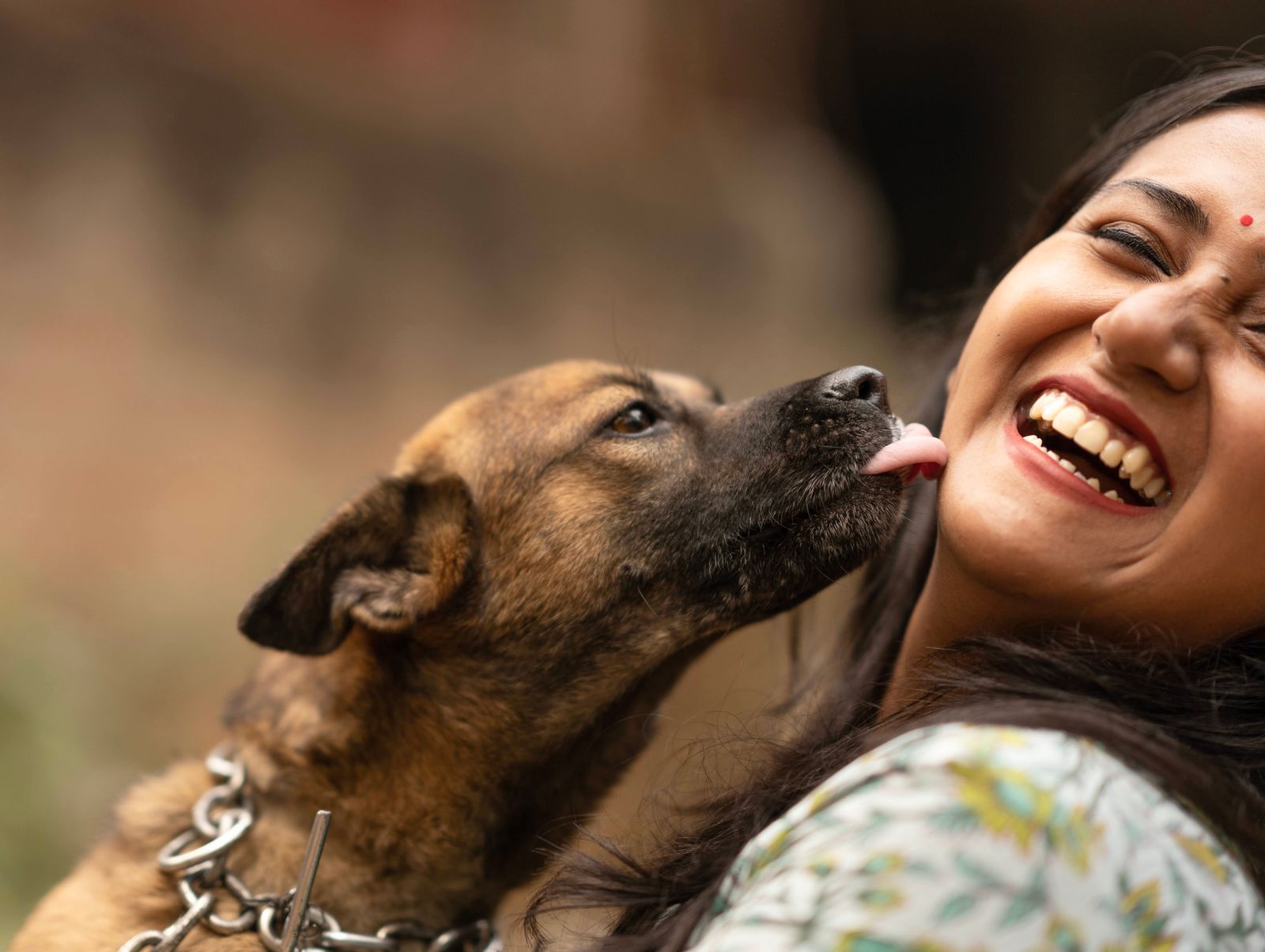
You sit down, your dog trots over, and within seconds a warm, wet tongue is working its way across your hand, your arm or – if you let it – your entire face. Why does my dog lick me? It’s one of the most searched questions dog owners ask, and the short answer is reassuring: most of the time your dog is telling you it loves you. But licking is also how dogs communicate hunger, stress, curiosity and, occasionally, that something isn’t right.
This guide covers the nine real reasons dogs lick people, what it means when the licking is aimed at your face, hands or feet, whether “dog kisses” are safe, when licking is a warning sign, and how to gently reduce it if it’s getting a bit much.
9 Reasons Why Dogs Lick You
1. Affection – it really is a “dog kiss”
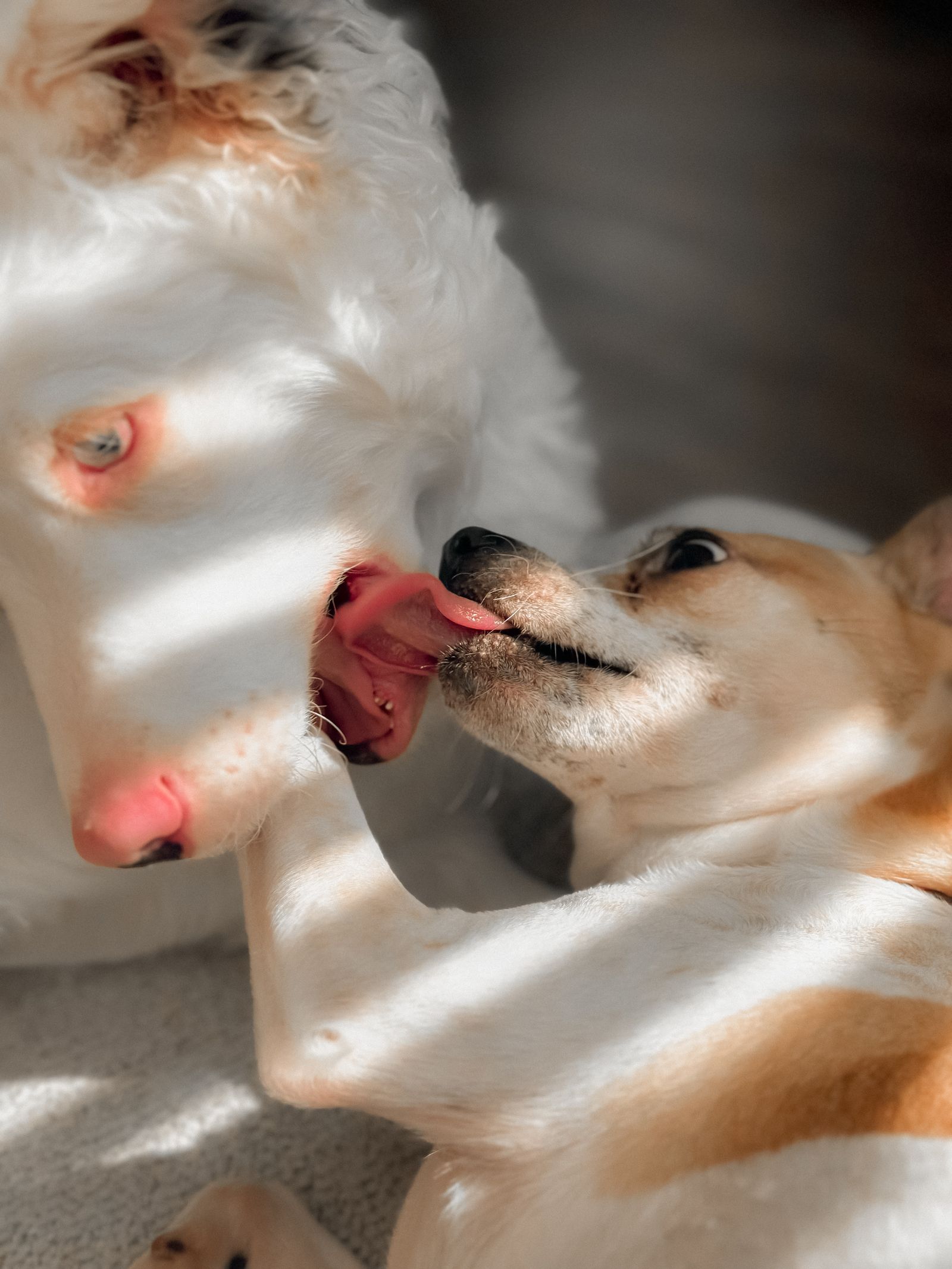
The most common reason by far. Licking releases endorphins in a dog’s brain, so it feels good, and dogs learn early that licking the people they love earns cuddles, attention and warm words. Mother dogs lick their puppies from the moment they’re born, and adult dogs lick pack members they’re bonded to. When your dog licks you, it’s treating you as family.
2. Instinct they were born with
Puppies lick their mother’s mouth to ask her to regurgitate food – a behaviour wolves still show in the wild. That instinct never fully disappears. A dog that licks your face or mouth, especially when you’ve just eaten, is running a very old piece of programming.
3. You taste good
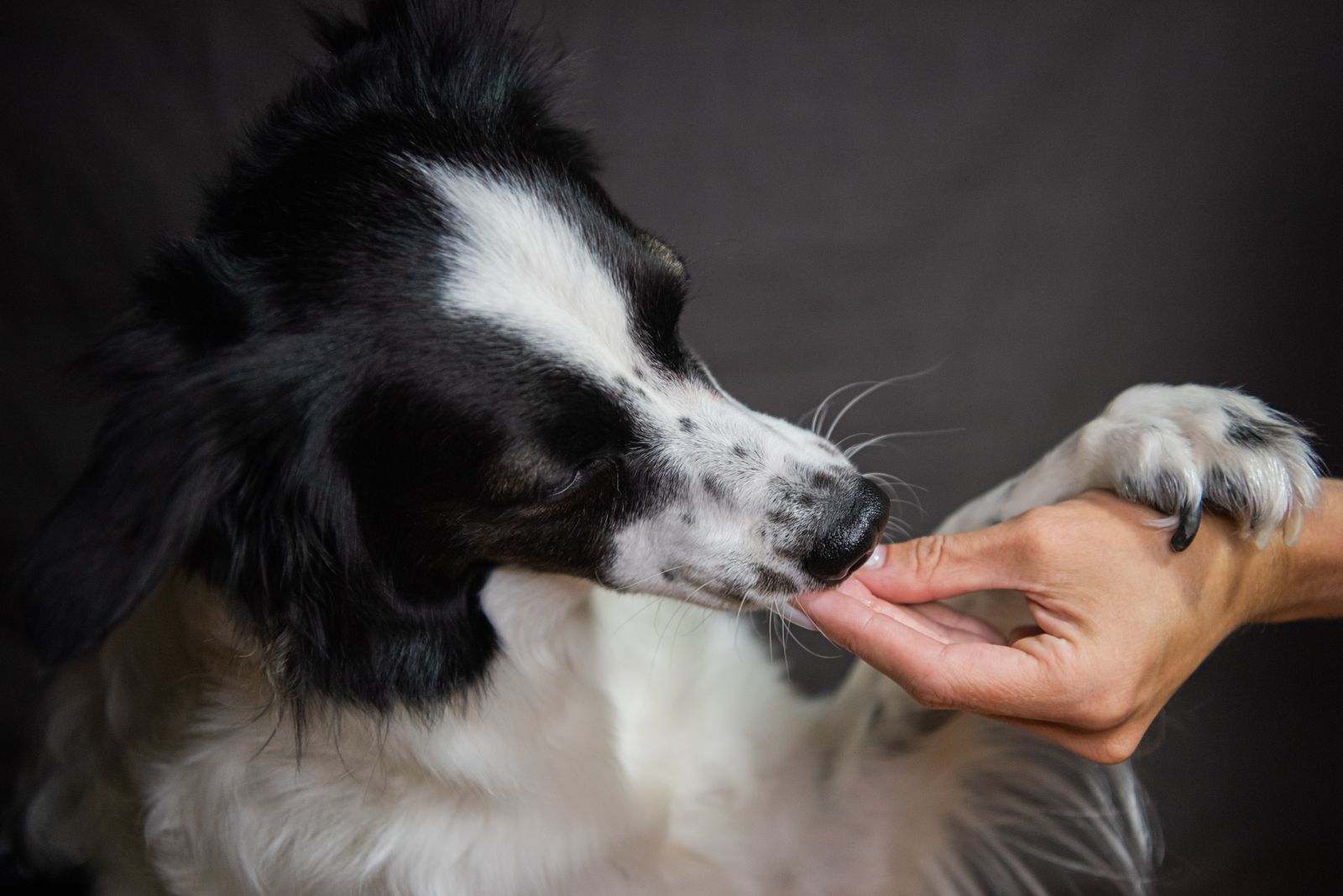
Human skin is salty, and after a workout, a hot day or a meal it carries all sorts of interesting flavours: sweat, food residue, hand cream, sun lotion, the dog next door. Dogs have far fewer taste buds than we do (around 1,700 versus our 9,000), but a superb nose, and licking is how they “read” the smells on your skin.
4. Gathering information
Dogs have a second scent organ – the Jacobson’s (vomeronasal) organ – in the roof of the mouth. Licking pushes scent molecules towards it, giving your dog a chemical read-out of where you’ve been, who you’ve touched and how you’re feeling. That’s why many dogs lick you more intensely when you come home.
5. Seeking attention
If licking gets a laugh, a stroke, eye contact or a “stop it!” (which is still attention), a smart dog will repeat it. Dogs that lick you when you’re on your phone, working or watching TV have usually learned that a lick is the fastest way to get you to look at them.
6. Empathy and comfort
Studies have found that dogs are more likely to approach and lick people who are crying or upset than people who are humming or talking normally. If your dog licks you when you’re sad, stressed or unwell, it’s almost certainly trying to comfort you – the same way it would soothe a distressed pack member.
7. Asking for something
Licking around meal times, near the door, or beside an empty water bowl is a request. Dogs quickly learn which behaviours get results, and a lick followed by a stare at the treat cupboard is not subtle.
8. Stress, anxiety or boredom
Licking is self-soothing, so an anxious or under-stimulated dog may lick you, the sofa, the floor or itself far more than usual. Watch for other stress signals: yawning, lip-licking, whale eye (whites of the eyes showing), pacing, panting when it isn’t hot. New babies, house moves, fireworks and long hours alone are common triggers. More exercise, mental enrichment (puzzle feeders, sniff walks) and a predictable routine usually help.
9. A medical problem
Less commonly, a sudden increase in licking – of you, of objects, or of the dog’s own paws – points to something physical: nausea (dogs lick and drool when they feel sick), dental pain, allergies, an itchy skin condition, arthritis, or in older dogs, cognitive decline. Compulsive licking that the dog can’t be distracted from deserves a vet visit.
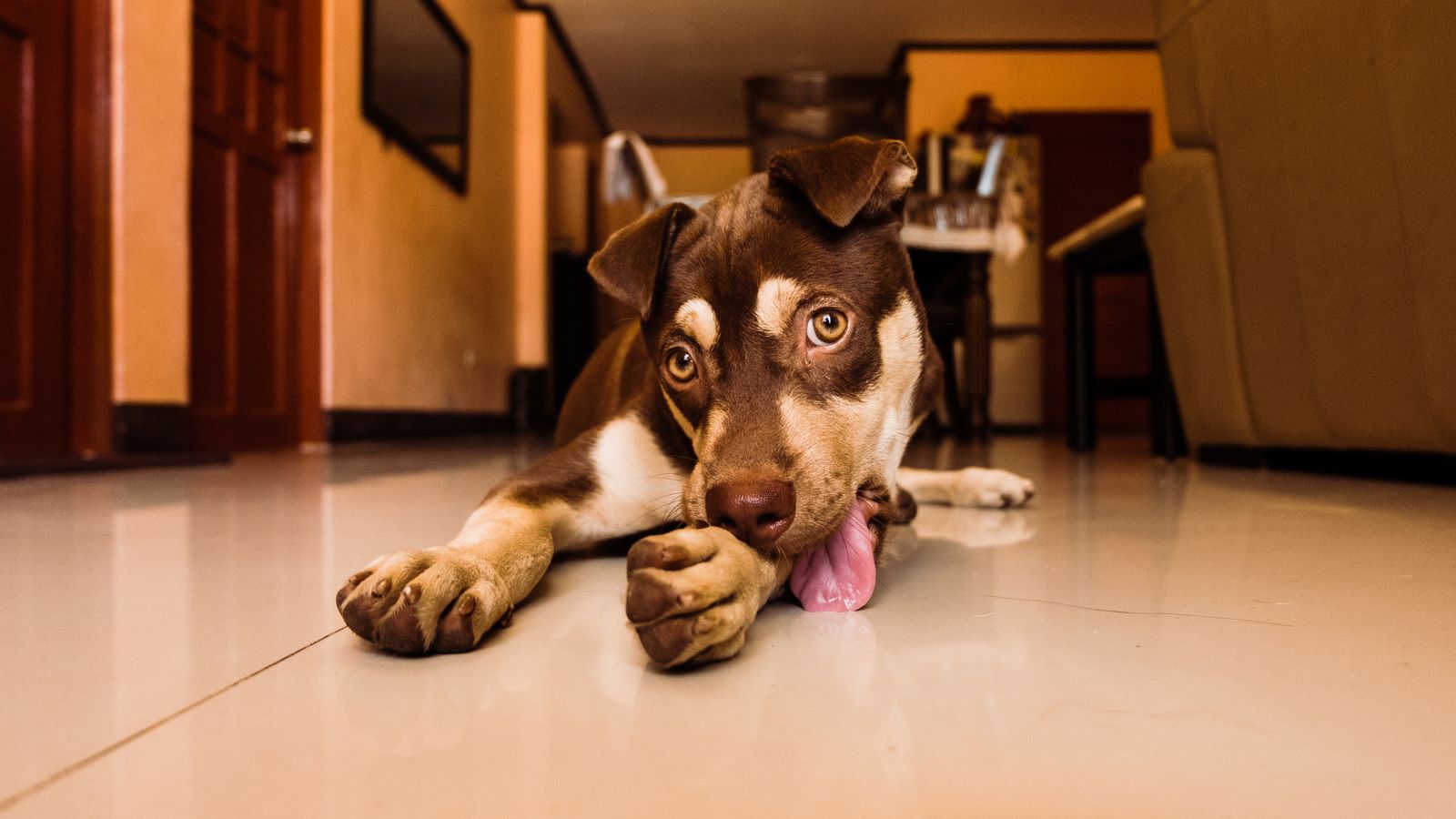
What It Means Where Your Dog Licks You
- Face and mouth – the strongest affection and submission signal, rooted in puppy behaviour. Also the tastiest spot after meals.
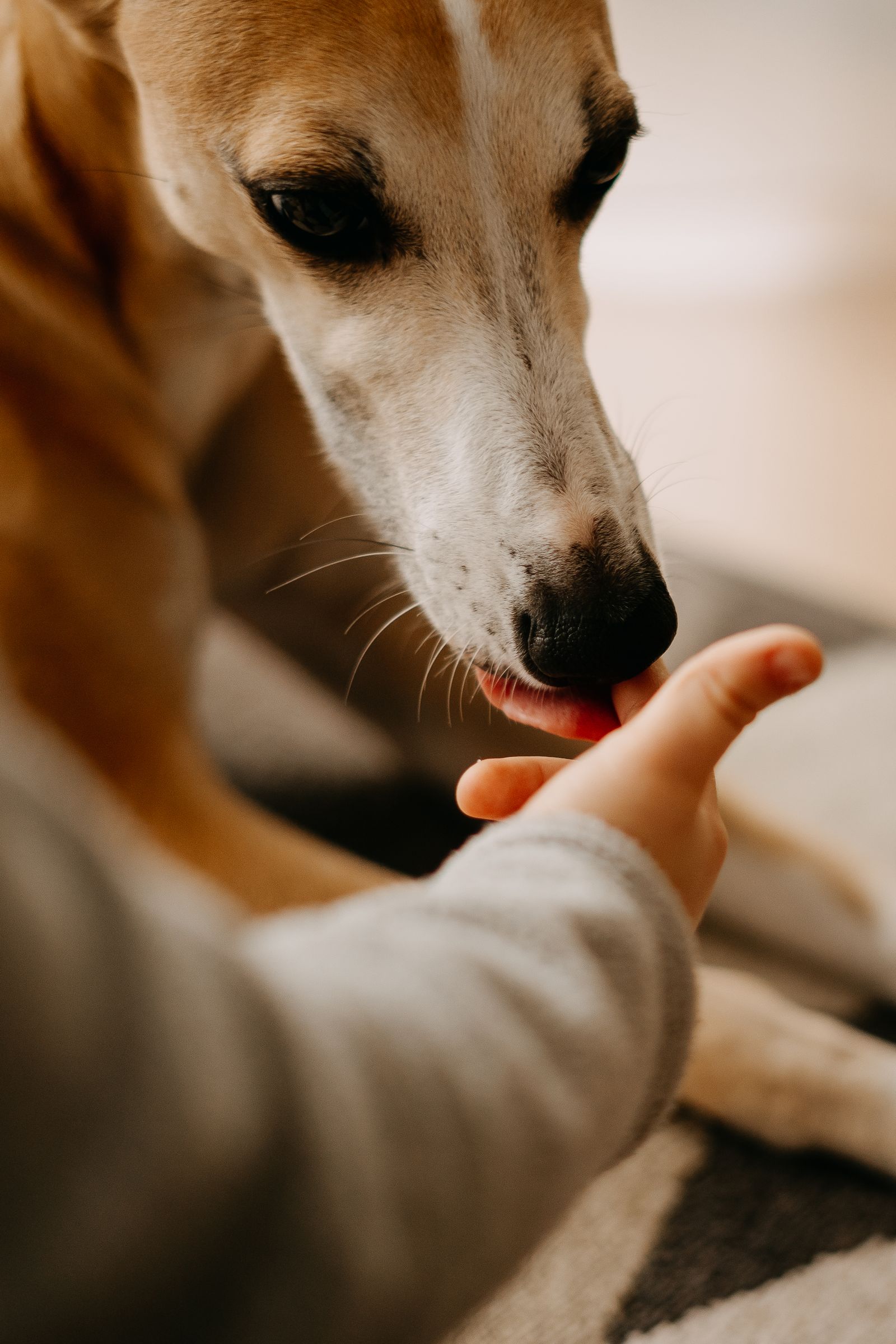
- Hands – taste and information gathering. Your hands touch everything, so they carry the most smells.
- Feet – feet are sweaty and salty, and feet smell strongly of you. Foot-licking is usually pure affection plus flavour.
- Ears – ear wax has a distinctive smell dogs find fascinating. Mildly gross but harmless.
- Wounds or sore spots – dogs instinctively lick injuries. Don’t let them: dog saliva can introduce bacteria and slow healing.
Is It Safe to Let My Dog Lick Me?
For healthy adults, yes – with a few sensible limits. A dog’s mouth isn’t “cleaner than a human’s” (that’s a myth); dog saliva can carry bacteria such as Pasteurella, Salmonella and, rarely, Capnocytophaga, plus parasite eggs if the dog isn’t wormed.
- Don’t let your dog lick open cuts, scratches or broken skin.
- Avoid licks on the mouth, eyes and nose, where bacteria can enter easily.
- Wash your hands after being licked, especially before eating.
- Be extra careful with babies, young children, elderly relatives, pregnant women and anyone with a weakened immune system.
- Keep your dog wormed, flea-treated, vaccinated and with clean teeth – our guide to getting rid of fleas on dogs covers the parasite side.
When Licking Is a Red Flag
Book a vet appointment if you notice any of the following:
- Licking that starts suddenly or gets much more intense than usual
- Licking paired with drooling, lip-smacking, gulping or refusing food (nausea)
- Constant licking of one paw, leg or patch of skin, especially with redness or hair loss
- Licking the air, floor or walls repeatedly (can be gastrointestinal or neurological)
- Licking that the dog cannot be distracted from, or that stops it sleeping
How to Stop a Dog Licking You Too Much
You don’t need to stop licking altogether – it’s healthy, normal bonding. But if it’s excessive, slobbery or embarrassing when guests visit, these steps work without punishment:
- Ignore it completely. The moment the tongue comes out, stand up, turn away and withhold eye contact. Attention is the reward; remove it.
- Reward the alternative. When your dog sits or lies calmly beside you instead, praise and stroke it. You’re teaching “calm gets cuddles, licking gets nothing”.
- Redirect. Offer a lick mat, a stuffed KONG or a chew – it satisfies the urge to lick in a way you’re happy with.
- Wash off the temptation. Shower after exercise, skip scented lotions before cuddle time, and wash your hands after cooking.
- Burn off the energy. A tired, mentally stimulated dog licks far less. Add a sniff walk, training session or puzzle feeder to the day.
- Be consistent. Everyone in the house needs to follow the same rule, or the dog will simply lick the person who still rewards it.
Never shout at or push a dog away for licking – it either reads as play (more licking) or as scary (more stress licking).
Frequently Asked Questions
Why does my dog lick me so much?
Usually because it works: licking earns attention, and it feels good to the dog. Excessive licking can also mean boredom, anxiety or a medical issue, so if it’s new or obsessive, rule out health problems first.
Why does my dog lick me when I pet him?
It’s a return of affection – you groom the dog, the dog grooms you. Many dogs also lick during stroking because being touched is slightly arousing, and licking helps them stay calm.
Why does my dog lick my face in the morning?
Morning licks combine greeting, affection, “I’m hungry/need to go out”, and the fact that you smell strongly of sleep and last night’s dinner. Dogs greet returning pack members by licking their faces.
Why does my dog lick my feet?
Feet are salty and carry your unique scent. Foot-licking is mostly taste plus affection, and some dogs find the sweat glands on feet particularly interesting. It’s harmless unless you have athlete’s foot or cuts.
Do dogs lick to show dominance?
No. Licking is a submissive, appeasing and affectionate behaviour, not a dominant one. The “dominance” theory of dog behaviour has been widely discredited by modern behaviourists.
Why does my dog lick my wounds?
Instinct – dogs lick their own injuries and those of pack members. Dog saliva does contain some antibacterial compounds, but it also carries harmful bacteria, so keep dogs away from human wounds.
Final Thoughts
So, why does my dog lick me? Nine times out of ten it’s affection, greeting, or a bit of harmless flavour-hunting – the canine equivalent of a hug. Enjoy it, keep it off your face and any cuts, and only worry if the licking suddenly changes or turns obsessive. If you share your home with a cat too, you might be surprised how similar the reasons are – see why does my cat lick me? – and for the other big question owners ask, read our guide on why dogs eat grass.