
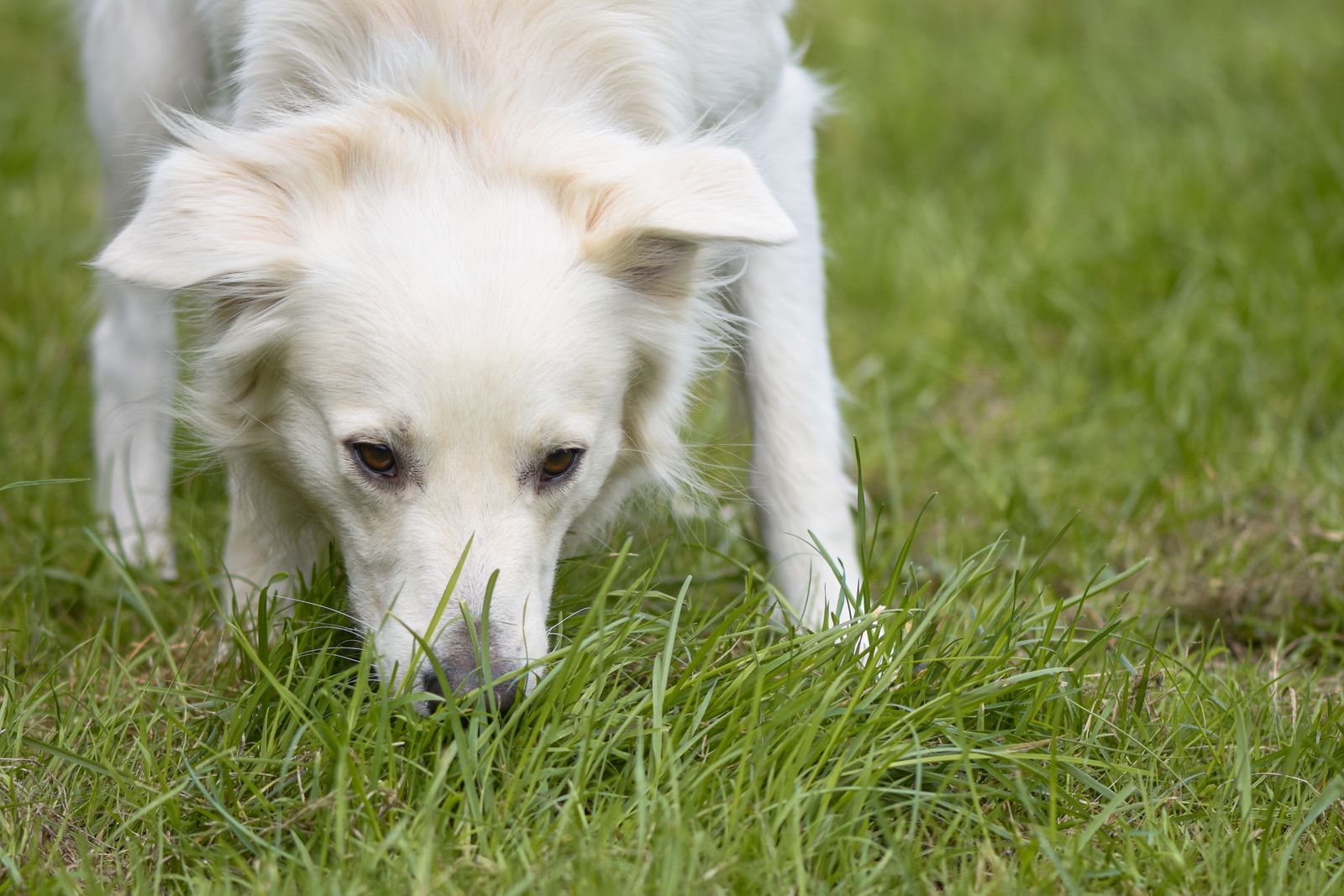
You let your dog out into the garden and, instead of doing its business, it starts grazing like a sheep. Why does my dog eat grass? It’s one of the most common questions dog owners ask their vet – and the reassuring answer is that grass eating is normal, extremely common and, in most cases, nothing to worry about.
That said, there are a few situations where grass eating is a signal that something is wrong. This guide explains the seven real reasons dogs eat grass, what the science says about the “dogs eat grass to make themselves sick” theory, the genuine risks, and how to reduce the habit if it bothers you.
Is It Normal for Dogs to Eat Grass?
Yes. In a well-known survey by researchers at the University of California, Davis, 79% of dog owners reported that their dog ate grass or other plants regularly. Importantly, only 9% of those dogs seemed unwell before eating grass and only 22% vomited afterwards. In other words, the vast majority of grass eating has nothing to do with illness.
Vets consider grass eating a normal canine behaviour – technically a mild form of “pica” (eating non-food items) that is so widespread it barely deserves the label.
7 Reasons Why Dogs Eat Grass
1. It’s instinctive
Dogs are not true carnivores – they are opportunistic omnivores descended from wolves. Studies of wild wolves and coyotes find grass and other plant material in a large share of their droppings, and wolves also consume the stomach contents of their prey. Your dog’s ancestors ate plants; your dog is simply doing what comes naturally.
2. They like the taste and texture
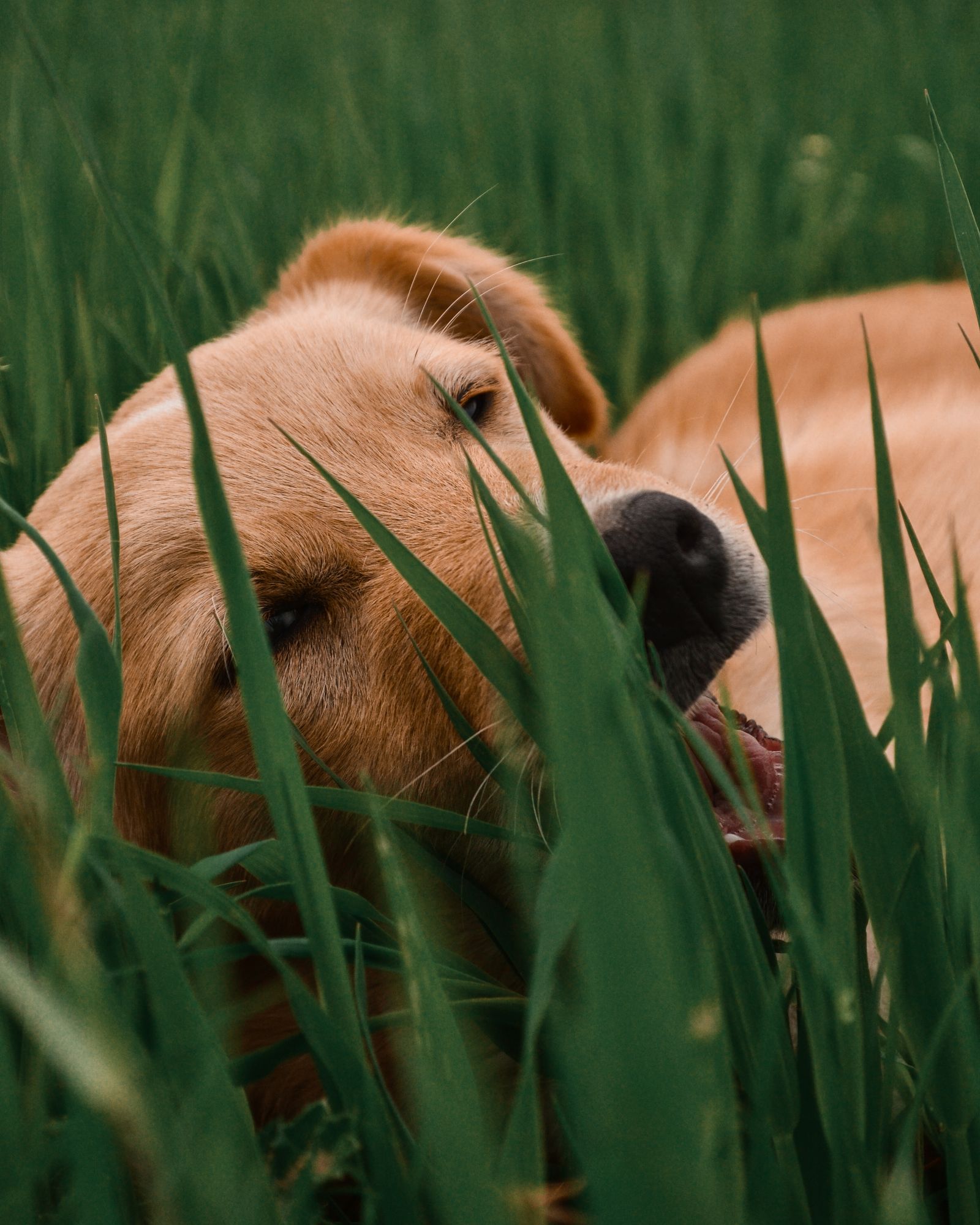
Many dogs clearly seek out fresh, sweet spring grass and ignore dry summer grass. Dew-covered morning grass is a favourite. For some dogs it is quite simply a snack they enjoy.
3. They want more fibre
Grass is roughage. Some dogs on low-fibre diets appear to graze to help food move through the digestive system, and in a few documented cases switching to a higher-fibre diet stopped the behaviour entirely.
4. Boredom or anxiety
A dog left alone in the garden for hours with nothing to do will find its own entertainment – and grazing is an easy, self-soothing activity. Dogs that eat grass mainly when their owner is absent, or during stressful events, are often eating out of boredom or anxiety rather than hunger.
5. An upset stomach (sometimes)
The classic explanation is that dogs eat grass to make themselves vomit when they feel nauseous. The evidence is weaker than most people think – as noted above, fewer than a quarter of grass-eating dogs vomit afterwards. But some dogs do gulp grass frantically when nauseous, and the long, tickly blades may indeed trigger vomiting. If your dog eats grass quickly and urgently and then throws up, an upset stomach is a plausible cause.
6. Attention seeking
If every time your dog starts nibbling the lawn you rush over shouting “leave it!”, a clever dog quickly learns that grass eating gets a reaction. For attention-hungry dogs, even negative attention is a reward.
7. A nutritional deficiency (rare)
True nutritional deficiencies are uncommon in dogs fed a complete commercial diet, but dogs on unbalanced home-cooked or raw diets may seek out plants to compensate. If your dog eats large amounts of grass and other odd items like soil, ask your vet to review the diet.
Does Eating Grass Mean My Dog Is Sick?
Usually not. But grass eating combined with any of the following deserves a vet visit:
- Vomiting more than once or twice a week
- Diarrhoea, or blood in the vomit or stool
- Lethargy, loss of appetite or weight loss
- Frantic, compulsive grass eating that starts suddenly
- Licking the lips, drooling or gulping – signs of nausea or acid reflux
- Eating other non-food items (soil, stones, fabric)
Possible underlying causes include gastritis, acid reflux, inflammatory bowel disease, pancreatitis, intestinal parasites or, less commonly, liver disease. All of these are treatable, and none get better by being ignored.

Is Eating Grass Bad for Dogs? The Real Risks
The grass itself is harmless. The dangers are what may be on it or in it:
- Pesticides, herbicides and fertilisers – lawn chemicals can cause poisoning. Keep dogs off treated lawns for at least as long as the product label states, and choose pet-safe products.
- Parasites – grass contaminated by other animals’ faeces can carry roundworm and hookworm eggs. In the UK and Europe, slugs and snails on grass can transmit lungworm, which is potentially fatal – another good reason for regular worming.
- Toxic plants – dogs that graze indiscriminately may also chew daffodil bulbs, foxgloves, lilies or other poisonous garden plants.
- Sharp or coarse grass – ornamental grasses and grass seeds (awns) can lodge in the throat, paws or ears.
- Vomiting – occasional vomiting after grazing is not dangerous in itself, but repeated vomiting can irritate the stomach.
How to Stop Your Dog Eating Grass
If your dog is healthy and eats grass occasionally, you don’t need to stop it. If you’d rather reduce the habit, or your dog is grazing where chemicals may have been used, try these:
- Rule out a medical cause with a vet check, especially if the behaviour is new or intense.
- Add fibre to the diet – a spoonful of plain cooked pumpkin or green beans, or a switch to a higher-fibre complete food, satisfies many grazers.
- Increase exercise and mental stimulation – longer walks, scent games, puzzle feeders and training sessions cure boredom grazing.
- Don’t leave the dog alone in the garden for long stretches.
- Teach “leave it” and reward your dog for turning away from grass – and ignore the behaviour otherwise, so it stops working as an attention grab.
- Offer a safe alternative – a tray of pesticide-free wheatgrass or “pet grass” grown indoors lets your dog graze safely.
- Keep the lawn chemical-free and worm your dog regularly.
Frequently Asked Questions
Why does my dog eat grass and then throw up?
Some dogs gulp long grass when they feel nauseous, and the blades tickle the throat and stomach lining enough to trigger vomiting. If it happens occasionally your dog is probably fine; if it happens weekly, see your vet.
Why does my dog eat grass every morning?
Morning grass is fresh and covered in dew, which many dogs love. An empty stomach overnight can also cause mild nausea (bile reflux) – try a small bedtime snack and see if the morning grazing stops.
Why does my puppy eat grass?
Puppies explore the world with their mouths and eat all sorts of things. Grass is one of the safer options, but supervise to make sure they aren’t also eating stones, mulch or toxic plants.
Should I let my dog eat grass?
Yes, as long as the grass is free of chemicals and your dog is otherwise well. It is a normal behaviour that most dogs enjoy.
Final Thoughts
Why does my dog eat grass? Most likely because it’s a dog, it likes it, and its wolf ancestors did the same. Keep an eye out for the warning signs listed above, keep your lawn chemical-free, and otherwise let your dog enjoy its salad. If you’re curious about other quirky pet behaviours, find out why cats purr – it isn’t only because they’re happy.