

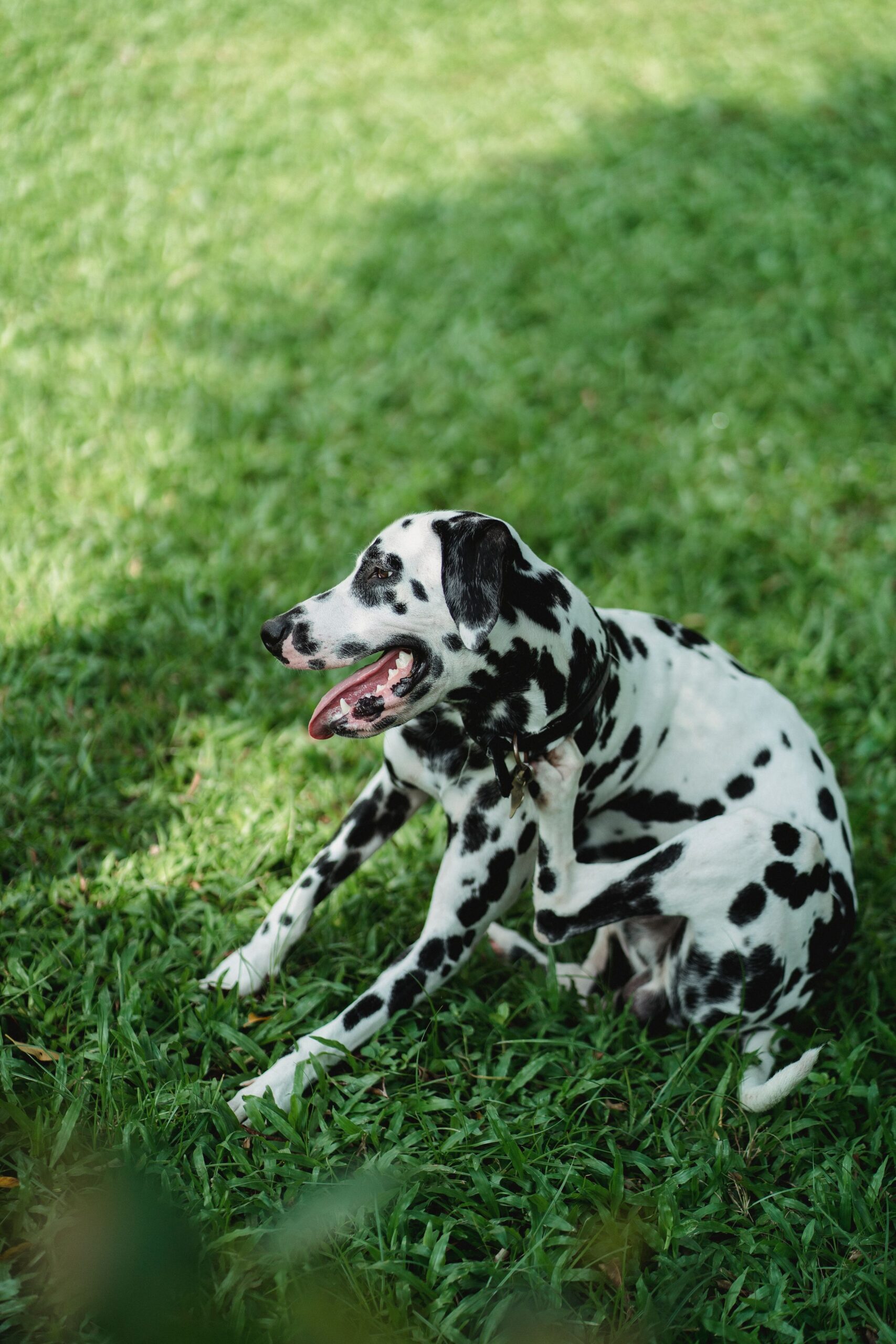
Scratch. Chew. Lick. Scratch again. If the soundtrack to your evenings is a dog going at its own skin, often just as you sit down to watch something, you’re not alone. Why is my dog scratching so much? Itching is the single most common reason dogs are taken to the vet, and while fleas are the obvious suspect, they’re only one of nine likely causes.
This guide covers all nine, how to tell them apart at home, the checks to do tonight, when itching becomes a vet visit, and what actually works, including why the “just give it an oatmeal bath” advice only gets you so far.
9 Reasons Your Dog Is Scratching
1. Fleas, still the number-one cause
You rarely see the fleas; you see the evidence. A single flea bite can set off flea allergy dermatitis in a sensitive dog, and one flea bite is enough to keep a dog scratching for days. The classic pattern is scratching and chewing at the base of the tail, rump and back legs.
Check tonight: stand your dog on a white towel and brush briskly along the back and tail base. If black specks fall out, wet them. If they turn rusty red, that’s flea dirt (digested blood), which means fleas, even if you never spot one. Our full guide covers getting rid of fleas on dogs properly, including the 95% of the flea life cycle that lives in your carpet rather than on your dog.
2. Environmental allergies (atopy)
Pollen, grass, dust mites, mould. Dogs don’t sneeze the way we do. They itch. Atopic dermatitis usually starts between one and three years old, and the tell-tale spots are paws, face, ears, armpits, groin and belly. Seasonal itching that gets worse in spring and summer points strongly this way; year-round itching suggests dust mites or food.

3. Food allergy or intolerance
Less common than people assume, roughly 10% of allergy cases, but real. The usual culprits are proteins the dog has eaten for a long time: beef, chicken, dairy, wheat, lamb. Suspect food if the itching is year-round, focused on the ears and rear end, and comes with digestive signs (loose stools, wind, frequent poos). The only reliable test is an 8 to 12 week elimination diet prescribed by your vet. Blood and saliva “allergy tests” sold online are not reliable for food allergy.
4. Dry skin
Central heating in winter, low humidity, over-bathing, or a diet short on essential fatty acids. You’ll see flaky white scurf, and the scratching is generalised rather than focused on one area. Bathing more often makes it worse, not better.
5. Mites and mange
Sarcoptic mange (scabies) causes intense, frantic itching, often the worst you’ll see, with hair loss on ear margins, elbows and hocks, and it’s contagious to humans. Demodex causes patchy hair loss with less itching, usually in puppies or immune-compromised dogs. Ear mites cause head shaking and dark, crumbly ear wax. All need a vet diagnosis (a skin scrape) and prescription treatment.
6. Skin infections
Bacterial (pyoderma) and yeast (Malassezia) infections are usually secondary. The dog itches for another reason, breaks the skin, and infection moves in. Signs: a musty or “corn chip” smell, greasy or crusty patches, red bumps or pustules, thickened dark skin in skin folds, brown-stained fur from licking. Very common in ears and paws.

7. Contact irritants
New shampoo, carpet cleaner, lawn treatment, a wool bed, plastic bowls. Contact reactions show up on the thin-haired bits that touch the surface: belly, groin, chin, paws.
8. Boredom, anxiety and habit
Dogs also scratch and lick for the same reason people bite their nails. Acral lick granuloma: a raw, thickened patch usually on a front leg, often starts this way, though pain or allergy underneath is common too. Suspect behaviour if the licking happens when the dog is left alone, under-exercised, or bored, and stops when it’s occupied.
9. Pain and other medical causes
Arthritis, an anal gland problem (scooting and tail-base chewing), hypothyroidism (dull coat, weight gain, recurring skin infections) and, rarely, skin cancers can all show up as licking or scratching one area.
Where Your Dog Scratches Tells You a Lot
- Tail base and rump: fleas, flea allergy, anal glands
- Paws (licking, chewing, rust-stained fur): environmental allergy, yeast infection
- Ears (head shaking, smell, dark wax): allergy, ear infection, ear mites
- Face and muzzle rubbing: allergy, contact irritation
- Belly, armpits and groin: atopy, contact irritant
- All over, with flaky skin: dry skin, mange, systemic issues
- One fixed spot, obsessively: pain, hot spot, lick granuloma, or a botfly larva if there is a lump with a small hole in it
When to See the Vet
Book an appointment if you see any of these:
- Broken skin, open sores, scabs or bleeding
- A hot spot, a wet, red, rapidly spreading patch (these can double in size in hours)
- Hair loss, bald patches or thickened, darkened skin
- A bad smell from the skin or ears
- Head shaking, or ears that are hot, red or gunky
- Scratching that stops your dog sleeping, or is getting steadily worse
- Itching plus lethargy, weight change, digestive upset or drinking more
- Sudden, frantic, whole-body itching (possible sarcoptic mange or an allergic reaction)
Itching that has gone on more than a couple of weeks won’t fix itself, and the longer a dog scratches, the more likely a secondary infection is to set in and make everything worse.
What Actually Helps
- Treat fleas properly first, all pets, every month. Use a vet-recommended product on every animal in the house, year-round, plus a household spray and hot-washing of bedding. Shop flea collars and cheap spot-ons are a common reason treatment “doesn’t work”.
- Bathe correctly. A soothing oatmeal or vet-prescribed medicated shampoo can help, but leave it on for 10 minutes before rinsing, use lukewarm water, and don’t bathe more than weekly unless your vet says so.
- Rinse the paws after walks in pollen season. A simple wipe-down removes a surprising amount of allergen.
- Omega-3 fatty acids. Fish-oil supplements improve coat and skin barrier function over 6 to 12 weeks. Ask your vet for the right dose by weight.
- Vacuum and wash bedding weekly: hot wash, 60°C, for fleas and dust mites.
- Enrichment for the behavioural itchers: longer sniff walks, puzzle feeders, chews.
- Prescription treatment where needed. Modern anti-itch medications (such as oclacitinib or the monoclonal-antibody injection lokivetmab) work far better and far more safely than long-term steroids for allergic dogs, and your vet can also treat any infection underneath. Never give human antihistamines or painkillers without veterinary advice. Ibuprofen and paracetamol are toxic to dogs.

Frequently Asked Questions
Why is my dog scratching but has no fleas?
Allergies (environmental or food) are the most likely answer, followed by dry skin, mites and secondary infections. Also bear in mind you rarely see fleas. Check for flea dirt with the white-towel test before ruling them out. Ticks are worth a look too, particularly after walks through long grass, and they need lifting out properly rather than pulled or dabbed with anything. Here is how to take a tick off a dog safely.
Why does my dog scratch so much at night?
Partly because the house is quiet and there’s nothing else to do, so you notice it more; partly because allergens settle in bedding, and partly because itching genuinely worsens when a dog is still and warm. Persistent night scratching is worth investigating.
Can I give my dog Piriton (antihistamine) for itching?
Some vets do recommend antihistamines for mild cases, but they help fewer than a third of allergic dogs and the dose must be set by weight. Ask your vet first. Never guess, and never use combination human products (many contain decongestants or paracetamol, which are dangerous for dogs).
What can I put on my dog’s itchy skin at home?
A colloidal oatmeal shampoo, a cool compress on a localised itchy patch, and coconut oil on dry noses/paw pads are safe first steps. Avoid tea tree oil (toxic to dogs), vinegar on broken skin, and human creams containing steroids unless prescribed.
Is my dog’s itching seasonal or food-related?
Seasonal, spring/summer-worse itching points to pollen; year-round itching, especially with ear infections and digestive signs, points to food. A vet-run elimination diet is the only way to be sure.
How long should I wait before seeing a vet?
If itching is mild and you’ve just treated for fleas, give it two weeks. Go sooner for broken skin, a spreading sore, a smell, ear involvement, or a dog that can’t settle.

Final Thoughts
So, why is my dog scratching so much? Start with fleas, properly, on every pet in the house, then look at where the scratching happens, because the location narrows it to allergy, infection, mites or habit faster than anything else. Persistent itching is treatable, and modern allergy medication has transformed what’s possible; the only wrong move is letting a dog scratch for months while the skin breaks down. For more on keeping your dog comfortable, read why dogs pant so much and why your dog licks you.
One more reason to take open, raw skin seriously: parasites use broken skin as a way in. If you are in Texas or New Mexico, or you travel with your dog, it is worth knowing the signs of screwworm in dogs and cats and where on your pet to check.