

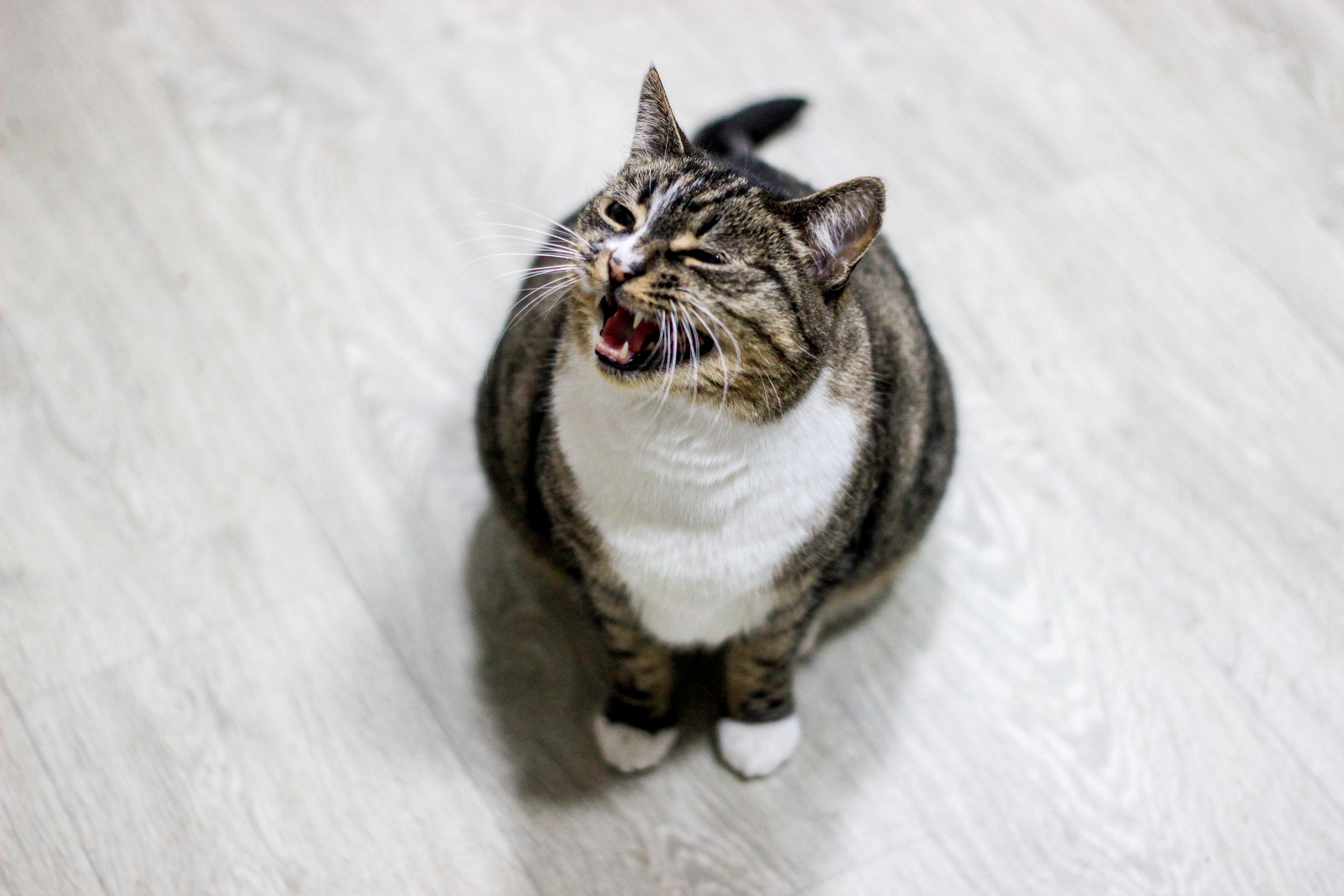
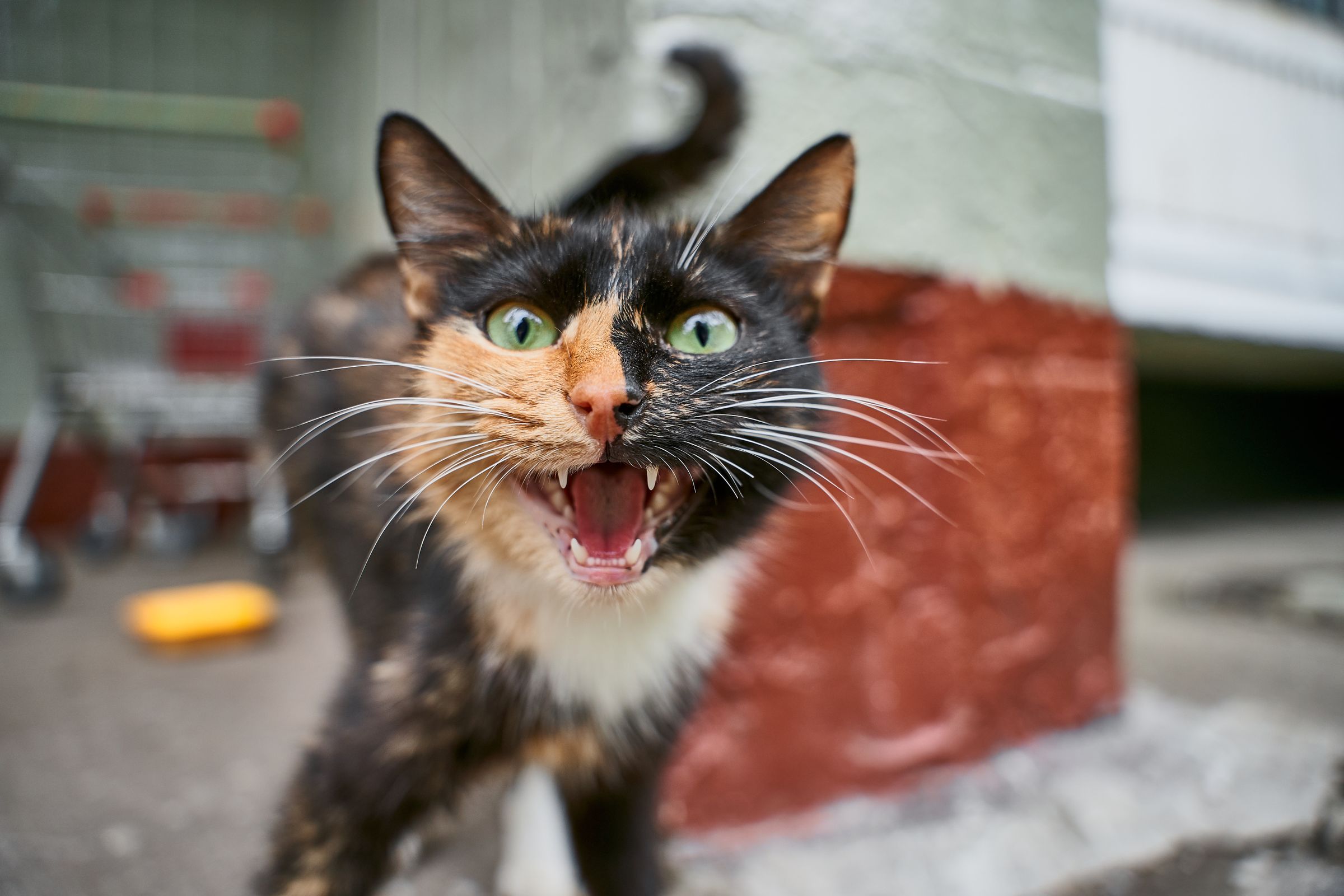
Some cats barely make a sound. Others narrate the entire day – at the food bowl, at the door, at 4 a.m., at absolutely nothing. Why does my cat meow so much? Here’s the fact that surprises most owners: adult cats almost never meow at other cats. Meowing is a language cats developed specifically for humans – and if yours is doing it constantly, it’s because at some point it worked.
This guide covers the ten reasons cats meow, what the different sounds actually mean, why some breeds never shut up, when excessive meowing is a medical warning sign, and how to quieten a vocal cat without making things worse.
Cats Meow at People, Not at Each Other
Kittens meow to their mother when they’re cold, hungry or lost. Adult cats drop it almost entirely when communicating with other cats – they use scent, body language, and the occasional growl or yowl instead. But with humans, they kept the meow, and then refined it: research suggests domestic cats have adapted their meows to be more urgent-sounding and more pleasant to the human ear than wildcat calls. Your cat is, quite literally, talking to you in a language it invented for you.
10 Reasons Cats Meow
1. “Feed me”
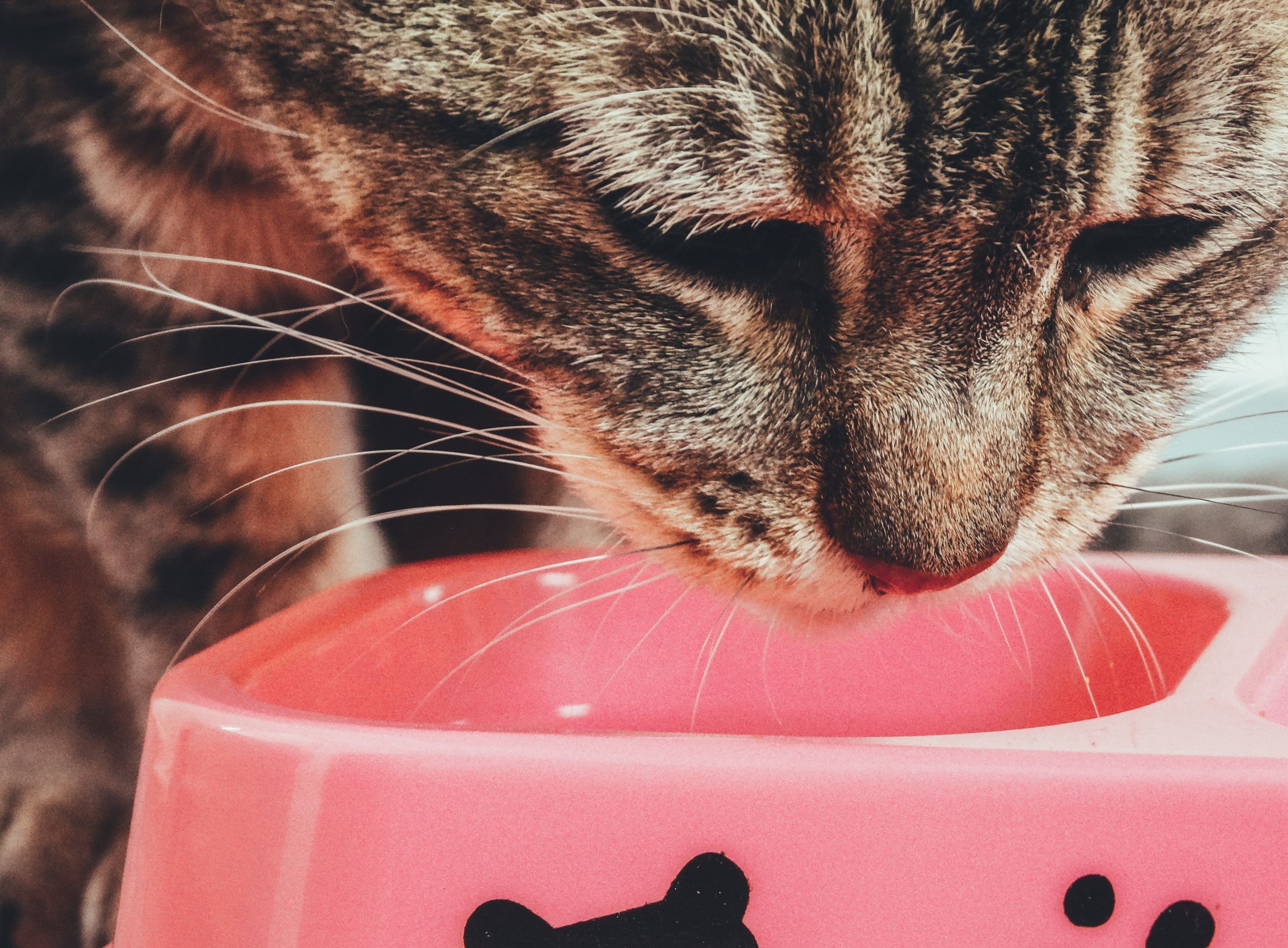
The most common reason by a mile. Cats learn the exact sequence that produces food – the alarm going off, the kettle boiling, you standing up – and vocalise on cue. If your cat meows loudest at 6 a.m., you have a feeding-schedule problem, not a behaviour problem.
2. Greeting
Many cats meow every time you walk in, get up, or come back from another room. It’s the feline equivalent of “oh, hello, you exist”. Nothing needs fixing here.
3. Attention and company
Play, stroking, or simply being noticed. Cats that are alone all day often become much more vocal in the evening. Ignoring it works only if you’re consistent – intermittent attention is the most powerful reinforcement there is.
4. “Open this door”
Closed doors are an affront. The meow at a door is a demand, and if opening it has ever worked, it’s now a trained behaviour.
5. Stress, change and anxiety
House moves, new pets, a new baby, building work, a change in your hours. Anxious meowing often comes with hiding, over-grooming, or litter tray problems – see 8 signs your cat is stressed.
6. Pain or illness
A normally quiet cat that becomes vocal needs a vet. Cats in pain often meow at odd times, sound different (lower, drawn-out), or cry when picked up, using the litter tray, or jumping. Straining and crying in the tray is an emergency – see our guide to litter tray problems.
7. Hyperthyroidism
Very common in cats over 10 and a classic cause of sudden loud, night-time yowling. The pattern to spot: eating more but losing weight, drinking more, restlessness, a scruffy coat, sometimes vomiting. It’s diagnosed with a simple blood test and is very treatable – don’t write this off as “just old age”.
8. Old age and cognitive decline
Senior cats yowl at night for several reasons: fading eyesight and hearing, disorientation from feline cognitive dysfunction (feline dementia), high blood pressure, or simply confusion in a dark, quiet house. Night lights, a predictable routine and keeping food, water and a tray close by all help – and a vet check is essential, because the treatable causes (thyroid, blood pressure, pain) look identical.
9. Mating behaviour
An unspayed female in season yowls loudly and repeatedly, rolls, and becomes very affectionate; unneutered males yowl at and spray near doors and windows, especially at night. Neutering resolves it in the vast majority of cases – and prevents a great many other problems.
10. Breed and personality
Some cats are simply chatty. Siamese, Oriental, Bengal, Burmese, Tonkinese and Sphynx are famously talkative – a Siamese can and will hold a conversation. If your cat has always been vocal and is otherwise well, that’s personality, not a problem.
What the Different Sounds Mean
- Short, high meow – hello / standard greeting
- Multiple short meows – excitement, “where have you been”
- Drawn-out mrrrooow – a demand: food, door, attention
- Low-pitched, long meow – complaint or displeasure
- High-pitched, sharp yelp – pain or fright (you stood on a tail)
- Chirps and trills – happy, sociable, “follow me” (mother-to-kitten talk)
- Chattering at a window – frustrated hunting excitement at birds
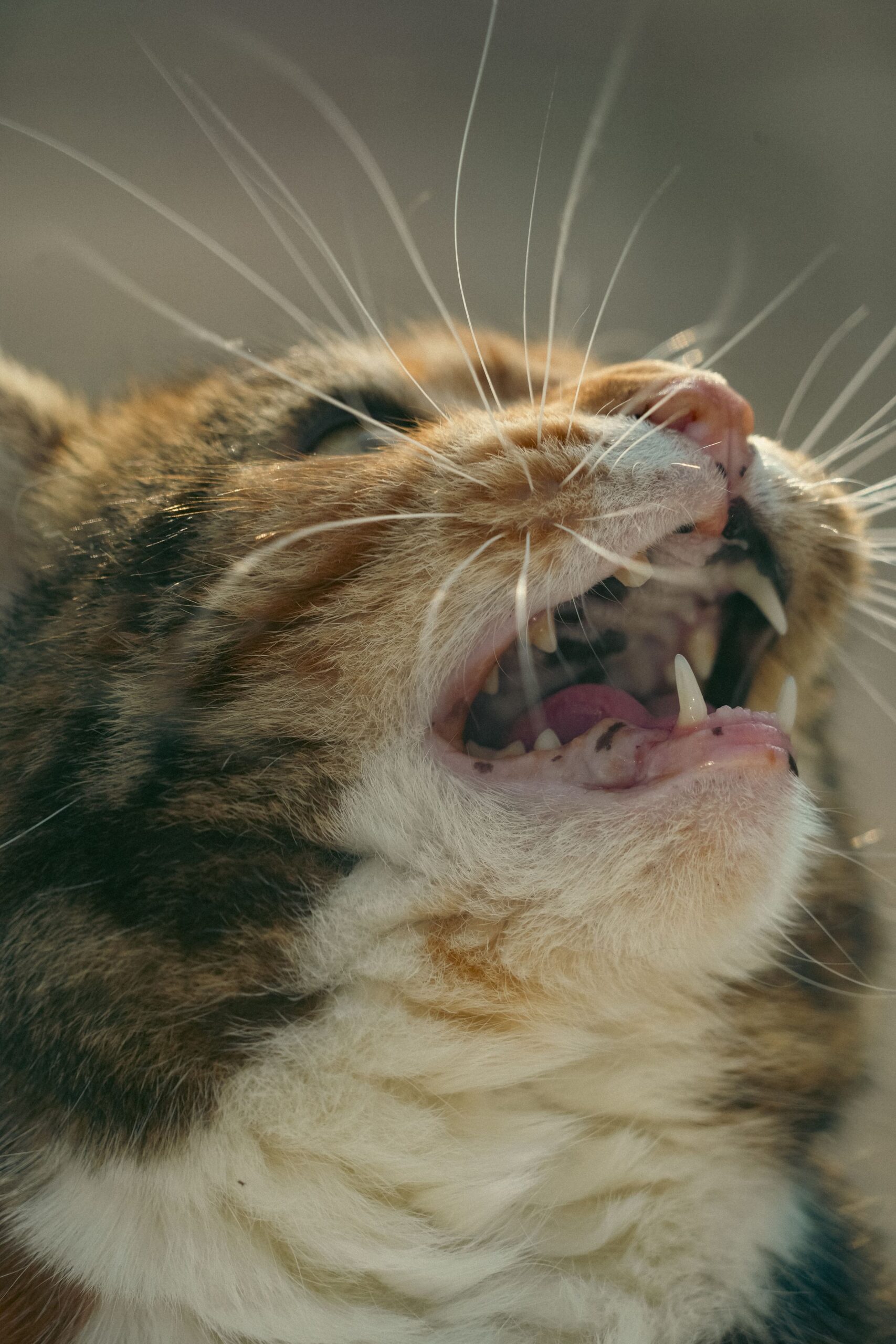
- Yowling or howling – mating, distress, disorientation, or illness – the one to take seriously
- Growl or hiss – back off, now
When Meowing Means “See the Vet”
- A quiet cat that suddenly becomes vocal
- Night-time yowling in a cat over 10 (thyroid, blood pressure, dementia, pain)
- Meowing plus weight loss, increased appetite, or increased drinking
- Crying in or beside the litter tray, or straining – emergency
- Vocalising when touched, picked up or jumping
- Meowing with vomiting, hiding, or a change in appetite
- Disorientation, staring at walls, or pacing at night
How to Reduce Excessive Meowing
- Vet first if anything has changed. New or increased vocalising is a medical question until proven otherwise.
- Never reward the meow. Feeding, opening the door or picking the cat up while it’s meowing teaches it that meowing works. Wait for a few seconds of quiet, then respond – that’s what you’re reinforcing.
- Fix the 5 a.m. alarm call with a timed feeder. The single most effective change for morning yowlers: the machine feeds them, not you, so waking you stops paying.
- Play properly, twice a day. Two 10–15 minute wand-toy sessions ending in a meal follow the natural hunt-eat-groom-sleep cycle and settle cats for hours.
- Enrich the environment. Cat trees, window perches, puzzle feeders, hiding spots. A bored cat is a loud cat.
- Keep routines predictable. Same feeding times, same play times. Cats vocalise more when they can’t anticipate what happens next.
- Neuter. If mating calls are the cause, this is the fix.
- Help senior cats at night – night lights, a warm bed near you, litter tray and water upstairs, and treatment for any underlying condition.
- Never punish. Shouting, squirting water or shutting the cat out increases stress and usually increases the noise. It also damages trust.
Expect an “extinction burst” – when you first stop rewarding the meow, it gets louder before it gets better. Hold the line for a week or two and most cats give it up.
Frequently Asked Questions
Why does my cat meow at night?
Boredom and pent-up energy in young cats; hunger; mating behaviour in unneutered cats; and in cats over 10, hyperthyroidism, high blood pressure, pain or cognitive decline. Play and feed late in the evening, and get an older cat checked.
Why does my cat meow constantly for food when it’s already been fed?
Either it has learned that meowing produces food, or it’s genuinely hungrier than usual – which can point to hyperthyroidism, diabetes or parasites. Check the portion sizes against our cat feeding guide, then see the vet if the appetite is genuinely increased.
Should I ignore my cat when it meows?
Ignore the demand meows, once you’re sure the cat’s needs are met and it’s healthy – and respond the moment it’s quiet. Never ignore a new, distressed or painful-sounding vocalisation.
Why is my cat meowing more as it gets older?
Most often hyperthyroidism, high blood pressure, arthritis pain, failing senses, or feline dementia. All of these are manageable, so it’s worth a proper senior check-up rather than accepting it.
Do some cat breeds meow more than others?
Yes. Siamese, Oriental Shorthair, Bengal, Burmese, Tonkinese and Sphynx are the chattiest; Persians, British Shorthairs, Ragdolls and Russian Blues tend to be quiet.
Why does my cat meow silently?
The “silent meow” is usually a real meow pitched too high for human hearing, or a very soft one used deliberately with people. It’s affectionate and completely normal.
Final Thoughts
So, why does my cat meow so much? Because meowing is the one language your cat invented purely for you – and because, somewhere along the line, it worked. Most of the time it’s food, attention or a closed door, all of which respond to routine, play and a timed feeder. But a sudden change in how much or how a cat vocalises is a health signal, especially over the age of 10. For more on understanding your cat, read why do cats purr? and why cats knead.